
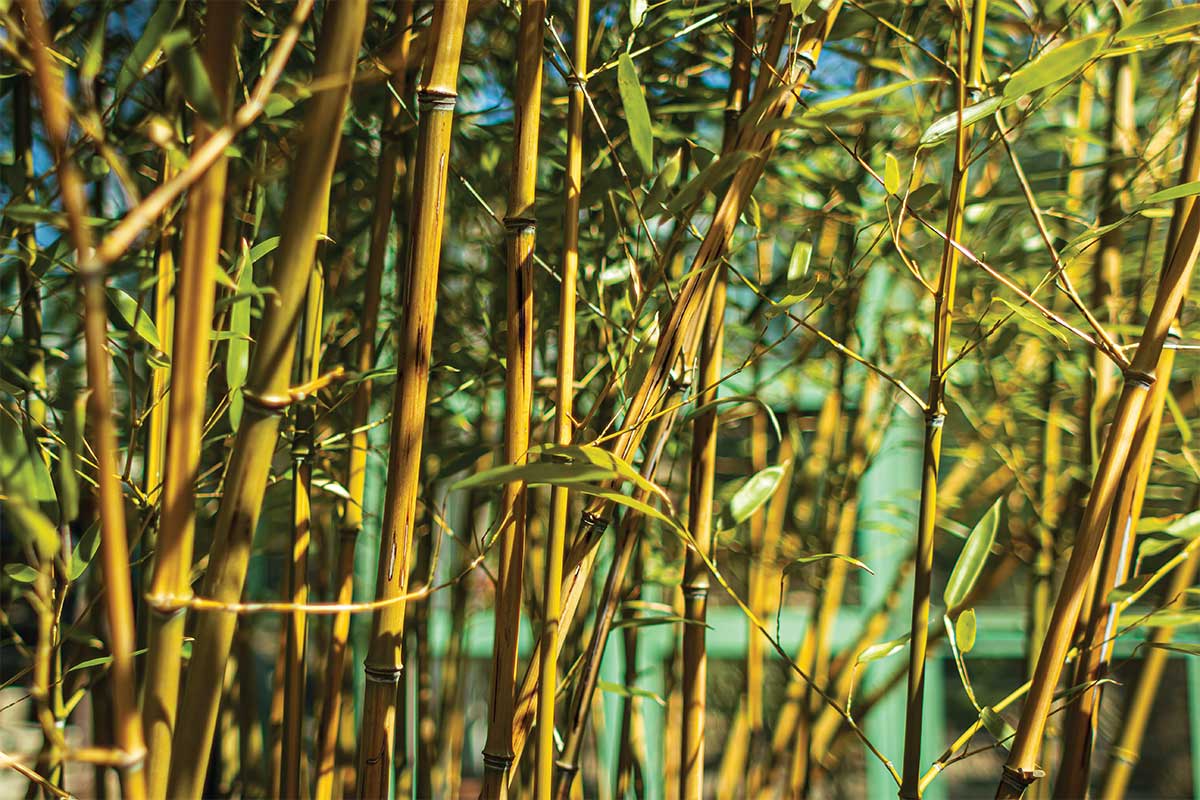
When you’re out in the backyard this summer, be on the lookout for bamboo. This invasive species won’t just take over your plants. It can take over Virginia habitats, too.
This reed-like grass spreads aggressively, growing underground at a pace of up to 15 feet per year. Bamboo arrived in the U.S. from China in the 1880s and was intended for ornamental use. But bamboo’s threat to native species has come to outweigh its beauty. In Virginia, golden bamboo is on the state’s list of invasive plants.
City of Falls Church arborist Charles Prince says bamboo dominates native plants. Prince says even after bamboo is removed, it can leave a chemical trace in the soil that prevents native plants from growing.
“What you’ll get is a monoculture of bamboo, and it’ll suppress all native plants that would otherwise grow,” Prince says.
In addition to its environmental impacts, running bamboo can harm your home. Bamboo roots can drive cracks into concrete, brickwork, and patios.
Removing bamboo will help native species thrive, Prince says. You can help with this effort. If you see bamboo on your property, Prince says to pull the plant out by hand and dig up its roots.
“Poisons and other herbicides do work,” Prince says. “But really, physical removal is the best way to get it out of your yard.”
Prince says bamboo’s height can sometimes make it difficult to remove. The plant can grow 16 to 40 feet tall. “Most bamboo removal can be done by yourself,” Prince says. “But for larger infestations, I would definitely get somebody that has equipment, or rent some equipment to dig it out.”
No matter the size of the stalks — pinky-size or taller than you — Prince says it’s important to remove them so that local ecosystems and biodiversity can flourish. “Non-native, invasive species outcompete our native species, and that prevents our native wildlife from consuming, breeding, and living.”
Alternatives to Bamboo
Bottlebrush Grass
Eastern Redcedar
Switchgrass
Little Bluestem
Indian Grass
Source: Master Gardeners of Northern Virginia
Feature image, P.R.M. Studios, LLC/stock.adobe.com
This story originally ran in our August issue. For more stories like this, subscribe to Northern Virginia Magazine.