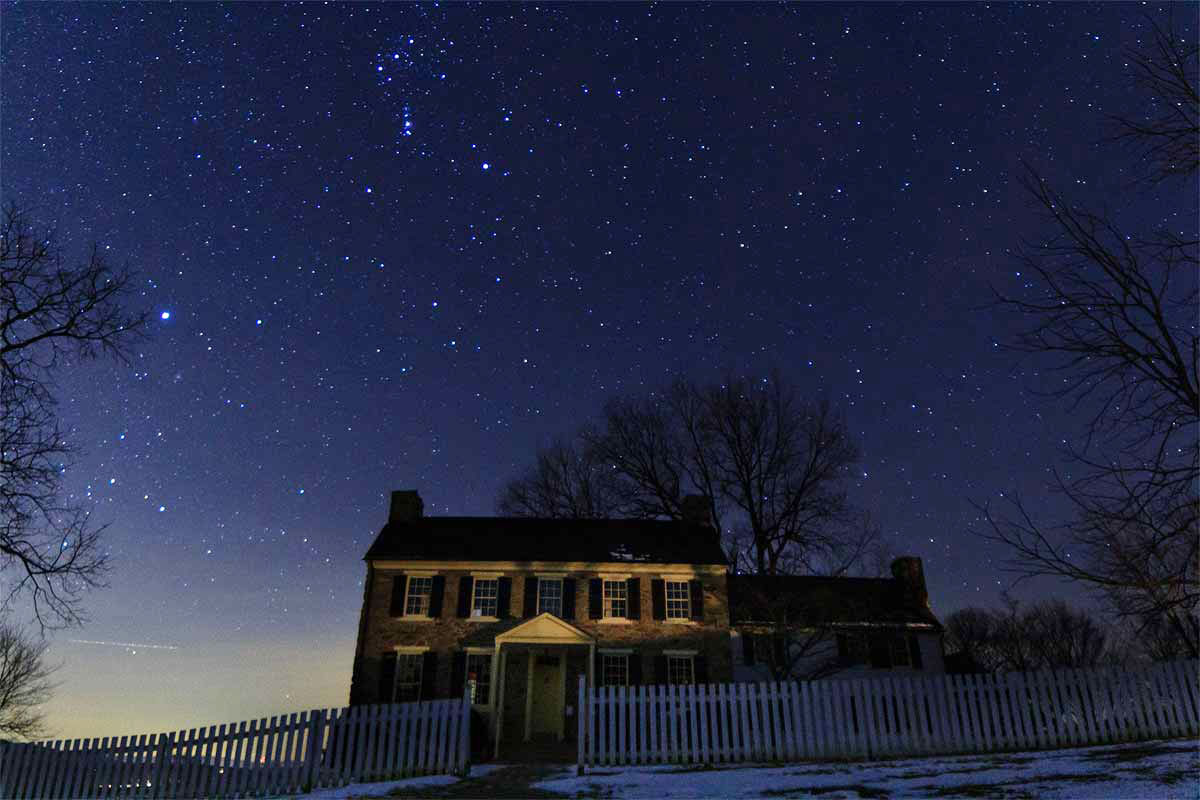
Updated December 1, 2022. When you look up at the night sky, odds are you can’t make out the shape of the Milky Way. While most of us are used to only seeing the occasional glimpse of the stars, this isn’t a natural phenomenon. It’s actually a result of light pollution, the product of artificial light that is poorly aimed or excessively bright.
When all the excess light filters into the air, it creates what’s called sky glow – a haze of light that blocks us from being able to see into the atmosphere, much like how glare from too-bright headlights can blind us from seeing anything past them. Sky glow is an entirely reversible phenomenon; unlike problems like climate change, sky glow would go away if we got rid of the excess light.
But there are longer-lasting effects of light pollution as well. For animals and humans alike, the presence of excessive artificial light can be detrimental. For humans, the presence of artificial light at night can disrupt the circadian rhythms that allow us to sleep. Animals have been shown to grow confused and disoriented when it’s light at night, disrupting migration patterns.
On the bright side–or rather, the dark side–organizations like the International Dark Sky Association (IDA) are working to find and preserve areas where light pollution doesn’t taint the night sky. That’s where Dark Sky Parks come in–after analyzing factors like nearby light, sky visibility, and proximity to urban areas, the IDA can officially grant an area that designation.
These areas serve as something like a nature preservation area for the sky; keeping them dark serves both as an attraction for people looking to experience natural nighttime, and as an opportunity to educate the public on the large-scale issue of light pollution.
“Designated areas are good for raising awareness of the issue but we need efforts at the regulatory side too, as in lighting ordinances and building codes, etc. and if we only protect darkness in designated areas but not where most of us live, that won’t work,” said Paul Bogard, a scholar with experience in the field of light pollution.
Virginia is currently home to five officially designated Dark Sky Parks, the most of any state east of the Mississippi, according to a press release from the Virginia Department of Conservation and Recreation. Four of the sites are Virginia State Parks.
Another park in Northern Virginia might soon join the ranks as well. On October 5, 2021, the Fairfax County Board of Supervisors voted unanimously to nominate Observatory Park in Turner Farm to the IDA. It has not yet been officially designated, but visitors can still go to the observatory for an array of astronomy camps and festivals that aim to educate people about the stars.
“I hope that all of Virginia’s Dark Sky Parks will inspire their surrounding communities to make responsible, quality outdoor lighting a priority so that Virginia can halt and reverse the decades’ long trend of growing light pollution,” said Laura Greenleaf, IDA volunteer representative, in the press release.
Whether that inspiration comes from one of the parks’ astrology programs, or simply by letting the views speak for themselves, Virginia’s officially designated parks are here for education and exploration.
Staunton River State Park
Designated in 2015, this was the first Virginia State Park to receive Dark Sky designation. The Scottsburg park is home to forests and meadows that showcase the beauty of southern Virginia during the day, but the stars are the star of the show. To experience the night sky, visitors can stay overnight in cabins built in the 1930s for the Civilian Conservation Corps. 1170 Staunton Trail, Scottsburg
James River State Park
For a view of the cosmos from the waterfront, James River State Park has over two miles of river shoreline. Visitors can stay overnight in the park’s cabins to get a glimpse of the stars. This park is about a three hour drive from Northern Virginia, and allows visitors to take in all the beauty of the night sky without obstruction. 104 Green Hill Dr., Gladstone
Natural Bridge State Park
One of the most iconic natural landmarks in Virginia, Natural Bridge State Park is one of the most recent parks to receive their designation from the IDA. While the park is typically only open until dusk, they host events for stargazing that allow visitors to take in the natural beauty of the cosmos from one of the most beautiful places in Virginia. 6477 S. Lee Hwy., Natural Bridge
Sky Meadows State Park
Nestled on the eastern side of the Blue Ridge Mountains, Sky Meadows is the closest park to NoVA, only about a one hour drive away. The park offers an array of outdoor activities during the day, including hiking with great views of the Virginia wildflowers and ample opportunity for birdwatching. For adventurous visitors, hike-in camping is available by reservation, or for those looking to catch a glimpse of the stars more casually, Sky Meadows holds monthly astronomy programs. 11012 Edmonds Ln., Delaplane
Rappahanock County Park
The only Dark Sky Park that’s not a Virginia State Park, this County Park in Washington, VA is just a few miles from the Appalachian Trail. On a clear night, visitors at the park can catch a glimpse of the Milky Way. The park’s listing on the IDA website notes that it is nearby the Virginia Blue Ridge foothills, “one of the darkest remaining areas within the Eastern United States.” 7 Park Ln., Washington
Feature image courtesy Virginia Department of Conservation and Recreation
For more stories like this, subscribe to our Travel newsletter.