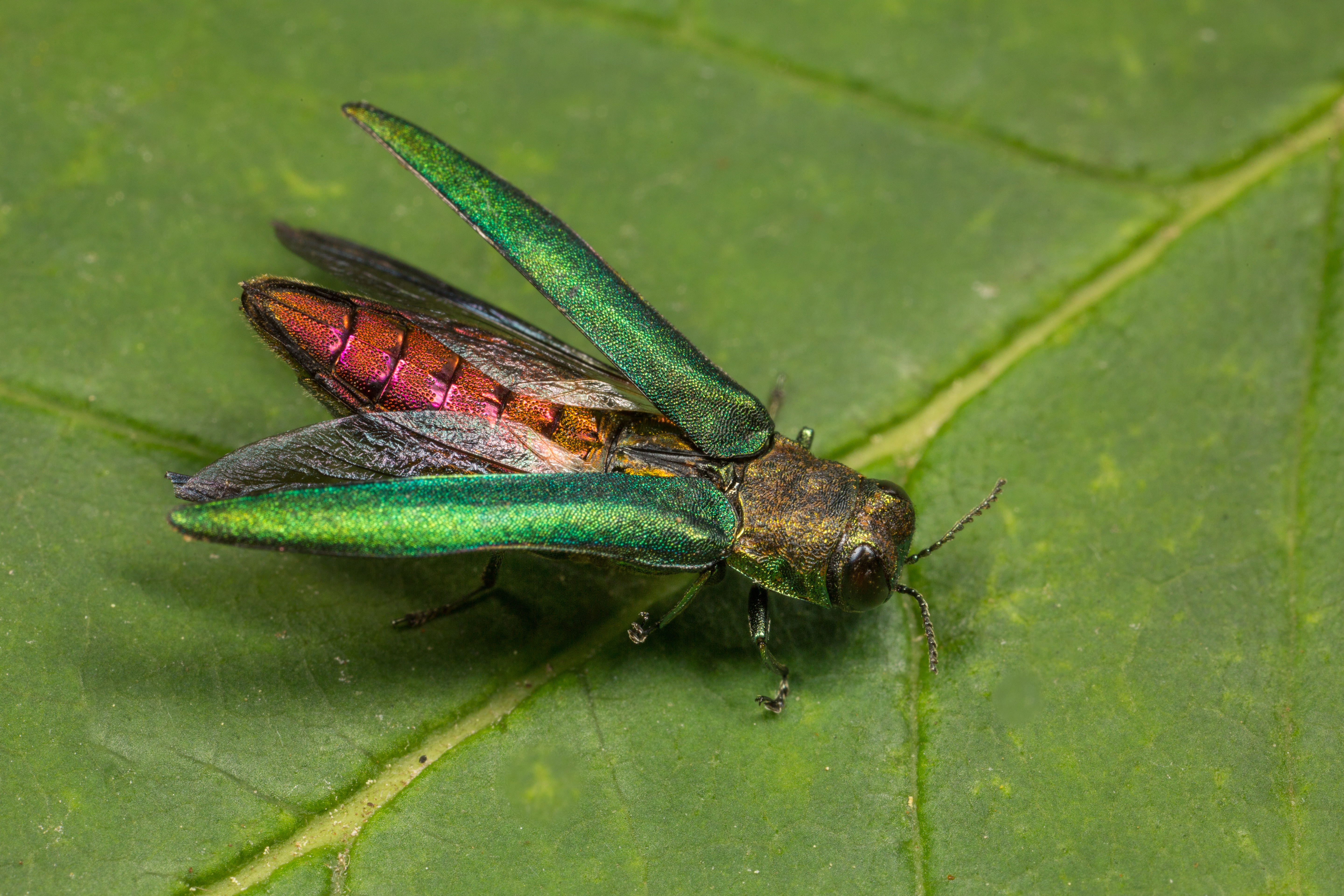
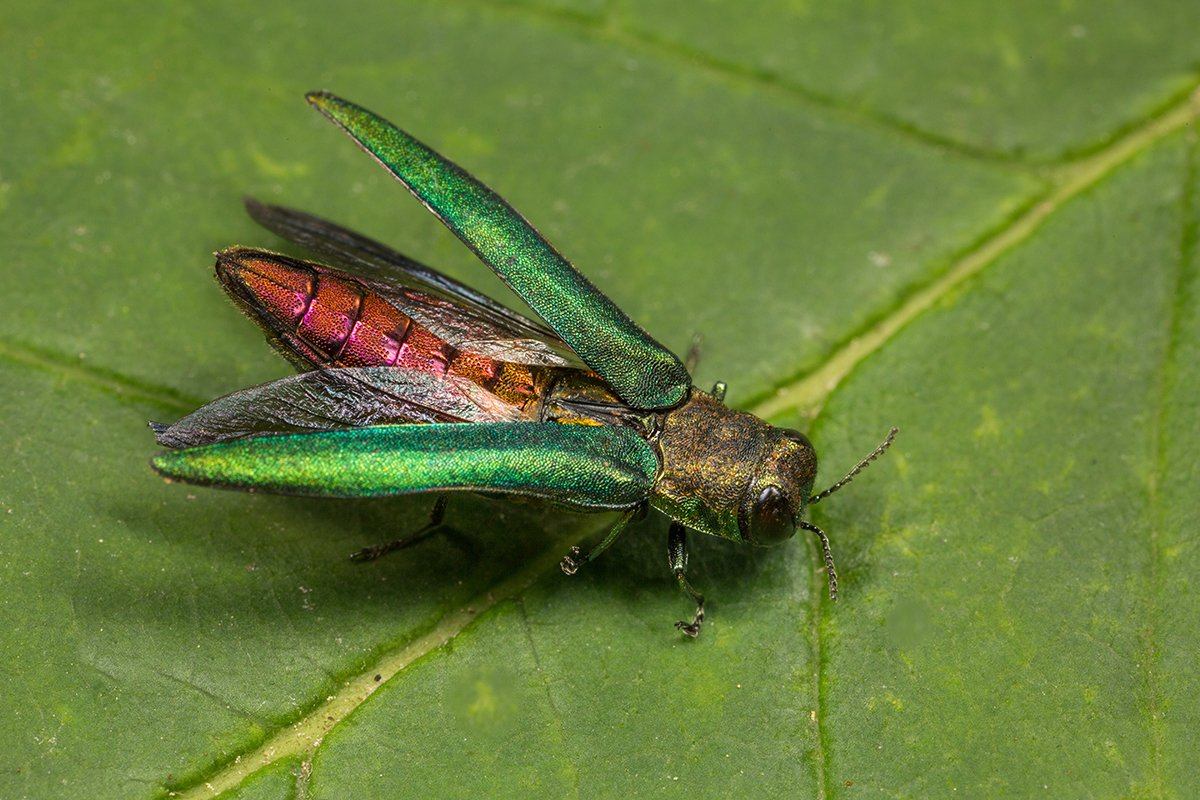
Northern Virginia ash trees are at risk of being eaten alive by emerald ash borers (EABs), tiny insects that feed on what lies beneath the trees’ bark.
EABs have been attacking D.C.-area trees for years, but in 2017, their attention turned to Virginia’s Shenandoah Valley, and although park officials have identified and individually treated historically significant ash trees—like the East Woods at Antietam National Battlefield—with an insecticide injection (a labor-intensive process that requires subsequent injections every few years), there’s still more to be done.
“Ash trees across all parts of our region are vulnerable to EAB,” Megan Nortrup, communications specialist for the National Park Service’s National Capital Region, said. “White ash was the 10th most common tree species in the region based on data collected between 2006 and 2009. Our region also has green ash and pumpkin ash.”
And while one would think that winter’s colder temperatures would keep EABs at bay, they’re still out there ravaging their way through the parks.
“[EABs are] highly destructive, killing ash trees within two to three years once infected. There is no known cure … [so] emerald ash borer is almost always fatal,” Nortrup continued.
EAB eggs are laid on the bark’s surface, which seems harmless. And although the larvae attract predators such as woodpeckers (who remove the trees’ bark to get to their bug buffet through a “blonding” process), the bark being stripped does not kill the tree. What does destroy it is the larvae tunneling through the sapwood.
“It is hard to know over the long term how [ash trees] will fare,” Nortrup said. “It is possible that natural resistance to EAB may develop (or already exist[s]) in trees in some areas, although none are currently known. It is also possible that native birds and insects or biological controls (natural enemies of an EAB that target only EAB) may knock back EAB populations enough to allow ash trees to survive and reproduce over the long term. We simply don’t know yet.”
But rather than waiting until it is too late, Nortrup recommends that everyone do their part to protect area ash trees by purchasing firewood where one intends to burn it, and not taking firewood or logs from home if travelling.