Dr. Gao Chen, MD, is a board-certified surgeon with the Mid-Atlantic Permanente Medical Group and is regional director of the robotic surgery program.
Have you been told you need surgery? You may want to ask your surgical team whether outpatient, robotic-assisted surgery is an option for you.
Robotic surgery is part of a growing field of minimally invasive surgery, which uses advanced technology and small incisions to perform complex procedures with greater precision. Compared with traditional open surgery, minimally invasive techniques can lead to less pain, lower risk of infection, and faster recovery times.
A bit of background: The outpatient Robotic Surgery Program at Kaiser Permanente launched in 2020 at our Largo Medical Center in Upper Marlboro, Md. In fact, Largo was the first civilian ambulatory surgery center in the Mid-Atlantic region to adopt this technology. (Traditionally, people needed to go to a hospital to get robotic surgery, and required overnight stays) Since 2020, more than 1,500 robotic procedures have been performed at Largo.
Due to Largo’s success and increasing demand, Kaiser Permanente started offering outpatient robotic surgery in Northern Virginia at our Tysons Corner Medical Center. This creates a network of state-of-the-art robotic ambulatory surgery centers, bringing minimally invasive procedures closer to home for thousands of patients.
Benefits of Robotic Surgery
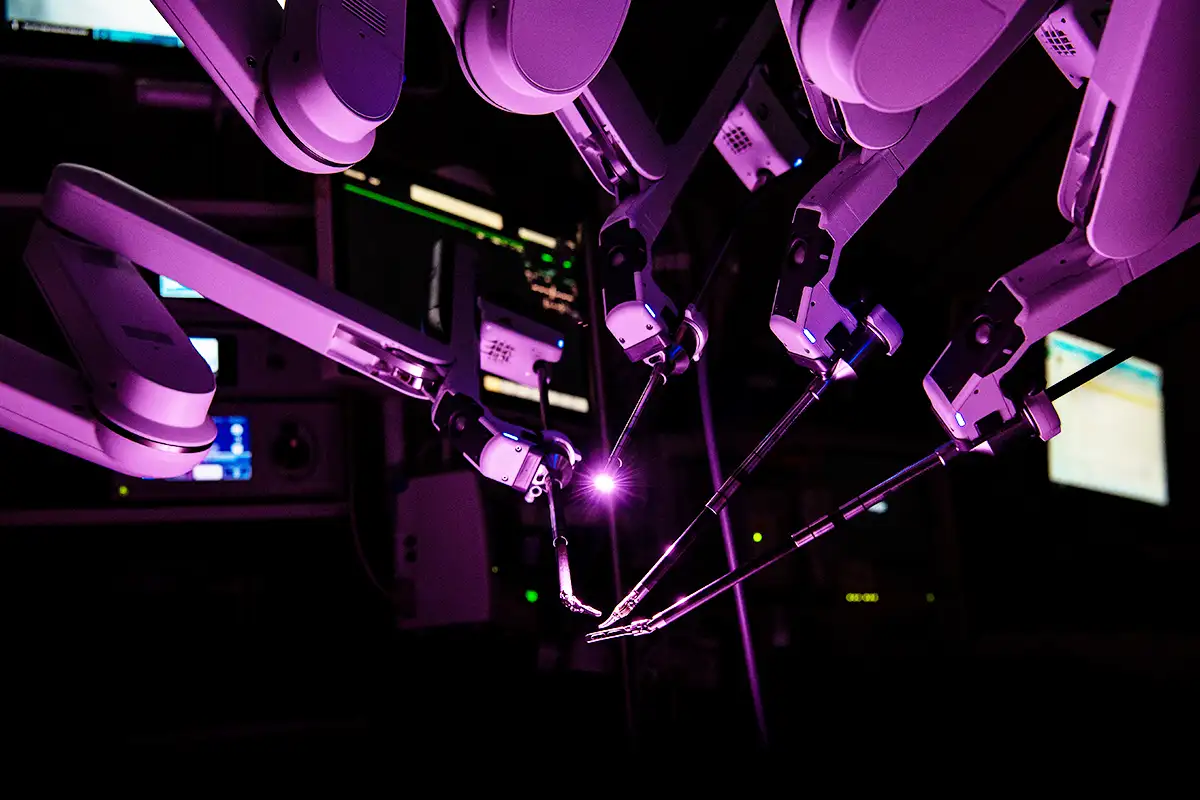
At Tysons Corner, surgeons are using the Intuitive da Vinci robotic system. While the robot does not move autonomously, this technology does enhance the surgeons’ abilities by offering:
- High-definition, 3D visualization
- Ten times magnification of the surgical field
- Four robotic arms that mimic the natural movements of the human hand, wrist, and fingers
- Exceptional precision for delicate or complex procedures
These capabilities allow surgeons to perform highly detailed operations through tiny incisions, in contrast to traditional open procedures that require larger cuts to accommodate the surgeon’s hand. Because of this, patients undergoing robotic surgery typically experience:
- Less bleeding
- Lower risk of infection
- Less postoperative pain
- Faster recovery times
- Reduced or eliminated need for narcotic pain medication
When robotic surgery is performed in an ambulatory setting, most patients go home the same day or the next morning, avoiding the disruption and cost of a hospital stay. They return to work, school, family responsibilities and daily activities far sooner than with traditional surgery in a hospital.
Types of Same-Day Procedures Performed Robotically
Many surgical procedures can be performed robotically (a skilled and highly trained surgeon is always at the controls). The procedures fall under different surgical specialties, including:
- General surgery: inguinal hernia repair, abdominal wall reconstruction for complex hernias, gallbladder surgery, reflux procedures and bariatric surgery.
- Urology: prostate removal for enlargement or cancer, bladder surgery, kidney surgery, treatment of urologic cancers.
- Benign gynecology: hysterectomy, fibroid removal, and ovary and fallopian tube removal.
- Gynecologic oncology: treatment of endometrial and other gynecologic cancers.
- Urogynecology: pelvic organ prolapse repair.
Among the minimally invasive innovative procedures offered at the Kaiser Permanente Tysons Corner Center:
- Sonata, an incisionless treatment for uterine fibroids, and can preserve fertility.
- Endoscopic spine surgery to treat spine pathology, reduces soft tissue trauma compared to traditional open procedures, preserving muscle, and minimizing blood loss.
Tysons Corner Medical Center, which offers a full spectrum of minimally invasive outpatient surgeries, represents a model for the next generation of ambulatory surgery centers. As the U.S. population continues to age, the demand for surgical care is rising. Over the past two decades, ambulatory surgery centers have expanded far more rapidly than hospitals, helping meet this growing need by providing safe, efficient outpatient care.
Adopting advanced technologies, including robotic surgery systems and other minimally invasive techniques, will play a critical role in this shift. These innovations allow complex procedures to be performed safely outside of traditional hospital settings, enabling patients to recover faster and return to their daily lives sooner.
By embracing these technologies, we are helping shape a future where more high-quality surgical care can be delivered conveniently in outpatient settings, meeting the evolving healthcare needs of an aging population.
Patients who are considering surgery are encouraged to talk with their care team about whether minimally invasive or robotic-assisted procedures may be right for them.
Feature image courtesy Mid-Atlantic Permanente Medical Group