Jessica Traylor, MD, is a board-certified OB-GYN with the Mid-Atlantic Permanente Medical Group. She sees patients at the Kaiser Permanente Silver Spring Medical Center.
Endometriosis is an often-painful condition that affects millions of women in the United States. In fact, more than 10 percent of women ages 15 to 44 are diagnosed with endometriosis.
March is Endometriosis Awareness Month. As a board-certified OB-GYN with specialized training as a minimally invasive gynecologic surgeon, I want women to be aware of the symptoms and to know that there are treatments that can help. If you are in pain, please reach out to your doctor so that together, you can develop a treatment plan that can improve your quality of life.
What Is Endometriosis?
Endometriosis is a chronic condition where tissue similar to the lining of the uterus, known as the endometrium, grows outside of the uterus. Endometriosis can be found near the reproductive organs, such as on the fallopian tubes, ovaries and the surface of the uterus. In rare cases, it can exist elsewhere in the body, such as the lungs or brain.
Anyone with a uterus can develop endometriosis, and it sometimes runs in families. People may be at increased risk of endometriosis if they have heavy menstrual bleeding that lasts more than seven days, or menstrual cycles that last fewer than 27 days.
We don’t know with certainty why some people develop endometriosis. There have been theories proposed, but none of them have been definitively proven. One theory is that menstrual tissue that is usually shed from the uterus during a period tracks backward through the fallopian tubes and onto the walls of the pelvis or the ovaries; this is called retrograde menstruation. Another theory is that the tissue spreads through an individual’s bloodstream to areas outside of the uterus.
What Are the Symptoms of Endometriosis?
Some patients don’t have any symptoms of endometriosis and are diagnosed when seeking treatment for another condition.
Some patients do have symptoms, which can be severe. Symptoms of endometriosis include:
- Painful menstrual cramps, particularly in the pelvic area. Pain may radiate to the back and shoot down the legs.
- Heavy periods
- Pain when urinating
- Pain when having a bowel movement
- Pain during or after sexual intercourse
- Intestinal issues during menstruation, such as diarrhea, constipation, bloating, or nausea
- Infertility
Usually, symptoms worsen during menstruation.
What Should I Do If I Think I Have Endometriosis?
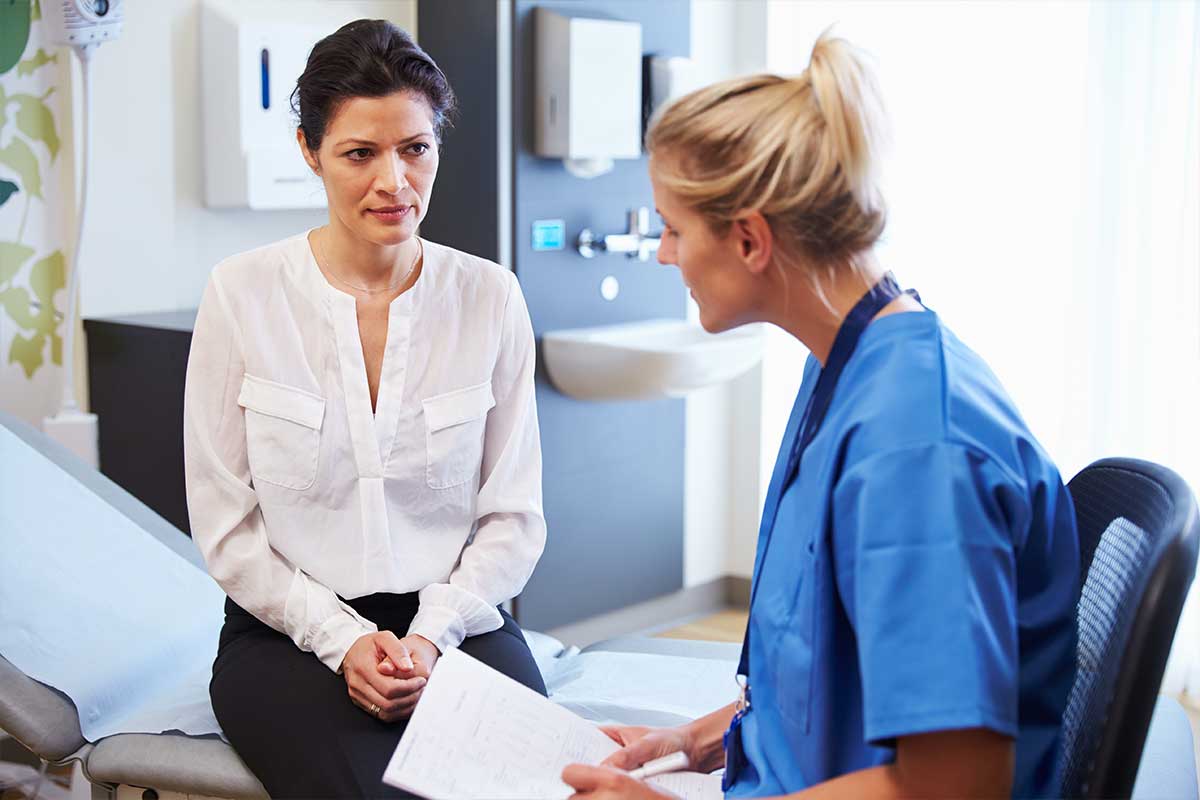
If you think you have endometriosis, reach out to your doctor. Be as detailed as possible when describing your symptoms; keeping a journal may be helpful. Your doctor will talk to you about your symptoms and medical history. The doctor will perform a pelvic exam and may have you do an ultrasound exam or a diagnostic laparoscopy procedure to look for endometriosis implants; endometriosis can be removed during this procedure, if found.
Currently, there is no definitive blood test for endometriosis.
Can People with Endometriosis Become Pregnant?
Many women with endometriosis are concerned about whether they can become pregnant in the future. Unfortunately, endometriosis is one of the leading causes of infertility. Fibrosis caused by endometriosis can create scar tissue that affects the fallopian tubes, making it harder to become pregnant naturally. Also, endometriosis can sometimes cause cysts in the ovaries. If endometriosis is treated surgically, the surgery can affect fertility.
However, I usually tell patients that treating their endometriosis doesn’t mean they cannot become pregnant in the future or have a successful pregnancy, but how they become pregnant may vary based on the severity of their disease and whether any part of their reproductive system is affected. Some patients with mild endometriosis will have little trouble becoming pregnant, but those in the advanced stage may need to consider in vitro fertilization, or IVF.
How Is Endometriosis Treated?
There is no cure, but there are non-surgical and surgical approaches that can help. Nonsurgical approaches include:
- Living a healthy lifestyle by exercising regularly and eating a healthy diet.
- Taking nonsteroidal anti-inflammatory drugs (NSAIDs) and acetaminophen in the days leading up to and during your period. These drugs, available over the counter, can help relieve pain.
- Using hormonal birth control, including birth control pills, injections and intrauterine devices.
- Endometriosis tissue responds to estrogen. Hormonal treatments reduce estrogen levels and lessen menstrual bleeding, and in doing so help to alleviate menstrual pain.
- Using gonadotropin-releasing hormone (GnRH) agonists, such as Lupron, to reduce the amount of estrogen in the body and block the menstrual cycle. These drugs create a temporary menopause-like state.
Sometimes, surgery is necessary to remove as much endometriosis as possible, with a goal of preserving the uterus and ovaries. During a laparoscopy, we make small cuts on the abdomen and look inside the abdomen and pelvis for endometriosis. We remove what we find.
Recovery can take a few weeks, and hormonal treatment is usually needed too. Many patients say their quality of life is much better after this minimally invasive procedure. They experience less painful periods and may have more success conceiving.
How Can Endometriosis Affect Mental Health?
Many patients with endometriosis benefit from mental health support. The condition can be challenging to navigate and take a significant emotional toll, so I encourage patients to find others to talk with who have shared experiences. There are support groups geared toward people with endometriosis. Ask your doctor for help if you need assistance finding a support group or mental health resources.
Bottom line: Endometriosis can be a challenging condition, but there are nonsurgical and surgical treatment approaches that can help. Being open and honest with your doctor about your symptoms can help your medical team develop a treatment plan that is right for you. Many patients do have a better quality of life after treatment – and are able to have children, so don’t hesitate to reach out for help.
Feature image, stock.adobe.com