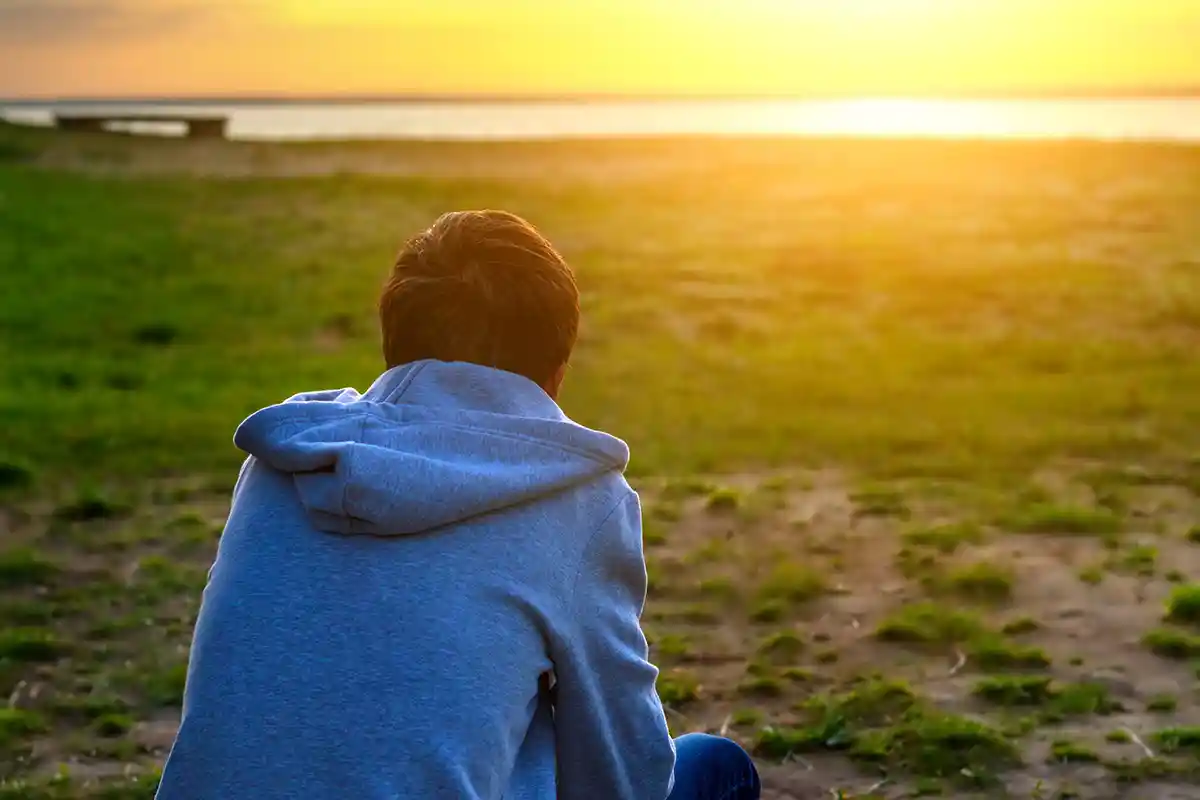
The days are getting even shorter, and for a lot of people that means seasonal affective disorder or SAD. One Northern Virginia psychiatrist wants parents to know the signs of SAD in children who may be too young to realize yet that it’s even a thing.
Dr. David Clayton, a child, adolescent and adult psychiatrist, says the first thing to look for is a lack of energy. “Is there a change in energy? They’re tired at night? They’re hard to wake up in the morning, or harder?”
He says the most challenging time for seasonal affective disorder, especially among kids, is coming up. Most school systems in Northern Virginia finish the second quarter of the academic year in January, shortly after the winter break. Short, cold days are the norm; the fun of the holiday season is over, and a lot of final exams and projects are due.
“Northern Virginia, in general, is kind of a high-achieving, high-expectations kind of place. And I think there’s a lot of pressure on kids, maybe from themselves, from their peers, and sometimes from parents, to do well academically,” Clayton says. “It’s a lot for those kids, and that’s a particularly difficult time … even if you don’t have seasonal affective disorder. So throw in the possibility of that, right?”
Problems Kids Experience with SAD
Seasonal affective disorder can cause a lot of problems for schoolkids and parents for a few reasons: It usually comes out as depression and irritability, Clayton says, and that poses problems in the classroom and at home.
Depression affects cognitive function and working memory, and that makes it even more challenging to get schoolwork done.
“If I’m not on my game because of these seasonal things, it exacerbates that,” Clayton says.
And irritability can make it more difficult for parents and children to communicate, which makes it more difficult to solve problems.
“[You] want to take care of this kid,” Clayton says, “but it’s hard to take care of somebody who’s exquisitely irritable.”
It can be frustrating as a parent to feel that “I’ve got to kind of fight with you about getting things done,” he adds.
How to Fight SAD
The main way to fight seasonal affective disorder is with bright light. While it may get less comfortable to go outside as the weather gets colder, Clayton calls it “a wonderful thing.” In many European countries, children go outside for extended periods of time year-round, and the combination of sunlight and exercise “really does help.”
There are indoor alternatives that work well. “There are bright lights that people will use, and there’s pretty good evidence that that’s a helpful thing. With LED technology, they’re not as expensive; they’re not as hard to get,” he says.
There’s a misconception that you need to sit with the light in your eyes to get the benefits, Clayton says. It’s uncomfortable, and it’s not necessary.
“We think of our eyes being our light-sensitive organ, but our skin is a much bigger light-sensitive organ,” Clayton says. “I can sit inside [when] the sun is coming in and be exposed to bright light, or have one of these things and, over breakfast, having it shine on me obliquely.”
He says anywhere from 15 to 30 minutes is an “effective intervention” for a lot of people.
Check with your doctor about whether your child is getting enough vitamin D, which is produced from the reaction of ultraviolet light on the skin. There’s a very good chance your child’s level will be low. “February, March, when I look at the labs coming in, there’s nobody who’s got a normal vitamin D,” Clayton says. “They are all low.”
Feature image by Sabphoto/stock.adobe.com
For more wellness news, subscribe to Northern Virginia Magazine’s Wellness newsletter.