Dr. Patricia Lucey is a board-certified dermatologist at the Inova Melanoma and Skin Cancer Center. She has a special interest in the diagnosis and management of melanoma and other skin cancers.
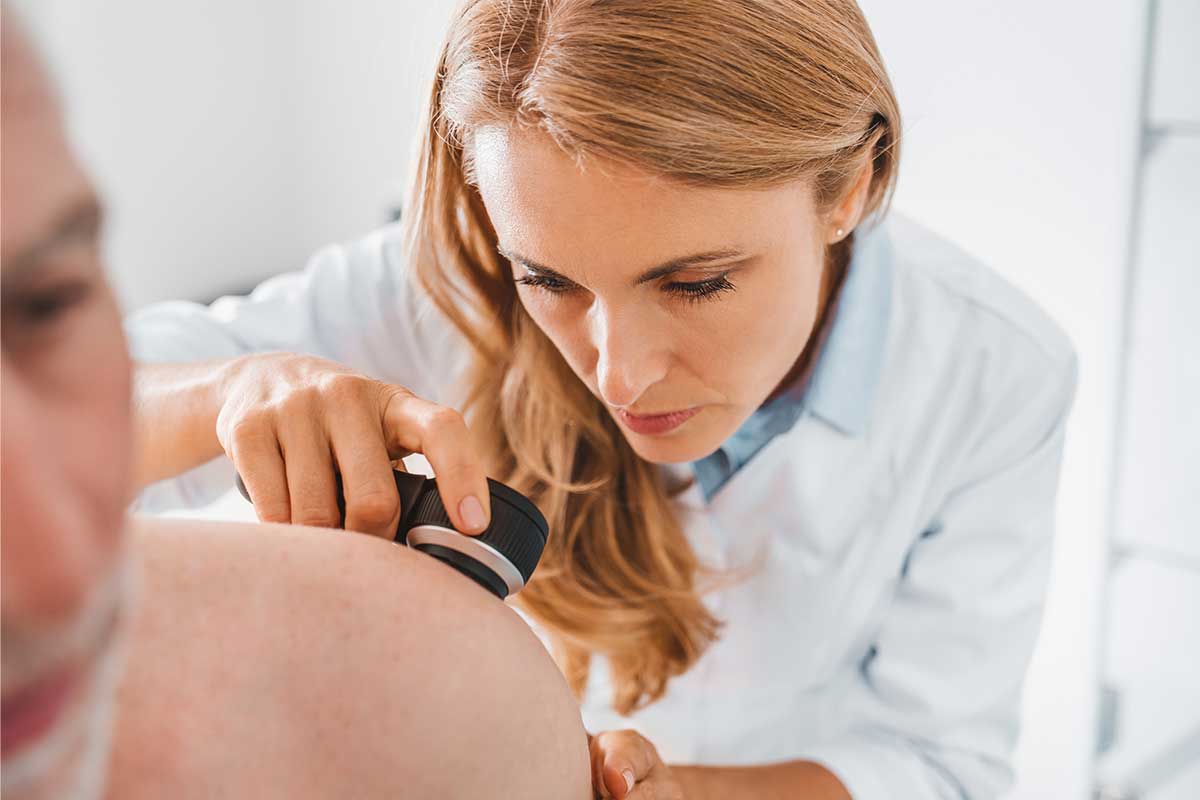
Skin cancer is the most prevalent form of cancer in the United States — a fact that can sound ominous. But another fact we know about skin cancer is encouraging: It is usually able to be visualized by a simple skin examination and highly curable if caught early. One of the best things we can do to prevent and treat skin cancer is simply screen more patients.
This responsibility falls on both patients and their doctors. Patients need to take skin cancer seriously (there are a surprising number who don’t) and make sure they get screened. And doctors need to take every opportunity to look at a patient’s skin, no matter the reason for the visit.
Are Skin Cancers Easily Treatable and Less Dangerous?
Because skin cancer is so common (One in five Americans will be diagnosed with it,), many patients know someone who was diagnosed with it and subsequently had it removed with a simple surgery. That does happen, especially when the cancer is caught early, but that’s not what happens in every case. Many skin cancer treatments leave patients with permanent scarring, and health care costs for treatment can be high. Furthermore, while the majority of skin cancers are basal cell carcinomas and squamous cell carcinomas that are easily treated when caught early, melanomas are the much more serious type of skin cancer, which if caught late, can be deadly. And while melanoma is the rarest form of skin cancer, it is also the most lethal. Don’t leave it to chance — early detection and treatment are how you avoid the more dire outcomes.
Are People of Color Immune?
It’s true that having more melanin (darker skin) means your skin won’t burn as easily. And if you have more melanin, you usually have fewer moles. That does reduce skin cancer risk, but it doesn’t eliminate the risk.
Unfortunately, those who believe they are protected from skin cancer don’t use sunscreen nor do they get screened as frequently. So often when a doctor detects skin cancer in a person of color, the cancer often is more advanced — portending a worse prognosis.
As physicians, we need to do a better job of fighting the misconception that people of certain ethnicities or skin colors are immune to skin cancer. Skin cancer does not discriminate. In fact, reggae singer Bob Marley, actually died of a melanoma, which was on his pinky toe, at the young age of 36. It spread to his brain and lungs.
Are Screenings Necessary if You Don’t Think You Have Concerning Spots?
A large segment of the population is at risk of skin cancer.. As a starting point, I recommend any Caucasian over the age of 50 get screened. But anyone who has a family or personal history of melanoma, had sunburns growing up, used tanning beds, has over 100 moles, or has a fair complexion, has an increased risk for skin cancer. If you fall into one of these categories, seeing a dermatologist annually for a skin check is a good idea.
Finding and treating skin cancer early is key, as doctors can often address it with a simple excision instead of chemotherapy, immunotherapy or more invasive surgery. Regular screenings by a certified dermatologist for those who are at high risk for skin cancer are definitely worth it.
Because skin cancer is so common, and many people hold misconceptions about it, it’s important to remember the bottom line: Screening is important and easy. Everyone should be afforded the opportunity to have a full-body scan for skin cancer.
Inova Saville Cancer Screening & Prevention Center is making skin cancer screening easier, which encourages more screenings. More screenings mean we can save more lives. This summer, before you hit the beaches and pools, make it part of your plan – schedule an appointment to get your skin checked out.
Feature image, InsideCreativeHouse/stock.adobe.com
For more expert advice, subscribe to Northern Virginia Magazine’s Health newsletter.