Guest Contributor Dr. Rosina Shrestha is a board-certified internal medicine physician with the Mid-Atlantic Permanente Medical Group. She sees patients at the Kaiser Permanente White Marsh Medical Center.
As we age, we hear about different screening tests we need to help prevent disease or catch diseases in their earliest stages. You may be familiar with mammograms to screen for breast cancer, colonoscopies to screen for colon cancer, and blood tests to check cholesterol and glucose levels.
Another important test is the dual-energy X-ray absorptiometry scan, a test that uses two X-ray beams to check bone mineral density in the spine and hip. Known as a DXA or DEXA scan, this bone density test is widely used to help diagnose osteoporosis in post-menopausal women but can be used to diagnose this condition in anyone at risk.
Here are some commonly asked questions and answers about the DXA/DEXA test.
How is a DEXA scan done? Does it hurt?
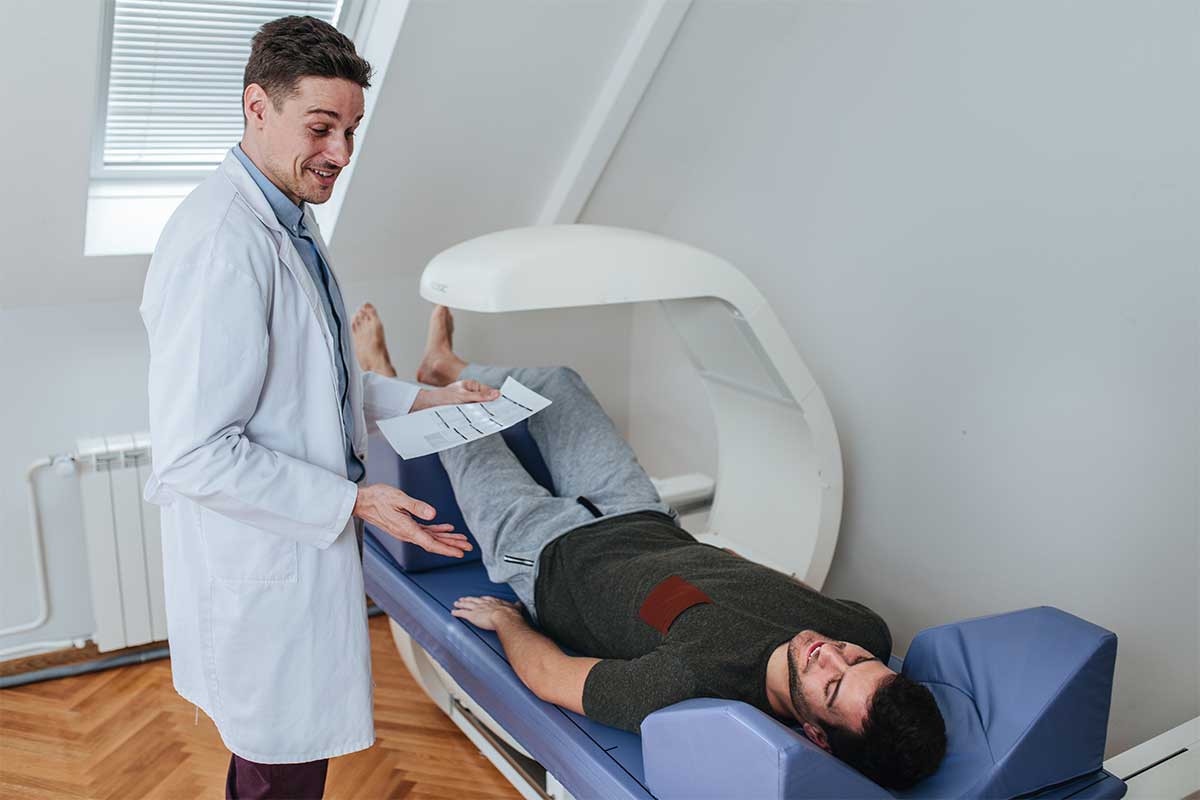
When you undergo a bone density test, you lie flat on a padded table. You may be asked to rest your legs on a padded platform. The machine scans your bones using beams and measures the amount of radiation your bones absorb. Dense, healthy bones allow less of the X-ray beam to pass through them.
The test is painless. Many patients wonder if they will lie in an enclosed tube, like when undergoing an MRI. The good news is that patients are not enclosed in a machine during a DEXA scan. Patients will, however, be advised to be still. The test takes about 20 to 30 minutes.
Who needs a DEXA test?
A DEXA test helps us scan for bone loss and diagnose osteoporosis and osteopenia. Having osteoporosis means your bones are thin and brittle, with lots of holes inside of them; the bones can break easily. People with osteoporosis are at increased risk of fractures and decreased mobility. Osteopenia means your bone density is below normal, but not in the range of osteoporosis. Though women are far more likely to develop osteoporosis than men, anyone at high risk of osteoporosis should talk to a doctor about whether a bone density scan is needed.
People at high risk of osteoporosis include the following:
- Women who are post-menopausal, especially those who are age 65 and older;
- People who have a history of smoking and/or excessive alcohol consumption;
- People with a personal history of a fragility fracture after age 50;
- Those with a parental history of hip fracture;
- People with low body mass index;
- Patients who have used corticosteroids for long time periods;
- Women who have undergone hormonal therapy to treat breast cancer, as well as men who have undergone hormone therapy for prostate cancer.
A bone density test may be recommended for those being treated for osteoporosis to see how well treatment is working.
Will getting a DEXA scan expose me to a lot of radiation?
No. While DEXA scans do use radiation, the amount is extremely low – less than a typical X-ray. That said, pregnant women should not have DEXA scans.
Do I need to prepare for a DEXA scan?
Depending on where you go for a bone density scan, you may be asked to wear a medical gown or you may be allowed to wear your own clothes. Do not wear clothing with metal, including zippers, snaps, and belts. Do not take calcium supplements within 24 hours of your scan. If you have had a DEXA scan before, you should ideally return to the same place for any follow-up DEXA scans because different machines may report slightly different results.
What do the results mean?
DEXA results are reported using T-scores and Z-scores. A T-score is a measure of your bone density compared with a healthy 30-year-old. T-scores may be reported as positive or negative numbers. A negative number means you have lower bone density compared with the average 30-year-old. A positive number means your bones are stronger than the average 30-year-old.
Here’s the range that’s monitored:
- A T-score of -2.5 or less generally means a diagnosis of osteoporosis.
- A T-score between -1 and -2.5 is indicative of osteopenia (below normal bone density but not in the range of osteoporosis).
- A normal, healthy T score is -1 or higher. The lower your T-score, the greater your risk of breaking a bone.
A Z-score (different from a T-score) is a comparison of your bone density to others of your same age, gender and race. A score of -2 or greater is considered a healthy Z-score.
What if I have osteoporosis or osteopenia?
There are treatments and lifestyle changes that can help patients who are diagnosed with osteoporosis or osteopenia. Talk to your doctor about increasing your calcium levels through foods and supplements. Getting enough vitamin D is also important because it helps your body absorb calcium. Weight-bearing exercises, such as walking, can improve bones, as can strength-training exercises, such as using resistance bands or weights. Kaiser Permanente offers members strength and balance as well as yoga classes.
If you smoke, stop. Limit alcohol.
Your doctor may also prescribe medications to treat osteoporosis, such as bisphosphonates. If you are diagnosed with osteoporosis, your doctor may ask you to have a repeat bone density scan in two to three years to see if treatment is working.
Osteoporosis is a serious condition that can lead to fractures and decreased mobility. In the vast majority of cases, patients don’t have symptoms until they break a bone. That is why getting a bone density scan is important to determining whether you have osteoporosis. Though osteoporosis isn’t curable, being diagnosed and starting treatment early can slow the progression of this disease.
Feature image courtesy LStockStudio/stock.adobe.com
For more stories like this, subscribe to Northern Virginia Magazine’s Health newsletter.