As doctors, we are always looking for better, more effective ways to take care of our patients. At the Mid-Atlantic Permanente Medical Group, we have experienced doctors who stay on top of research so we can use the best that medicine has to offer to diagnose and treat patients. We carefully study and participate in the development of innovations to ensure their safety. Whether administering a new vaccine to thwart a novel virus, implanting a new device to treat a heart condition, or trying a new cancer treatment, we always embrace medical innovation and the intersection of technology and healthcare.
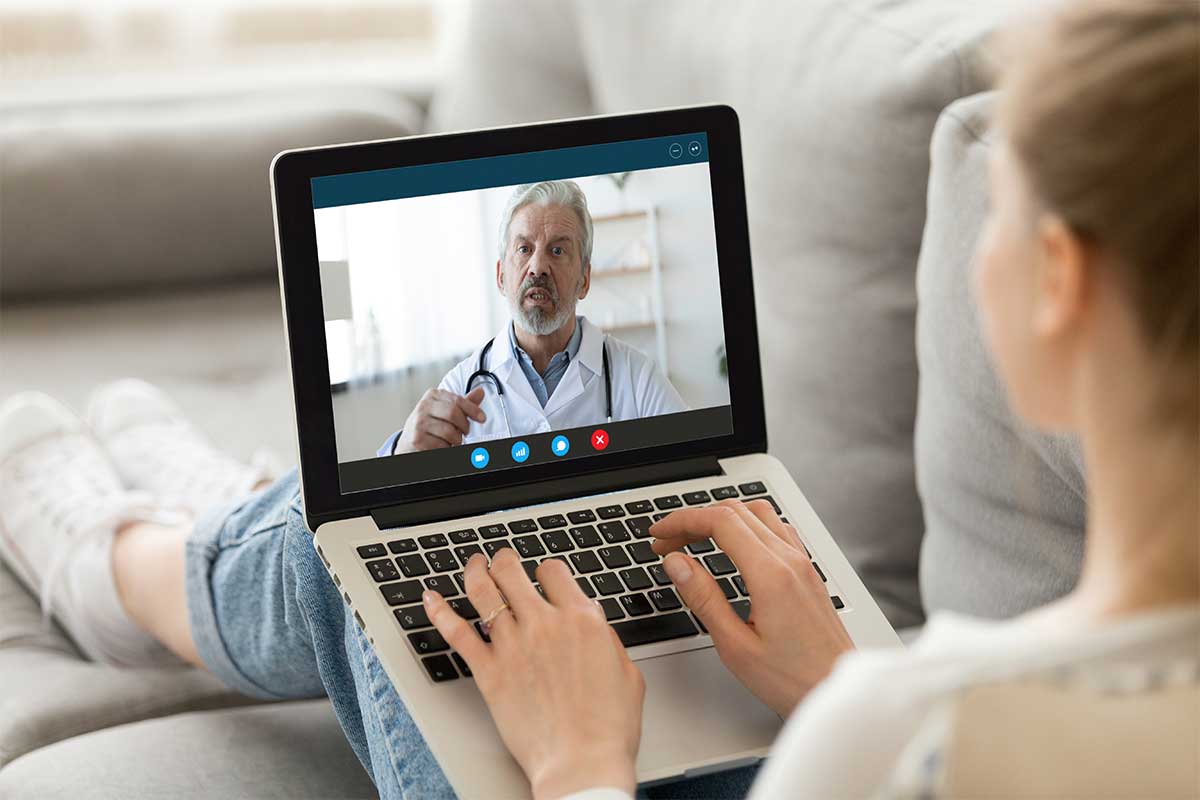
Over the past few years, and particularly since the COVID-19 pandemic, we have embraced remote monitoring programs. Through these initiatives, our patient’s healthcare team can keep tabs on a patient’s essential numbers – weight, blood pressure, temperature, oxygen levels, and blood glucose readings – via technology, without our patient needing to come into the office or even make a phone call. Kaiser Permanente members with certain medical conditions, including COVID-19, hypertension, and congestive heart failure, have been participating in remote monitoring programs that combine state-of-the-art technology with medical expertise and human connection.
And the outcomes are fantastic.
Patients enrolled in these programs receive technology that electronically transmits readings to their health record in real time. Members of the patient’s healthcare team review that data. If a number seems out of range, a doctor or nurse will reach out to the patient to discuss next steps.
There are many benefits to remote monitoring:
- Convenience: Patients who participate in remote monitoring programs make fewer trips to the doctor’s office for blood pressure or blood glucose reading check-ins.
- Data accuracy: With technology doing the work, there is less margin for human error in data reporting.
- Patient engagement: Patients who participate in remote monitoring programs are more aware of progress toward goals and are more likely to make healthy choices and sticking with treatment programs.
- Early detection/Intervention: Doctors may pick up on a health problem in its earliest stages, when treatments are usually more likely to be successful.
- Helps keep patients where they are most comfortable – at home: Previously, patients with certain conditions had to stay in the hospital so we could monitor certain numbers, such as oxygen saturation levels. Now, in some cases, we can use remote monitoring to keep our eyes on a patient’s numbers from the comfort of their home.
Remote Monitoring for COVID-19
During the height of the COVID-19 pandemic, we gave portable pulse oximeter devices and a thermometer to patients who met eligibility criteria. From the comfort of home, patients used a web browser on a computer or smartphone to input their oxygen saturation percentage, heart rate, temperature readings, and severity of cough and shortness of breath. (Patients received twice daily text-messages to remind them to input their data.) If a patient entered an oxygen saturation percentage lower than a certain threshold, the patient would receive an alert to call the healthcare team. Simultaneously, an alert was sent to the healthcare team, who would proactively reach out to the patient to check in.
Patients who participated in this remote monitoring program had fewer urgent care visits, ER visits and hospital admissions compared with those who were not enrolled.
We love to tell the story of one patient who tested positive for COVID-19 who was so grateful for remote monitoring. After her positive test, we gave her a remote pulse oximeter. Although she felt okay, her healthcare team was able to detect that her oxygen saturation was low. We reached out to her and told her to go to urgent care. When she arrived, her oxygen saturation had fallen even more. She was admitted to the hospital. After she was discharged a week later, she said, “I just had to let you know that you saved my life. I thought I was fine … It turned out I was really not okay at all. Your intervention from afar made … a difference.”
Remote Monitoring in Congestive Heart Failure, Diabetes, and High Blood Pressure
Usually, managing chronic health conditions such as congestive heart failure, chronic obstructive pulmonary disease (COPD), asthma exacerbations, diabetes and high blood pressure means many trips to see the doctor. Remote monitoring dramatically cuts down on all those visits. With remote monitoring, patients get the help they need faster. Medications can be adjusted without a patient needing to come into the office. Recognizing a problem quickly lets us take action that can often prevent a patient from needing to go to urgent care or the emergency room, too.
Patients receive technology-enabled blood pressure cuffs, scales, pulse oximeters (depending on their health condition) that sync up with tablets and smartphones. Readings are accessible by the patient’s healthcare team, who follows up with the patient if a number is concerning.
In the near future, we intend to send some patients with diabetes a Bluetooth-enabled glucometer that synchs with a smartphone. Blood sugar is measured every five minutes. The healthcare team will review the data and contact the patient if the blood sugar reading is dangerously low or high. Medications can be adjusted, and lifestyle changes recommended. Effectively managing blood sugar helps prevent many diabetic complications, including nerve damage, kidney damage, and heart disease.
Remote patient monitoring can be lifesaving. If you have a chronic health condition such as diabetes, hypertension, congestive heart failure, or COPD, reach out to your physician to discuss whether remote monitoring is a good option for you.
Feature image, fizkes/stock.adobe.com
For more stories like this, subscribe to our Health newsletter.