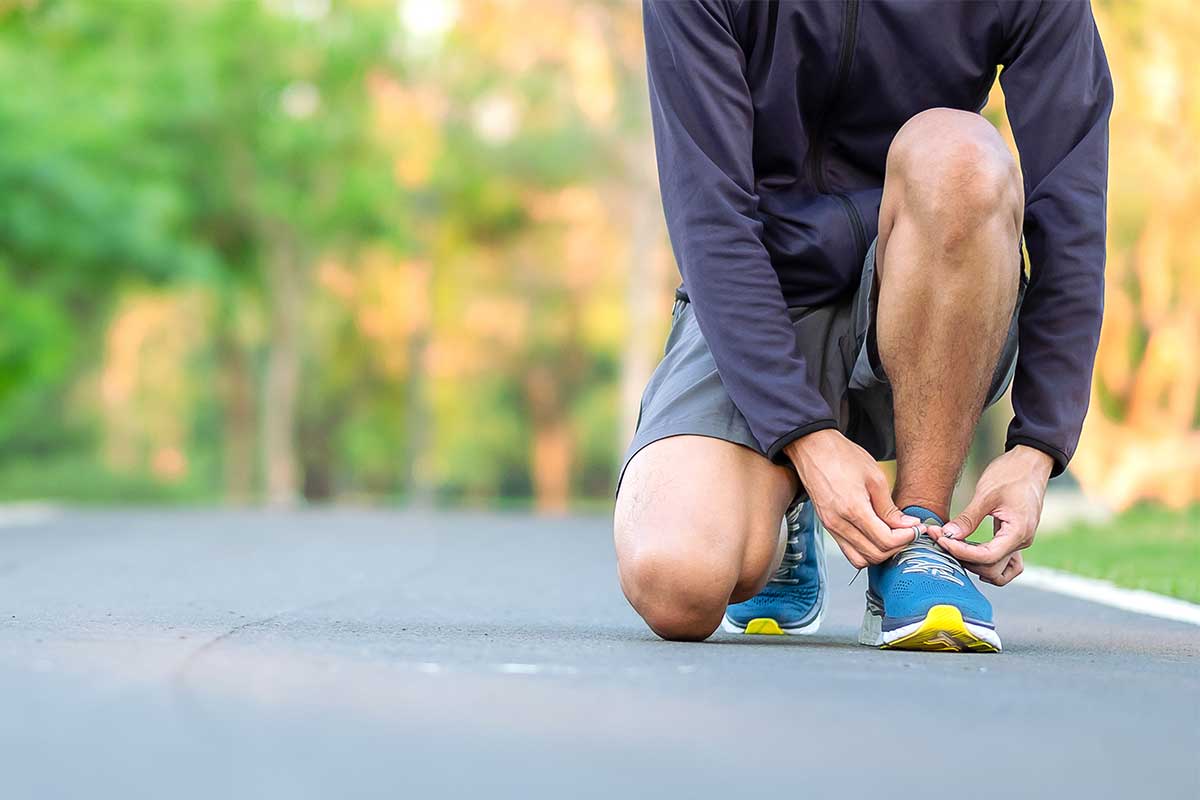
So you’ve decided to take up running. As more Americans are vaccinated against COVID-19, many are excited to re-join running groups and take advantage of the opportunity to exercise more freely outdoors. With training season for fall marathons and races upon us, now is the perfect time to incorporate running into your fitness routine.
Studies show that running for just 5 to 10 minutes every day can reduce your risk of heart disease and death from heart attack or stroke, lower your risk for cancer and neurological diseases like Alzheimer’s and Parkinson’s, and boost your mood. While running offers a host of health benefits, doing so in the wrong footwear can also cause a litany of painful foot problems like blisters, plantar fasciitis, and bunions.
As you prepare to join the approximately 47 million Americans who run or jog on a regular basis, don’t overlook the importance of finding a proper pair of running shoes. Your feet are the foundation for your entire body, and wearing the wrong shoe can cause serious injury and reduce overall athletic performance. Look out for these signs that your running shoes might not be the best fit:
- Darkening of nails
- Pressure sores
- Wounds
- Abrasions
- Blisters
- Arch pain
- Lower back pain
Generally, a good pair of running shoes should have strong stability to support your foot muscles during movement and cushioning to protect against heavy landings. Try these three tests to find a quality pair of running shoes that will keep your feet safe while you enjoy the mental and physical benefits of running:
- Bend Test
The stiff structure in middle part of a shoe’s sole, also known as the shank, is crucial for providing foot support and stability. Grab both ends of your shoe and try to bend it in the middle of the shoe (as if you’re trying to fold it in half). You should be unable to bend the shoe at the mid-point. If you are able to bend the shoe, or you find it to be very flexible, it may not provide adequate support for the arches your feet.
- Twist Test
Most people don’t realize that the human foot not only bends up and down, but also twists side to side. This side-to-side movement, also known as pronation and supination, determines how well your feet are absorbing shock and how evenly you are pushing off the ground. If your foot rolls too far inward or outward, you could be wasting energy and risking injury. Depending on things like your stride, arch and pronation, your feet will require different levels of support.
To determine the stability and balance of your shoe, try the twist test by wringing your shoe out like a dish rag. Similar to the bend test, you’ll know if your shoe has adequate levels of support if it does not show much flexibility.
- Pinch Test
The back part of your shoe should keep your heel securely in place as you run. Pinch the back of the shoe where the heel sits. The more difficult it is to squeeze this area of the shoe, the more securely it will hold your foot in place.
Finally, consider whether you shoes are worn out and simply need to be replaced. Check the soles to see if there is still “tread” and examine whether the inner and outer sides of the shoes worn out. Finally, examine the inner liner for any holes. If your shoes are a few years old or have any of these problems, it may be time for new shoes.
Most important: Trust your body. If you experience persistent foot or ankle pain, consider seeing your foot and ankle doctor, or podiatrist, to help keep your feet supported and healthy for the road ahead. Many foot and ankle problems can be treated from home via phone, video, or secure messaging—ask your doctor if you can schedule a virtual visit.
Timothy Swartz, DPM, is a podiatric surgeon with the Mid-Atlantic Permanente Medical Group. He sees patients at the Kaiser Permanente Kensington Medical Center.
Feature image, © Jo Panuwat D
Fore more stories like this, subscribe to our Health newsletter.