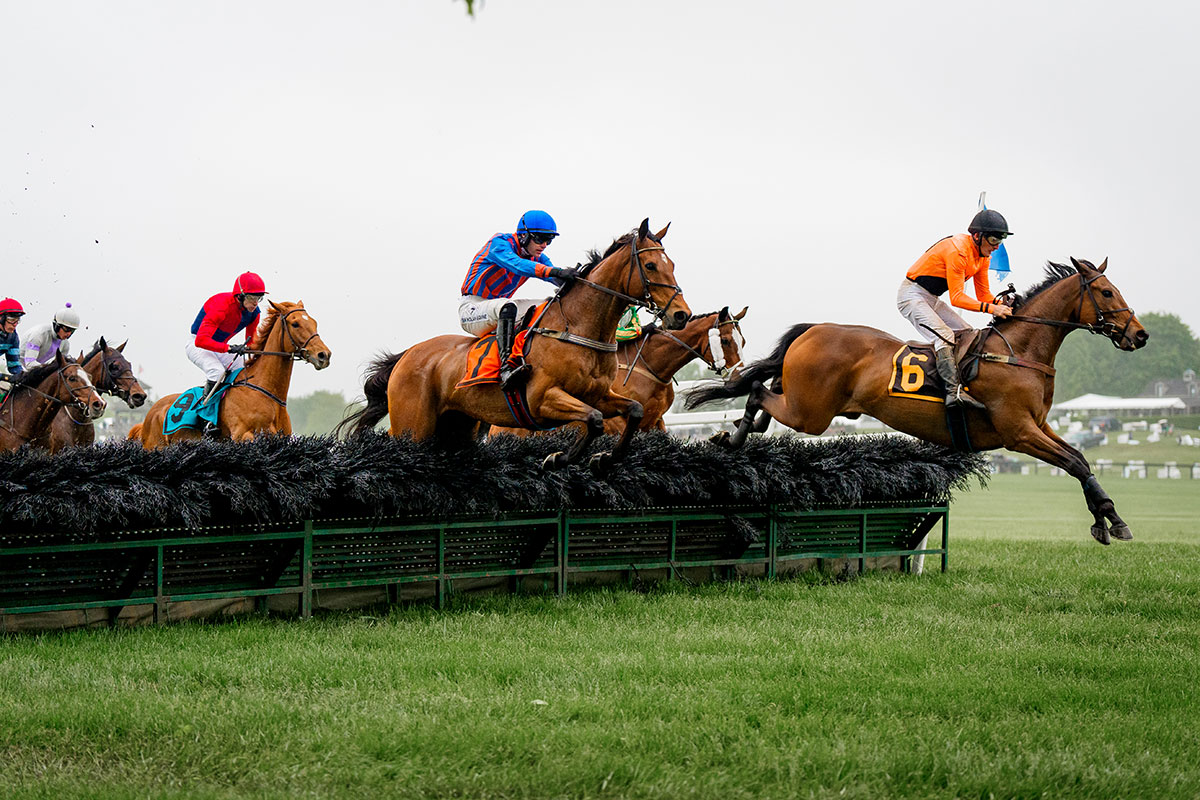
On Saturday, May 3, horses will take to the course for the 100th running of the prestigious Virginia Gold Cup. The event will be held at Great Meadow in The Plains, which encompasses more than 350 acres and is home to steeplechase races, polo competitions, show jumping, and cultural fairs.
A Commonwealth Tradition
The popularity of fox hunting and steeplechase riding speaks to the fact that both recreation and community are important components of Virginia horse country culture.
Today, the ancient sport of fox hunting is “a bloodless sport,” says Alfred Griffin, co-chair and director of racing for the Virginia Gold Cup and president of the National Steeplechase Association. “Fox hunting is about being able to stay on your horse while keeping up with the hounds.”
Fox hunters follow a pack of hounds as they track the scent of a fox, explains Griffin. “Riders try to follow on horseback over fields and streams and fences across the most beautiful countryside anywhere in America. … The sport of steeplechasing is challenging other foxhunters for the fastest and best jumping horse in the hunt field.”
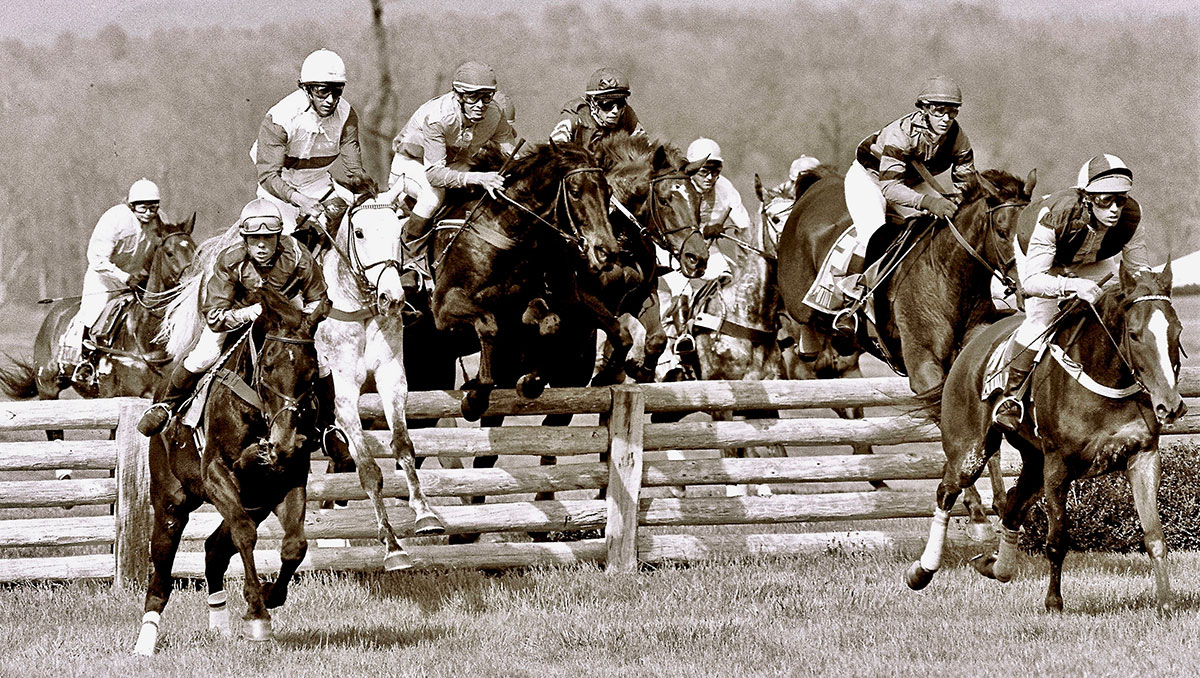
After one rigorous hunting season in 1922, eight sportsmen wanted to test the athleticism of their horses. They designed a 4-mile race between natural walls and fences where the winner would earn bragging rights and a $1,000 trophy.
Two years later, the race moved to Broadview Farm. The Virginia Gold Cup grew in popularity, and by the time the event moved to Great Meadow in 1985, thousands of spectators were gathering to watch the races, wager bets, and compete in the hat and tailgate contests. Today, there’s even a race among professionally trained (and irresistibly cute) Jack Russell terriers.
This year, the total purse is $430,000 divided among seven races. Trainers and jockeys from around the country and even Europe enter the races. Griffin says the Gold Cup has evolved from a competition between the fastest hunt horses to professional riders who run flat tracks from Saratoga to Belmont. Steeplechasing also offers a second career to older, master horses after they’ve retired from the Triple Crown.
Charting a New Course
Back in 1978, 10 thoroughbreds thundered across the 4-mile Gold Cup racecourse, leaping over 24 jumps. Among the horses was Navy Davy, a gray gelding ridden by jockey Don Yovanovich.
“My horse ran brilliantly, and I set off the pace,” Yovanovich remembers. “When we went across the backside, I made my move to close the gap. By the time I turned for home, I was gone, and won by 19 lengths.” It was the first of several Gold Cup victories for Yovanovich.
Yovanovich is known for his training and racing prowess as well as for serving as the Gold Cup’s race director for 32 years. During that time, he organized race cards, tracked stats, collaborated with stewards (judges), and made sure the meets ran on time.
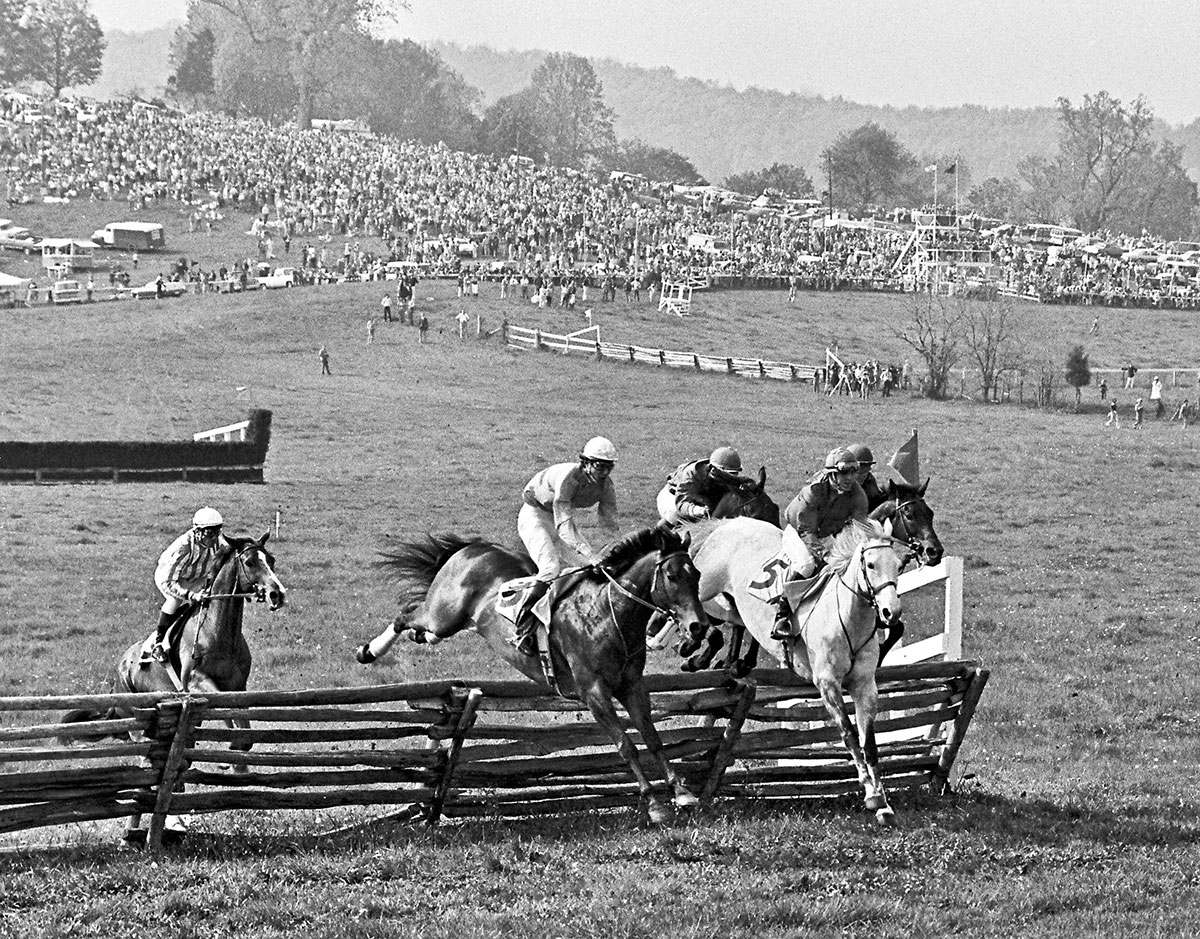
He also operated as Arthur “Nick” Arundel’s “right arm.” Arundel was a news executive who believed the Gold Cup needed a new home, and identified a large swath of land slated to become a high-density development. “It was Mr. Arundel’s vision to create another course far superior to Broadview,” Yovanovich says. “He ended up buying 500 acres with a lovely vista on a big piece of wetlands, where Great Meadow is today.”
As the course’s designer, Yovanovich thought the race should remain 4 miles long with 24 jumps. He told Arundel it was “a monotonous grind that the horses go through,” and “that’s what makes Gold Cup unique.”
Four years later, with drainage and excavation complete, lush grass grew atop the oval course with excellent sightlines from every viewing space. The International Gold Cup was held in the fall of 1984, and that following spring was the inaugural running of the Virginia Gold Cup at Great Meadow.
Yovanovich retired from racing at age 59 and was inducted into the Virginia Steeplechase Hall of Fame in 2010. He’s still training horses and is president of the Virginia Point to Point Foundation.
Historic Horses and Famous Friends
The Gold Cup has seen its fair share of rivalries over the years, including among philanthropist Paul Mellon, Virginia Sen. John Warner, and horse breeder Joe Rogers. Throughout the 1970s and ’80s, the men’s three horses took turns winning the Gold Cup.
Yovanovich remembers seeing two avid horsewomen occasionally in attendance: former first lady Jacqueline Kennedy Onassis, who owned a Middleburg estate, and Warner’s wife, actress Elizabeth Taylor. Political dignitaries, famed sportscasters, and actor Robert Duvall have all attended races over the years as well.
Some standout horses have gained celebrity status as well. Saluter, owned by the Stern family, won the Gold Cup six years in a row. When naysayers doubted he could continue his streak, the big bay gelding continuously finished lengths ahead of the pack. Saluter shocked the crowd with his final win in 1999 at age 11, and his rider and trainer Jack Fisher became the winningest rider in Gold Cup History. “Saluter wasn’t grand or masterful,” reminisces Yovanovich. “But he had true grit and a big heart and proved it every time he ran.”
A Social Occasion
The Gold Cup’s hat and tailgating contests encourage spectators to take part in the fun.
Devon Zebrovious is co-owner of Cherry Blossom Farm in Middleburg and also creates custom hats in her business, Cherry Blossom Millinery. She recommends preparing your ensemble for the possibility of warm, rainy, or chilly weather. “Almost everybody who goes to the Gold Cup plans their outfits in advance, but one thing pretty much understood is that ladies should wear a hat.” You’ll see big Kentucky Derby hats with feathers and simple fascinators, but the overall look wins the day. One of Zebrovious’ tips is to shop at local thrift stores for a hat and then add your own embellishments.
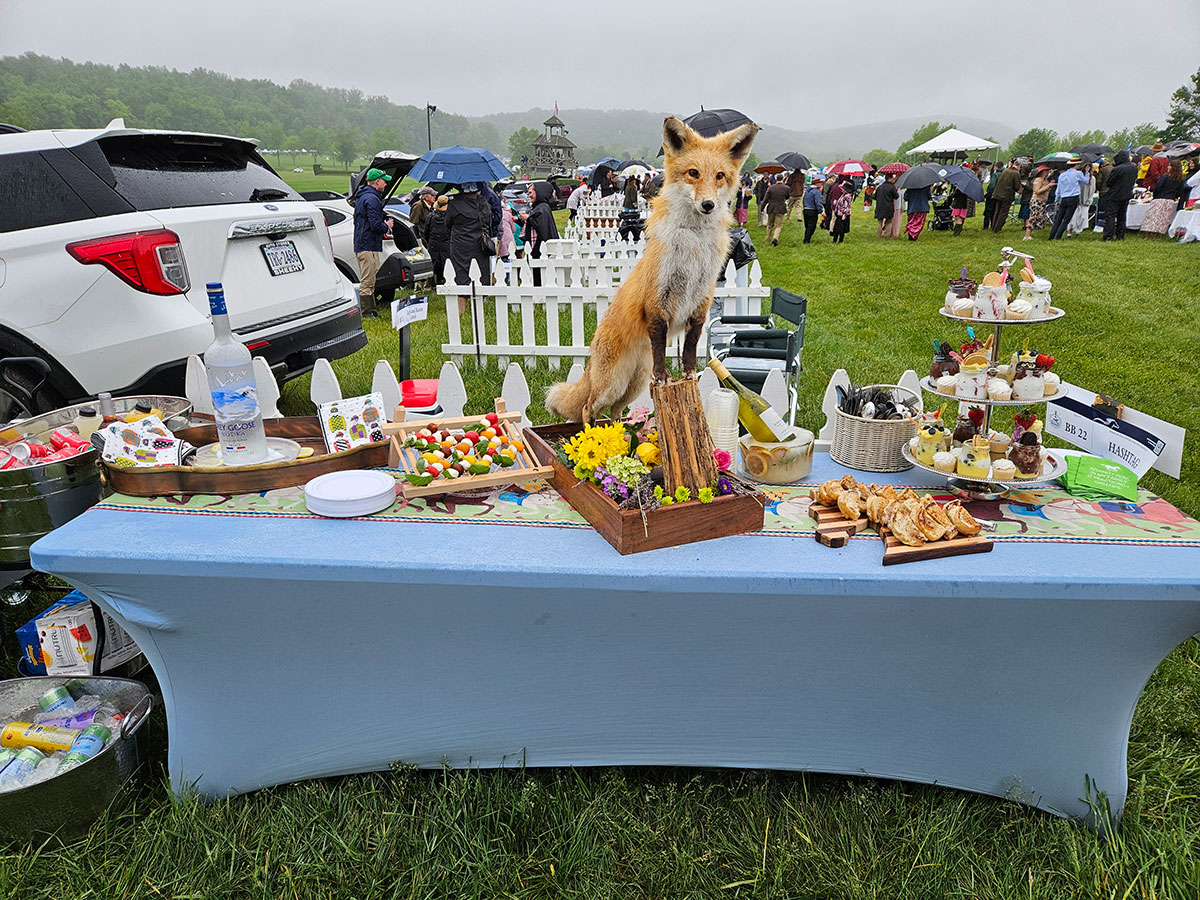
Tailgating is another essential part of the Gold Cup. Some spectators adorn their tables in racing themes and serve Champagne in crystal flutes. Others bring beer and fried chicken from a mini-mart. “The sky’s the limit,” says Yovanovich. “Everyone invites 15 of their best friends, and I don’t know how many races they watch, but they eat and drink all day and have a good time.”
One hundred runnings later, the Virginia Gold Cup remains an esteemed occasion that celebrates Virginia’s equestrian heritage. Says Zebrovious: “Even if you’re not involved in horses and not knowledgeable about it, you can come for the social aspects, see friends, and have a wonderful day in the country.”
Feature image by Christopher Zeigler
This story originally ran in our May Issue. For more stories like this, subscribe to Northern Virginia Magazine.