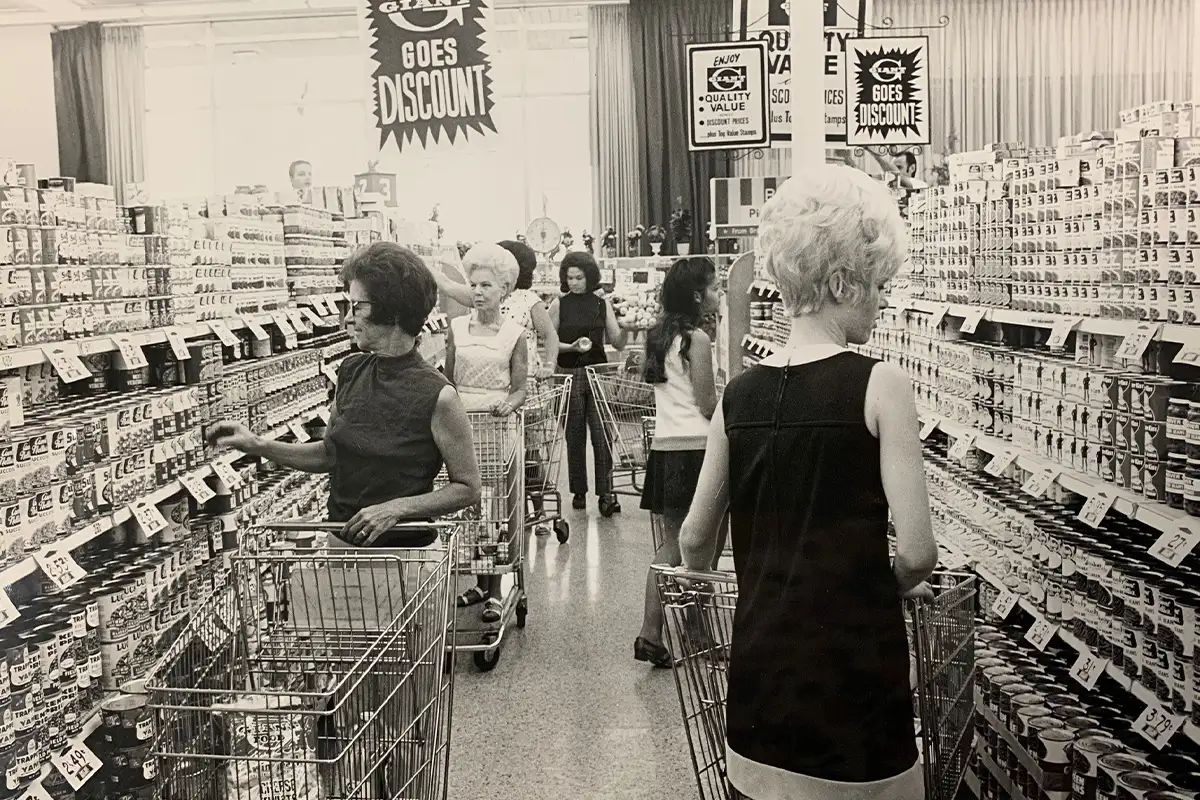
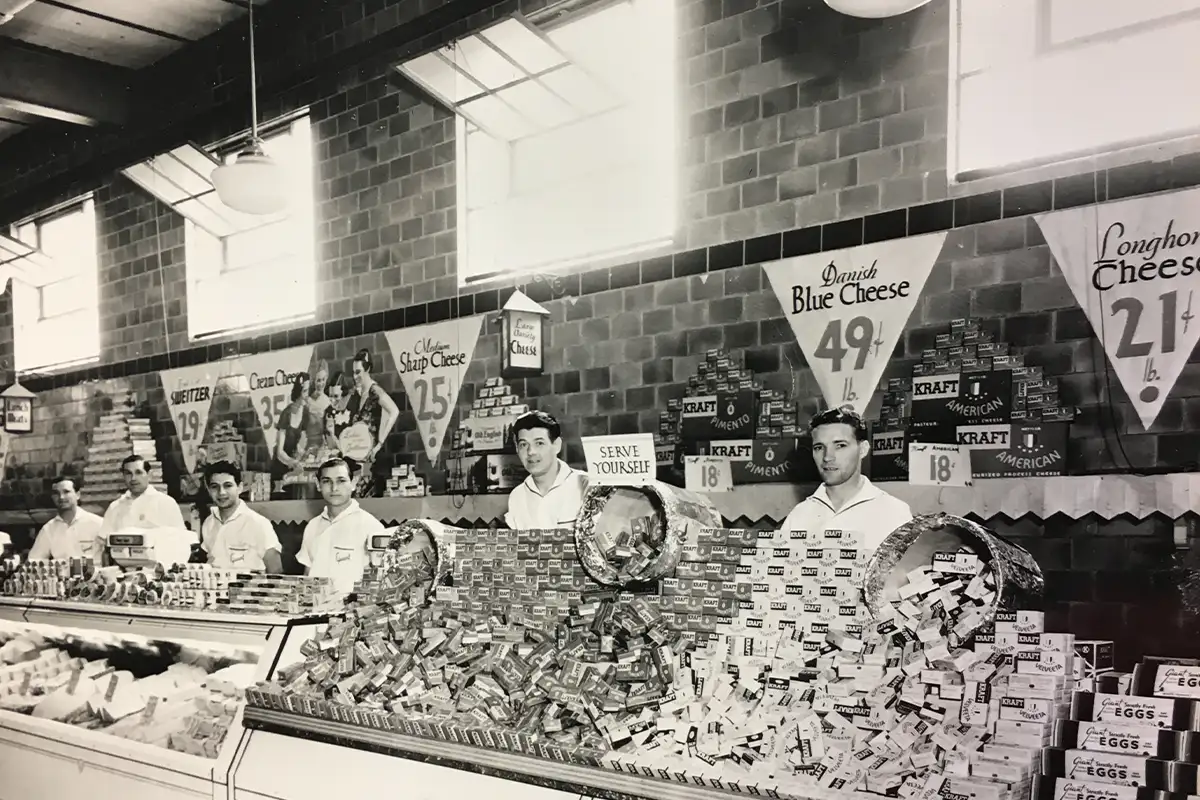
In 1936, Giant Food opened its first store on Georgia Avenue NW in Washington, DC. And the retailer introduced an idea so strange that customers lined up just to see it.
A sign inside read: “Serve Yourself.”
At the time, shoppers were used to clerks retrieving goods from behind counters. Giant handed them baskets and invited them to roam the aisles on their own. This radical concept helped invent the modern supermarket experience in the DMV.
“Our owners and founders were forward thinking and were constantly being the most innovative grocer they could possibly be, to always try and look out for the best of the customer,” says Gary Budd, Giant’s director of store refresh, who has worked for the company for 45 years.
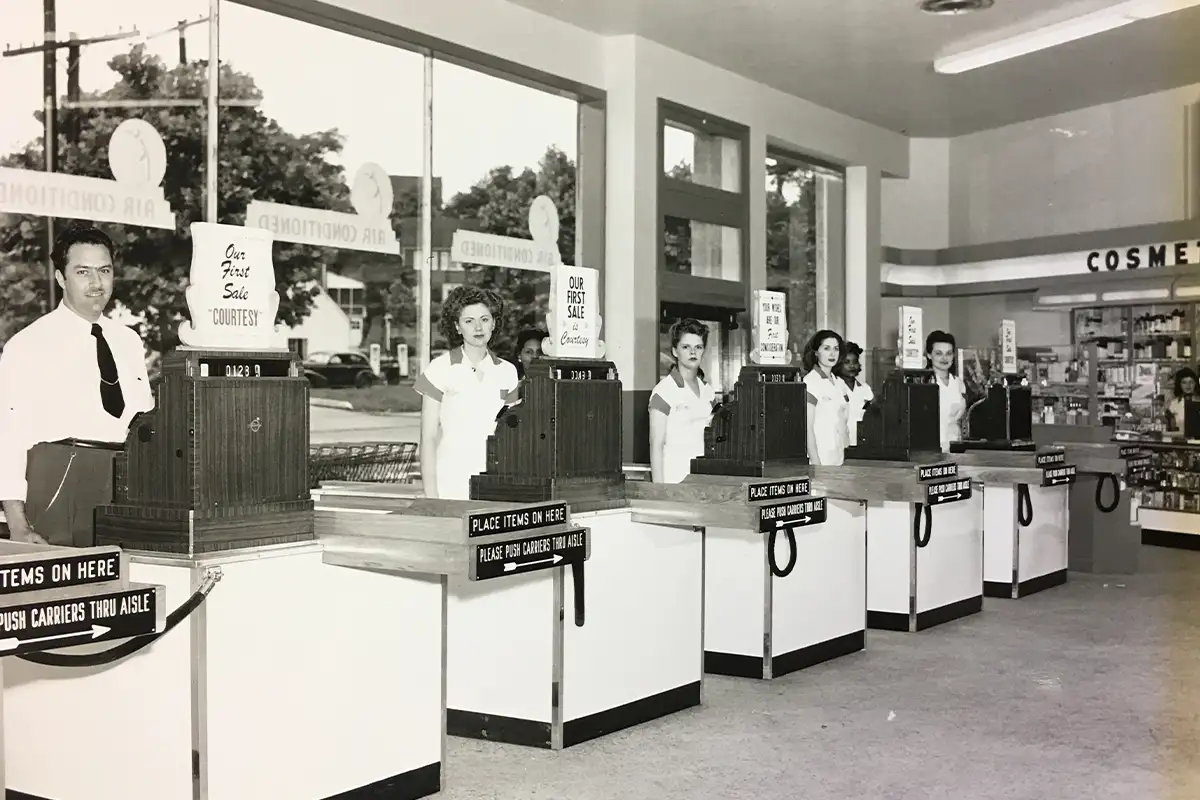
That spirit of innovation became a hallmark. In the 1980s, Giant was among the first grocery chains to roll out scanner technology at checkout — a change customers initially didn’t trust.
“They thought it would mess up their orders,” Budd says. “And we rolled it out to the entire chain, and it was actually quite impressive.”
Back in 1961, Giant opened the Super Giant in Lanham, a retail marvel with not only groceries but a fur salon, jewelry department, optical shop, and even an art gallery selling oil paintings.
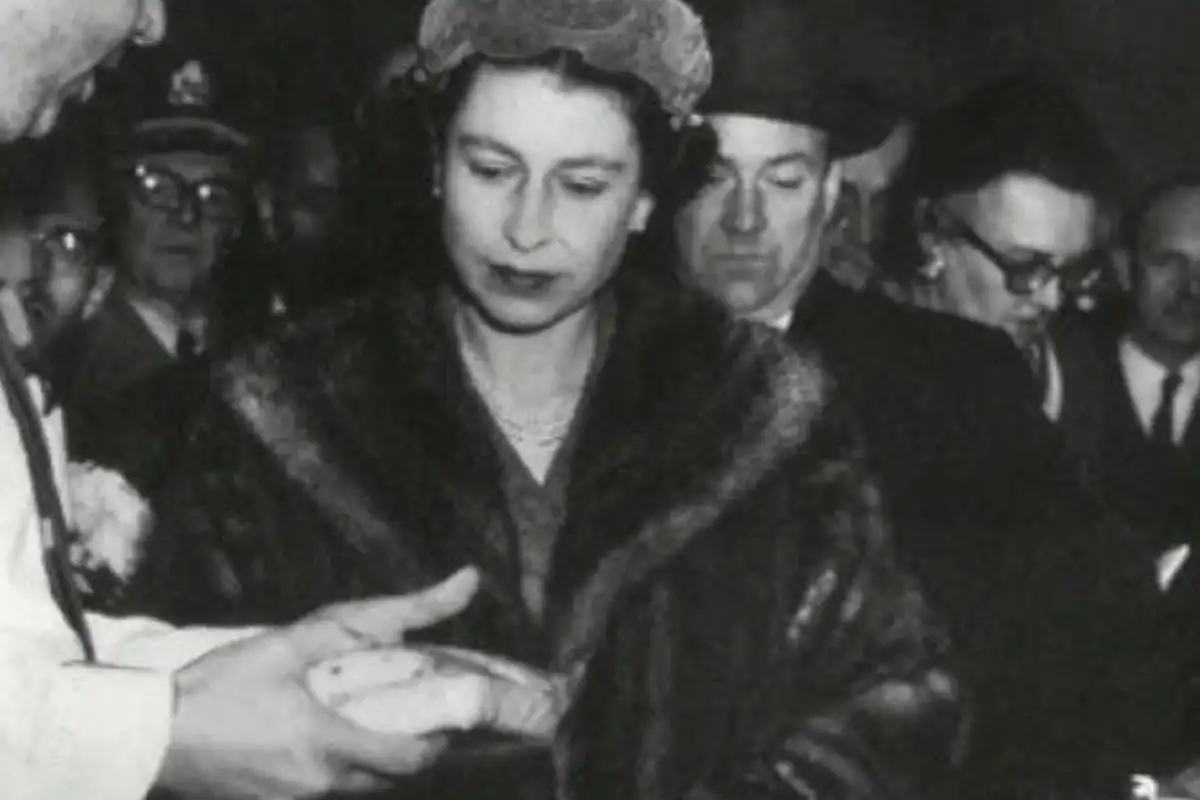
In 1957, Queen Elizabeth II famously stopped by a Hyattsville location after a University of Maryland football game and lingered at the meat counter, asking questions about American pot pies.
But ask Budd what defines Giant, and he doesn’t talk about royalty or retail firsts. He talks about snowstorms.
“I’ve seen store managers sleep on cots. Pharmacy managers sleeping on pillows in the pharmacy during storms,” he says. “During COVID, our stores stayed open every single day. The only time we close is if the state tells us we have to.”
Budd remembers one Maryland blizzard in the 1980s when, as a young cashier, he walked five miles from District Heights to Largo to staff a store because no other employees could make it in. He stayed for three days.
“I think it’s ingrained in our culture,” Budd says. “It’s about people, people, people, right? And that’s what we built the company on.”
Much of Giant’s community impact happens away from the grocery aisles. Budd and his team have helped design food pantries for regional food banks, providing layouts, shelving, and refrigeration so clients can shop with dignity.
“We’ve actually basically designed many of these food pantries for those individuals,” he says. “It gives you a good feeling inside to know that you’re able to help them in a way that’s helping other people in the community as well.”
Now, as Giant marks 90 years, Budd says the focus remains the same as it was in 1936.
“I think it goes back to being so customer focused, right in our communities,” he says. “There’s nothing more exciting than making the customer happy.”
Feature image courtesy Giant Food