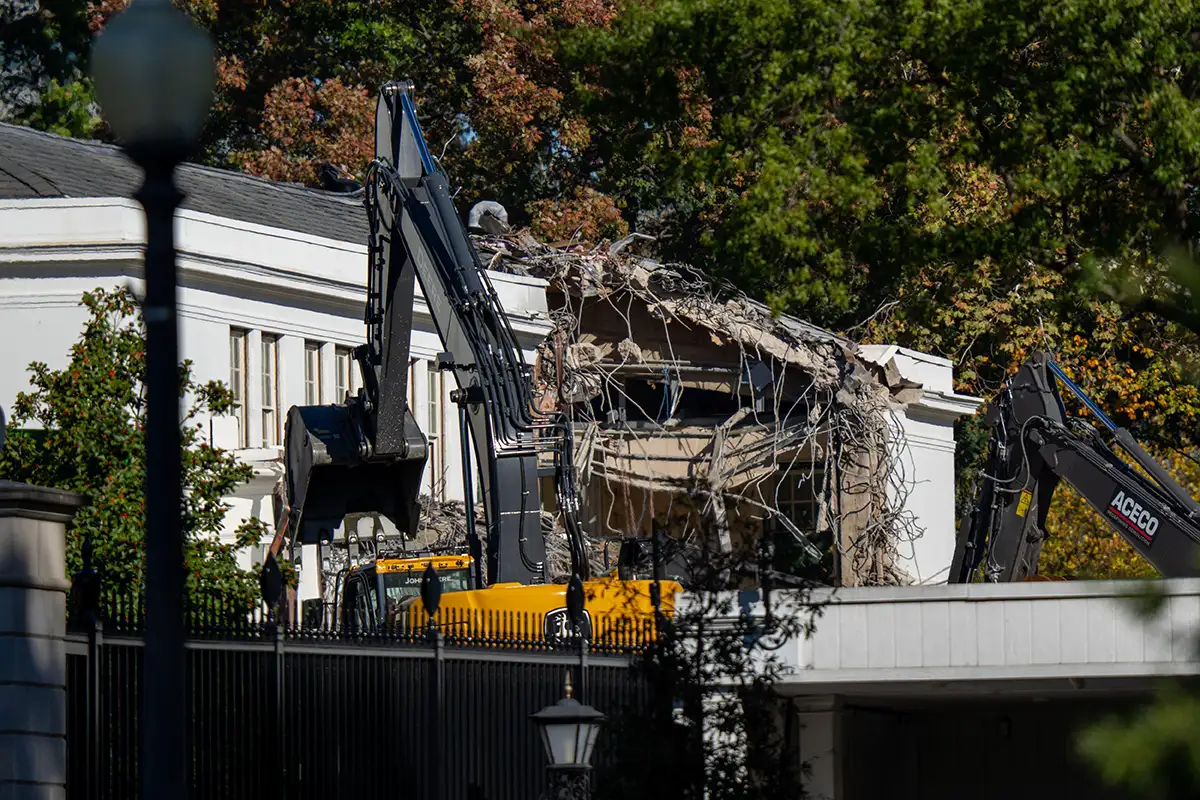
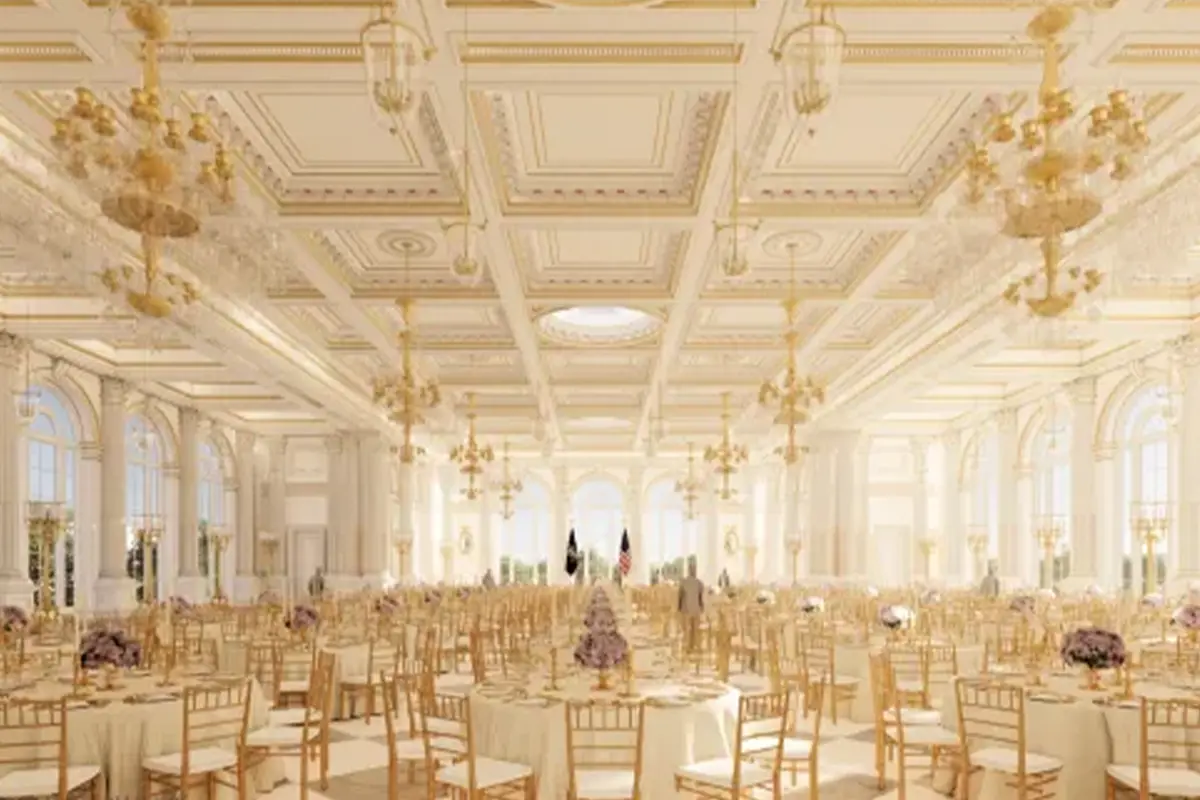
Construction is underway on a 90,000-square-foot ballroom at the 55,000-square-foot White House. The new addition, projected to cost $300 million, is expected to be completed before the end of President Donald Trump’s term. To make way for the massive new space, the entire East Wing — built in 1902 — is being demolished.
The East Wing has historically housed the Office of the First Lady and served as a military intelligence hub during World War II. It also serves as the public entrance for White House tours.
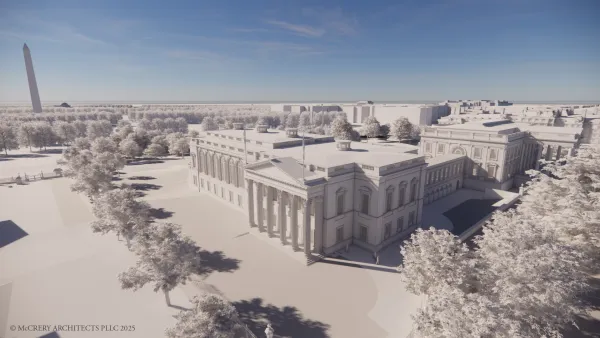
“I’ve seen drawings of [the ballroom] next to the White House, and it does a couple of things,” says Dr. Lindsay Chervinsky, presidential historian and executive director of the George Washington Presidential Library at Mount Vernon. “First, it dwarfs it. And second, it takes away the symmetry. The White House looks symmetrical from above, from the front, and from the back — and this addition disrupts that. It’s going to be a very big change.”
Raising Alarm
The proposed expansion is raising alarm among preservationists. The National Trust for Historic Preservation’s mission is to safeguard America’s most significant historic sites. Its congressional charter requires it to ensure public participation in decisions involving buildings and landmarks of national importance.
“We acknowledge the utility of a larger meeting space at the White House, but we are deeply concerned that the massing and height of the proposed new construction will overwhelm the White House itself,” Carol Quillen, president and CEO of the National Trust, said in a statement. She added that the new structure “may also permanently disrupt the carefully balanced classical design of the White House, with its two smaller and lower East and West Wings.”
Hit the Pause Button
The National Trust is publicly urging the Trump Administration and the National Park Service to pause demolition until the ballroom plans undergo the legally required public review processes. This includes consultation and review by the National Capital Planning Commission and the Commission of Fine Arts. Both agencies have authority to review new construction at the White House and to invite public comment before final approval.
“The President and the Trump White House are fully committed to working with the appropriate organizations to preserve the special history of the White House while building a beautiful ballroom that can be enjoyed by future administrations and generations of Americans to come,” White House chief of staff Susie Wiles said in a press release. No mention was made, however, of halting demolition to allow preservationists time to review the plans.
Chervinsky says a number of historic trees on the White House grounds will also be removed to make way for the project.
“It is one of the most iconic and distinct buildings in the world, and this is going to change how it looks for people,” Chervinsky says. “The goal is always, as much as possible, to preserve the character, and whenever possible, to preserve the historic elements of this space in recognition of all that has come before … It represents the American people.”
Feature image, ZUMA Press, Inc./Alamy