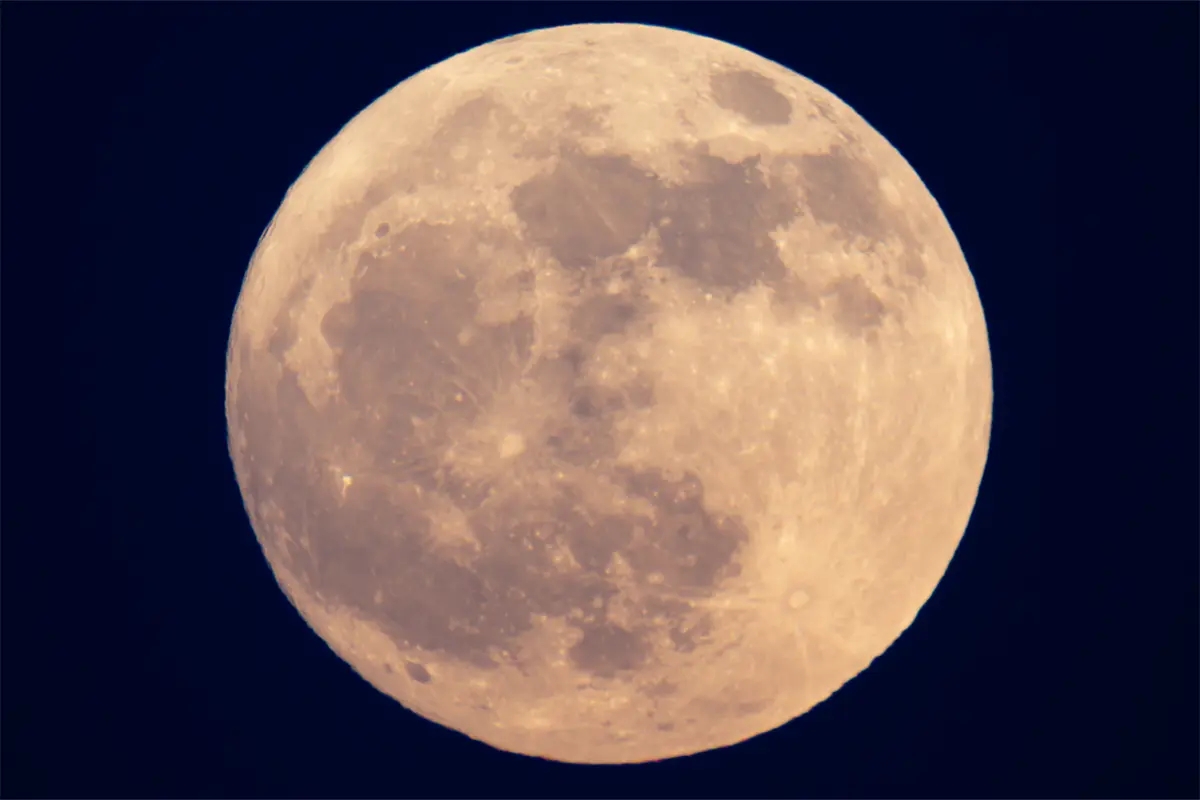
The official summer solstice on June 20 is quickly approaching. And in the sky, the last full moon of spring, known as the strawberry moon, will appear on June 11.
The moon will rise around 8:30 p.m. in the southeastern sky. According to The Old Farmer’s Almanac, it will reach peak illumination around 3:44 a.m.
A moon usually appears reddish when it is close to the horizon because the light rays must pass through the densest layers of the atmosphere. But according to the Farmer’s Almanac, the origin of the name “strawberry moon” has nothing to do with the moon’s hue or appearance. It was used by Native American Algonquian tribes to mark the ripening of June-bearing strawberries and other fruit.
This year’s strawberry moon will hang lower in the hemisphere because our planet is in the midst of a “major lunar standstill.” According to EarthSky, this happens because the moon is reaching the extremes of its orbit around the Earth, which happens every 18.6 years.
The June 11 strawberry moon will also appear near a bright star named Antares, also known as Alpha Scorpii, which has a distinctive red hue.
Feature image courtesy Rafael Prendes/stock.adobe.com