It’s time to break out the binoculars and get out the door early, because some of the most spectacular migratory birds that come to the Northern Virginia area are headed this way.
Matt Felperin, the roving naturalist with NOVA Parks, says we’re heading toward the prime season for seeing some birds that you don’t get to see year-round.
“Early May, especially, has among the most diverse migratory windows for birds in North America,” Felperin says. “We have quite a variety of birds on the move right now.”
Biggest Migratory Bird Arrivals
The big arrivals are the warblers and other neo-tropical migratory birds. They’re small songbirds that come from all across Central and South America, through Mexico or the Caribbean.
“They’ve adapted to having their breeding cycles in the U.S. and Canada,” Felperin says, because the seasonal menu of insects gives them and their young enough food to survive.
They’re also attracted by the lengthening days, Felperin adds. They migrate by night, but they’re active during the day. They look for the increased daylight hours.
“The most phenomenal thing to me is that these are tropical birds, but they’re utilizing our spaces when the seasons are warm,” he says.
“That’s a longer amount of time that they are able to successfully hunt insects to feed their young. So that alone gives their young greater chance of survival.”
They also face less competition for the insects, as they look for “unoccupied niches” where they can feast, he says.
Those have to be some pretty strong advantages, because, as Felperin points out, “Migration is deadly.” Many birds that head off in early spring “do not return,” and often human interference doesn’t help. (He says there’s also a period during fall migratory periods where birds heading back south from areas west of here get lost along the way, which doesn’t usually bode well for their survival.) “But for whatever reason, it hasn’t stopped these birds.”
‘Spectacular’
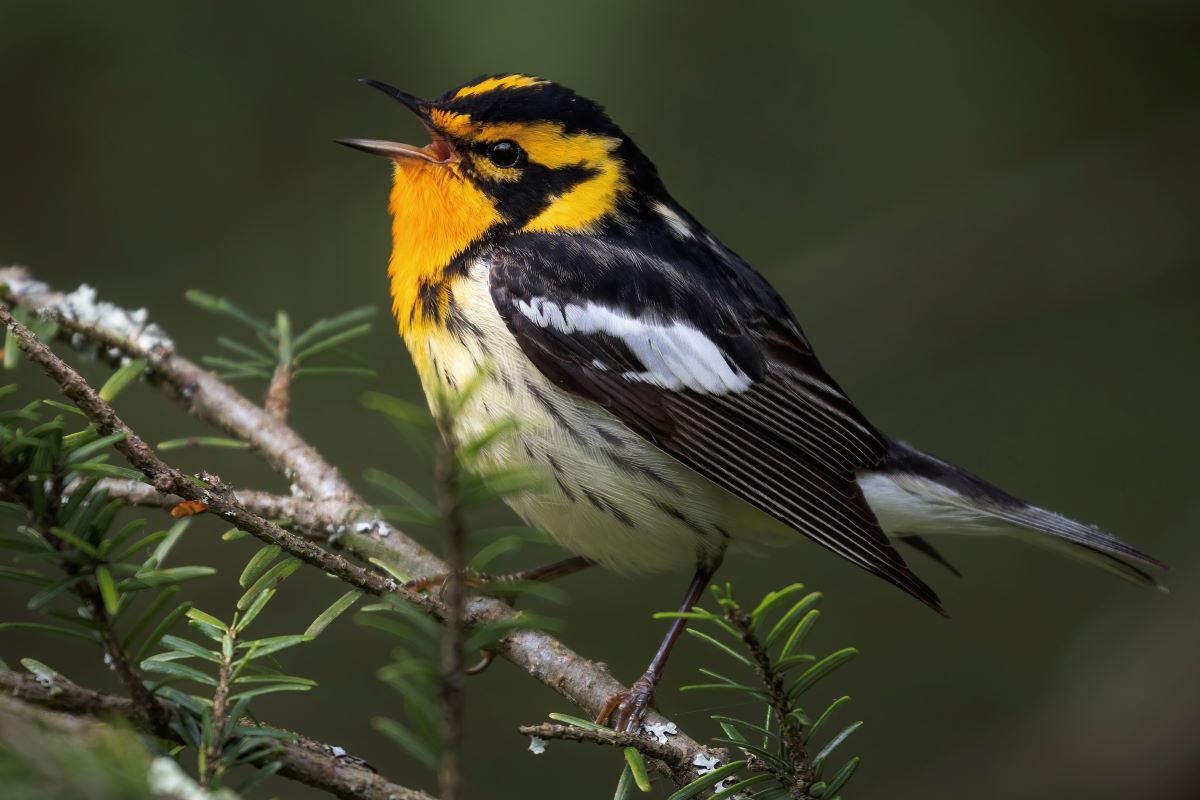
Felperin says there are about 35 species of birds set to come through, but the Blackburnian warbler and golden-winged warbler are standouts among the birds you can see in the area in the near future: “That’s one of the most spectacular birds this time of year that people try to find.” The golden-winged warbler is “on the brink” and “in some dire straits,” he adds, but conservation programs that help farmers maintain their properties in conducive ways are helping.
A lot of these migrants only stay a day or so, to rest and eat, Felperin says. For many of these birds, the Northern Virginia area is just a “hotel on the highway,” Felperin says. That gives your the chance to see some unusual species. “Many of these keep moving through, so we get to see so many birds that really don’t have anything to do here other than to travel through. So it’s like a really neat window into where some of these birds are going.”
Where to Go to See Migratory Birds
Felperin’s top recommendation for a NOVA Parks bird-watching venue is Algonkian Regional Park, in Sterling. “That location is prime because it’s right on the Potomac River, where there’s a lot of concentration of migrants coming through following the rivers and the riparian zones.” He also recommends Pohick Bay Regional Park, Bull Run Regional Park, Potomac Overlook Regional Park, and Gilbert’s Corner Regional Park.
Felperin recommends going out before sunrise; that’s when the birds land for the day and eat. After that comes a long nap, and by the late afternoon, “most of the activity is done.” He adds that you might even be able to see some unusual species in your own backyard if you have any mature trees. “Even just a single mature oak in someone’s yard can be a hotspot for some of these migrants.”
Feature image of a male Blackburnian warbler by Matt Felperin/NOVA Parks
For more stories like this, subscribe to Northern Virginia Magazine’s News newsletter.