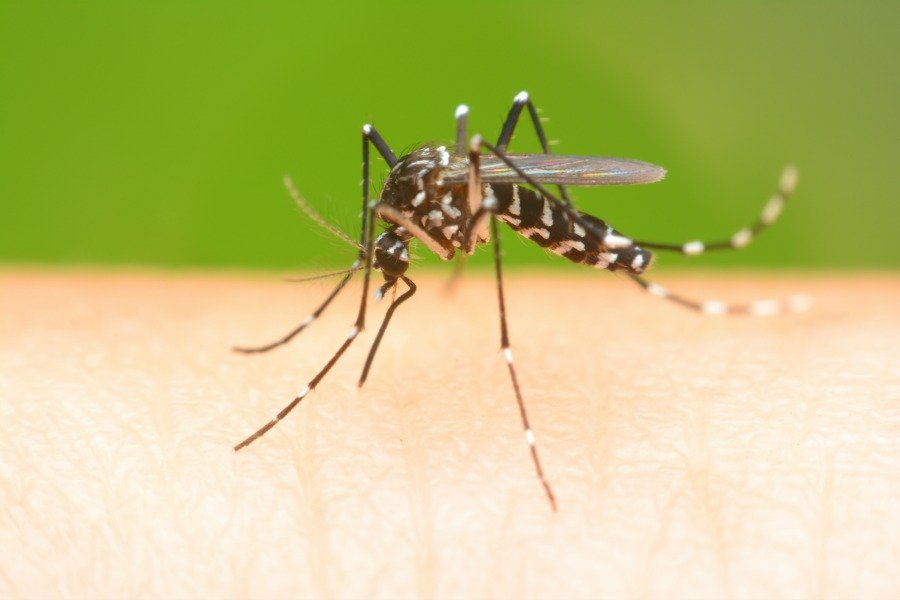
By now, you’ve probably heard about Zika virus, the mosquito-borne illness spreading throughout Central and South America. After confirmed cases appeared in D.C., Maryland and southern Virginia, we talked to Fairfax County Health Department Public Information Officer John Silcox to see if NoVA residents are at risk.
He says the department’s main concern now is educating people who plan to travel to countries where Zika is prevalent on how to prevent the disease. Precautions include wearing mosquito repellent and light-colored, loose-fitting clothing. He also advises using mosquito netting around one’s bed to further prevent mosquito bites.
So how do you know if you have it?
“Only about 1 in 5 people who are infected actually experience symptoms. So when the symptoms do occur, they’re usually like fever, rash, muscle pain, sometimes red eyes as the result of conjunctivitis … or a headache,” says Silcox. If you experience those symptoms after traveling to an affected area, he recommends talking to your health care provider to determine whether or not you’ve been exposed to the virus. “Zika virus is considered a fairly mild illness … a lot of people don’t experience any symptoms,” he says.
However, in some cases, people infected with the virus have later developed Guillain-Barré syndrome, an autoimmune disease that causes one’s immune system to destroy its own nerve cells, causing muscle weakness and sometimes paralysis. The CDC is hesitant to declare a direct link between Zika and Guillain-Barré, noting that correlation doesn’t imply causation.
Silcox also cautions women who are pregnant or planning to become pregnant.
The CDC issued a travel warning in January to women of childbearing age, cautioning them against traveling to areas where Zika is prevalent. The agency is also currently investigating a possible link between Zika and microcephaly, a birth defect that causes the head to be much smaller than expected. This can lead to developmental delay, seizures and problems with movement and balance, according to the CDC.
However, “This is one of those public health issues that’s still evolving. They’re still learning more. So the guidance and the information will probably change as we learn more about this virus and how it’s being transmitted. But for now, that’s our message to our community, to be aware of this situation. If you are planning to travel to those regions, take those extra precautions,” Silcox says.
So are we at risk?
“There’s already been one confirmed case in Virginia, and that is involving a person who had traveled to one of these areas. So they weren’t infected here; they were infected when they were traveling. But right now, this is not mosquito season in the United States, so we don’t have a concern right now about mosquitoes transmitting the virus here,” Silcox says.