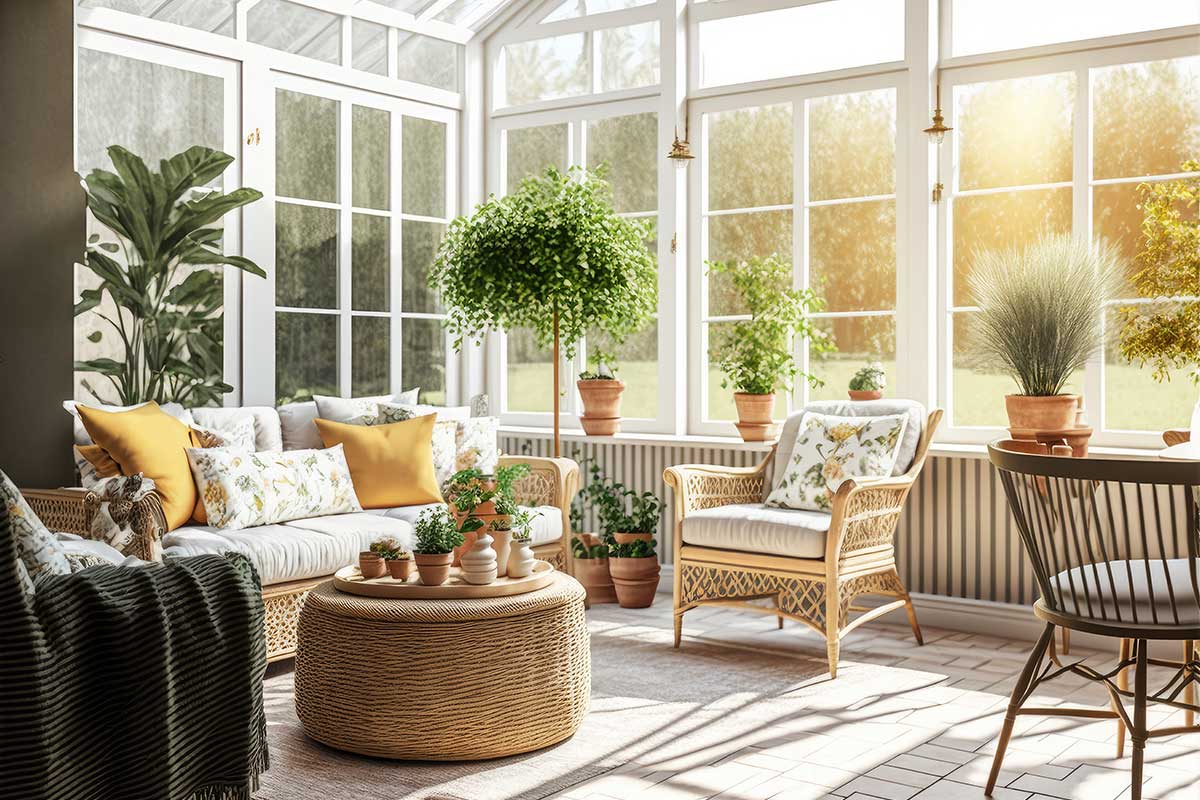
The home gym, home spa, and in-home flex space have had their collective moment, and that moment has passed. Each one was supposed to be the single-room solution to health, self-care, and relaxation, but they all fell short of having staying power. Now the move is toward wellness rooms.
The wellness room is a space that’s supposed to be holistically helpful. The wellness concept is expected to drive design trends throughout the year. With a focus on natural materials, organic shapes, ventilation, natural light, and fresh water, the wellness room is supposed to be a healthy space where people take a break from the pressures of daily existence. Basically, it’s a room that makes us feel well — grounded, safe, secure — and it doesn’t have a Peloton anywhere near it. Yes, it is in a room, for sure.
Lauren Magee, director of architecture for McLean-based Winn Design + Build, offers a few pointers on how to bring wellness into a space and shares her favorite home-wellness products.
Defining the Wellness Space
“The motivator for designing a wellness space is to take a break from the onslaught of information, deadlines, and technology that we have in our daily lives, whether that’s at home or in the world,” says Magee. “The wellness room is a space within the home that allows for a complete break from all of that.”
While this sounds nice, people just can’t lock themselves in the bathroom with the lights off.
“Typically, I begin by talking to my clients about how we can activate our various senses in a space. We focus on sound, smell, touch, and really try to activate senses other than just sight,” she says.
“Our wellness space should activate some of our other senses and help lead to a mental reconfiguration by opening up neural pathways.”
So, rather than avoiding a certain stimulus, people become more intentional with the type of stimuli in the space, to foster healthy neural responses to different sensations.
Bringing the Outside In
Just grabbing some throw pillows and a velvet couch may sound easy, but there’s more of a science to the wellness space that is perhaps lacking from the home gym, home spa, or flex space. The most important thing it to incorporate biophilia and connect with nature.
For Magee, biophilic design revolves around sound, greenspace, and materials. She says to start with moving water.
“I recommend everyone begin with a minimalist approach to the wellness space. Many times, people have been to spas or hotels and have an idea of what their space of full removal looks and feels like. There’s the sound of running water in the background. There are really simple indoor water features that can integrate the sound of running water without making a big investment in like a pond,”Magee says.
A room that opens to a garden is perfect for incorporating the outdoors. If you don’t have that, you can still bring some green into your life.
“Introducing biophilic elements by setting up a simple indoor garden with planters or individual plants is an easy way to bring nature inside. Incorporating natural light allows us to tap back into our natural circadian rhythms. Usually, one of the goals is to restore a sense of natural daytime and nighttime, and inherent cycles that help keep our bodies and minds working at an optimal level,” Magee says.
“When I’m with a client, I’ll talk about how we can bring in sound effectively to audibly separate the space from other parts of the house, which might be full of kids, or another person working from home, or the sounds of the street, and to activate our sense of hearing,” says Magee. “Then, we work with smell through incense or essential oils and diffusers.
“There are a number of ways that we can activate other senses, like with the materials we happen to touch — materials [that] help activate our fingers in a different way, other than just typing on our phones or our keyboards.”
And a break from that can’t hurt.
Feature image courtesy 3D Station/stock.adobe.com
For more stories like this, subscribe to Northern Virginia Magazine’s Home newsletter.