The real summer heat is just getting started in Northern Virginia, but it’s making up for lost time — and that means it’s been even longer since the risks and signs of heat stroke have been front of mind. An area doctor has reminders about what to look for and how to protect yourself.
Dr. Bruce Kaczmarek, an emergency room physician at Sentara Northern Virginia Medical Center, points out that heat exhaustion and heat stroke are related, but not the same thing.
Heat exhaustion is a more mild form of the problem — relatively. It causes your body temperature to go “far above what we would want it to be, far above what we would typically even see for like a fever from a virus,” Kaczmarek says. “It makes you, in general, just feel really awful, and it can start making your body kind of get out of whack, as is the nonmedical way of saying it.”
Heat exhaustion impairs cellular processes and normal metabolism. It also impairs your ability to sweat properly, “and that creates a snowball or domino effect,” Kaczmarek says. “Because if you can’t sweat properly, you’re not going to be able to dissipate heat; you’re not going to be able to release your [body] heat. And that makes that overheating even worse.”
If that sounds bad, heat stroke is even worse: “That impaired metabolism actually affects your brain function,” Kaczmarek says. There’s a reason they call it “stroke,” he adds: Symptoms can include confusion, slurred speech, or problems using limbs. “It kind of mimics what we would consider to be a classic stroke.”
Left untreated, heat stroke can cause conditions including lung problems, heart injury, seizures, muscle breakdown, kidney injury, and liver injury, according to Johns Hopkins Medicine.
Stay Hydrated
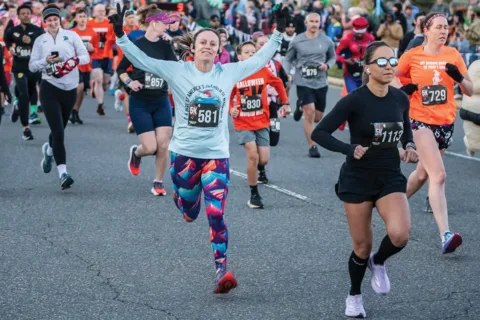
One of the groups most at risk for both conditions is young athletes playing summer sports and getting ready for fall sports. It’s easy to forget to drink enough water in those situations, and besides, your body needs more water than usual when you’re active outside.
The keys to avoiding heat stroke and heat exhaustion are water and cool temperatures. For athletes and anyone else who might be spending a lot of time outside in hot weather, that can mean limiting exposure during the hottest time of day and shifting activities to the early morning and late evening.
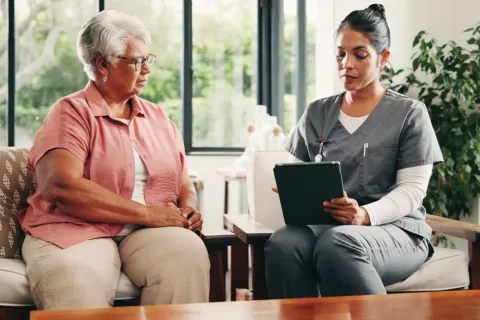
While young athletes run the risk of seeing their activity outstrip their ability to hydrate, the big risk for older adults comes from being in a home without air conditioning, and not drinking enough water. That’s partly a function of age. “Older adults have impaired thirst mechanism,” Kaczmarek says. Often they’re “not really drinking anything at all, and they don’t realize it,” he adds. “They don’t even really feel that desire to drink water.”
He suggests having a plan for where to go to cool off (such as a library or a shopping mall if your own home doesn’t have good air conditioning) and keeping a mental, or even a physical, log of how much water you drink.
He says the old standard of eight eight-ounce glasses of water a day is “a pretty good mantra to go by, if not even a little bit more.” For athletes, it’s more like 12 to 14, or even 18.
How to Help Someone
If you see someone who’s showing some of the symptoms of heat exhaustion or stroke, Kaczmarek says, cool them down — “We recommend either full submersion in cold water, or at least dumping cold water on them” — followed by fanning them, whether with an electric fan or even just a coach’s clipboard. That way they get the immediate effect of the cold water as well as the cooling effect of evaporation.
“If a patient is exhibiting any significant signs of heat exhaustion, definitely you want to call 911 immediately and have them evaluated by the EMS team and probably brought to the emergency department,” Kaczmarek says. “There, we can give intravenous fluids; we have other methods of cooling that are a little bit more advanced.”
But the best thing you can do — for yourself and for someone else — is to keep cool and hydrated. Kaczmarek recommends keeping a bottle of water handy. “Prevention is always better than having to seek medical care,” he says.
Feature image courtesy Wheatland Spring Farm + Brewery
For more stories like this, subscribe to Northern Virginia Magazine’s Health newsletter.