For many parents, dropping a child off at college can be a surreal experience — especially if that child is attending the parent’s alma mater. Memories harken back to collegiate days spent on the quad and evenings in the computer lab.
But the current college experience is vastly different. Now, incoming freshmen are entering an atmosphere where modern tech is intrinsically intwined in academic life and luxury amenities are increasingly commonplace.
We spoke with NoVA-area parents about their own college experiences as compared to that of their children.
Better Amenities
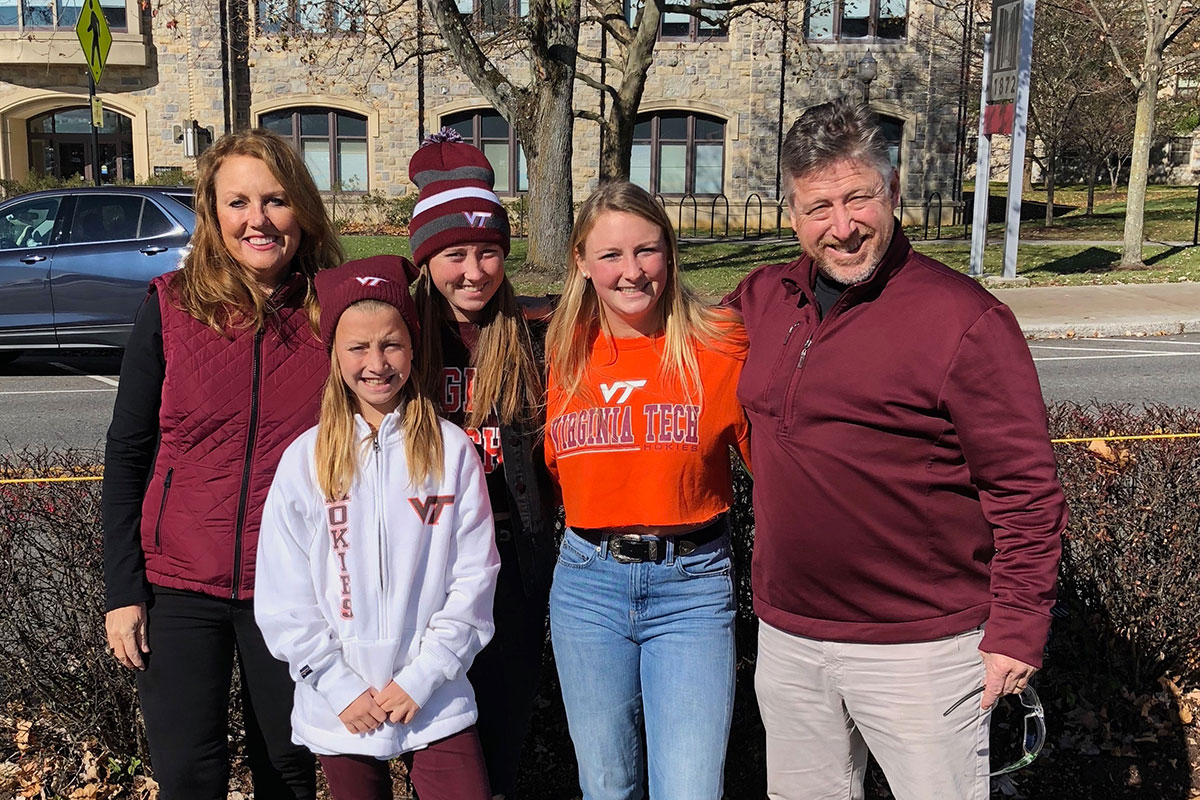
Donna Rynex, a Virginia Tech alum from the class of 1989, says she remembers spending her college days mingling with fellow students in the dorms and spending time in a residential lounge, the dining halls, and a spot near the duck pond on campus.
When she returned to campus for her daughter, who graduated from VT in 2021, a few things stood out as different. While there were a lot of the same facilities from her time there, there were also more amenities: larger dining halls with more choices, additional retail food options, and more fitness facilities.
“They had one gym that I used. They probably had three or four when my daughter was there, and she said they had everything under the sun you could need for working out,” Rynex says. And the dining went from basic cafeteria-style meals to “endless options of any food you could ever want.”
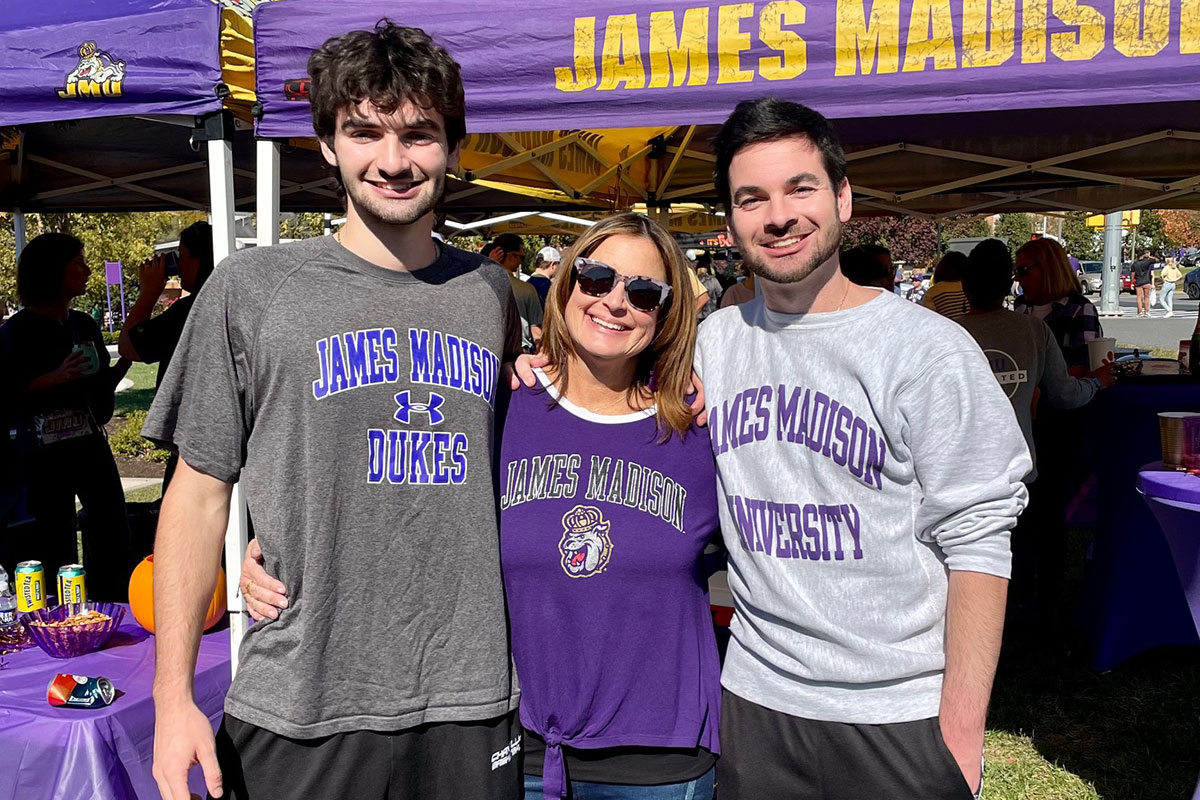
Doreen Walter graduated from James Madison University in 1991. She also recalls seeing new facilities and resources on campus when her sons attended in the classes of 2022 and 2025. “They have Shake Shack, they have Chick-fil-A, they have Dunkin’ Donuts, they have Starbucks — they have it all. I always joke, ‘I think I should come back to school,’” she says.
Amenities like this are more and more common, as schools show off state-of-the-art facilities, food, and entertainment options. Take UVA, where one student fitness center comes equipped with a rock climbing wall. Or JMU, where an on-campus theater shows a new movie every week. (It’s free for students and staff, popcorn included.) At George Mason University, there’s an on-campus arcade with games for students to play between classes.
Student Resources
The increased amenities don’t stop there. Walter and Rynex both note that resources like academic advisers, help centers, mental health resources, and medical facilities are more abundant and reliable than when they were students.
“We had a student center where you could go for resources and help. They have that option as well now, but now there’s a lot more to it. If you’re struggling and you need help, there are more resources,” Walter says.
Even the dorms are often better quality. Walter and Rynex both recall living in basic dorms with no air conditioning. Even if those are still around, there are now more variable options for housing, including suites, living-learning communities, and full on-campus apartments for upperclassmen. Some standard dorms include access to full kitchens on each floor or building.
Technology Is Everywhere
It’s no surprise that modern-day technology has shifted the way students work in college. It’s how they turn in assignments, communicate with professors, sign up for classes, and sometimes even take lessons. That’s a far cry from the college days of the early ’90s, when students often went to a computer lab to do their work.
But it’s not just academics that have been influenced: Technology has changed the way students communicate with each other and socialize in a college setting. Rynex recalls that your dorm was where you’d usually meet and spend time with your friends. You’d open your door to meet people, gather in the lounge, and use that common space to catch up with friends. “Our dorm life was our fun life,” she says.
When her daughter attended years later, Rynex was surprised at the lack of direct connection she had with her floormates. “I was always like, ‘Open your doors, talk to your friends, ask somebody to go to dinner with you.’ But I think maybe even with social media, you could just text them. … They didn’t have to find different ways to meet friends.”
Selecting a roommate is another aspect that social media has influenced. While options in the past were either live with a friend or have a stranger assigned to you (Rynex and Walter each say they knew their roommate before college), social media makes it easier to find and connect with roommates ahead of time. Students can now post inquiries to meet roommates who share the same interests and living habits and then get to know their roomie before making it to campus.
“Most of [my daughter’s] friends did the social media route [to meet a roommate],” Rynex says.

Campus Refresh
For some parents returning to campus after a few decades away, their alma mater may have had quite a face-lift. Many Virginia colleges have experienced major enrollment growth in recent years. Between 1992 and 2024, enrollment jumped about 121 percent at GMU; 110 percent at JMU; 65 percent at Virginia Tech; and 42 percent at the University of Virginia.
That means schools are undergoing improvement projects and building new residential, academic, and recreational facilities to keep up with demand. For example, GMU wrapped up a major Core Campus Project in 2022, and Virginia Tech completed Hitt Hall, a 100,000-square-foot academic building and dining facility, in 2024.
“Everything is built up and extended. They had to build more gyms. They had to build more dorms,” Rynex says of Virginia Tech. “It definitely has had some growing pains, and they’ve been doing a lot of construction.” Walter says JMU has also gone through some expansions since her time there, particularly on the east side of campus, where there are now more academic buildings, an arena, and a dining hall. “There’s been a lot of positive growth. I think what hasn’t changed is the feeling and the ambience of JMU, where it still is small in that respect. … That’s what hasn’t changed. But everything else has grown in a positive way.”
Feature image, ©Lightfield Studios/stock.adobe.com
This story originally ran in our June Issue. For more stories like this, subscribe to Northern Virginia Magazine.