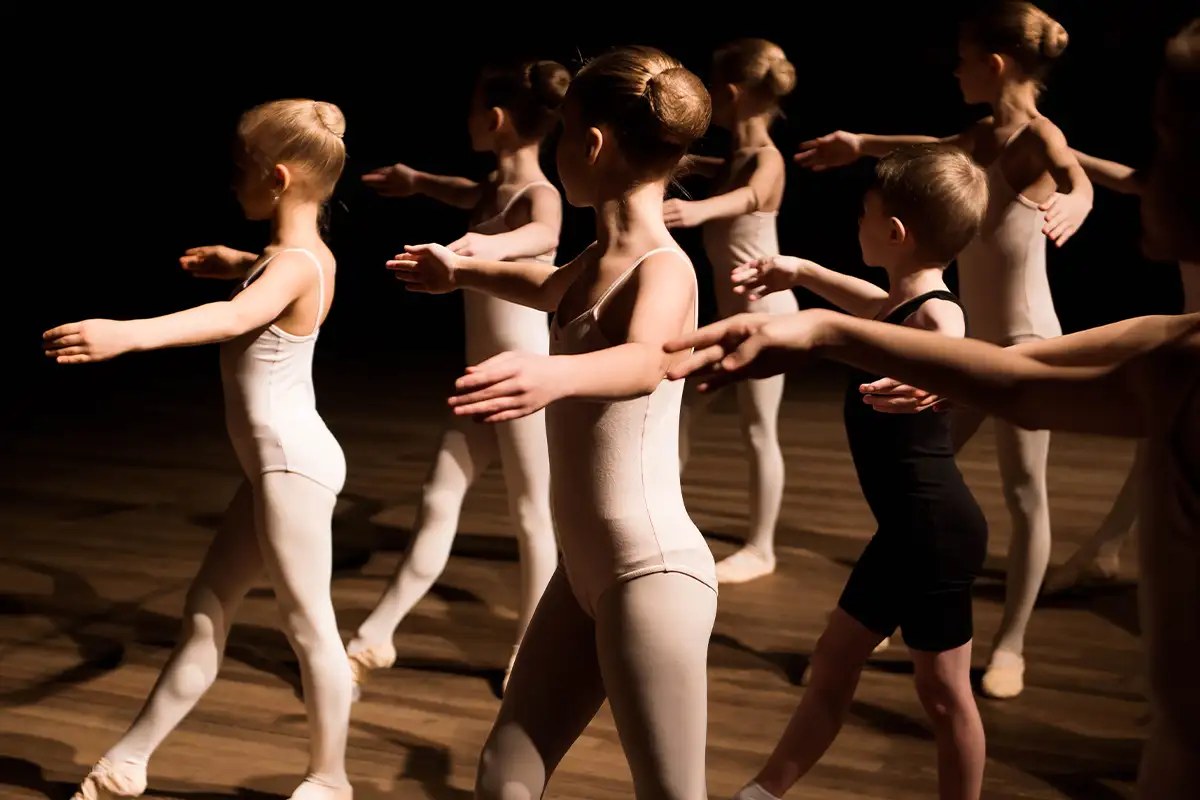
At a McLean dance studio, children with ADHD are learning to manage their extra energy through movement.
Because dance is multi-sensory — combining movement, music and instruction — it helps improve focus and coordination, says Katherine Horrigan, founder and CEO of the Dance Academy of Virginia (DAV). The structure of classes and routines supports executive functioning. And breaking choreography into smaller steps makes it easier for kids to follow and stay engaged.
“It’s taking a scattered, unfocused person, if you have ADHD, and bringing it all together in a direction that’s very supportive,” Horrigan says. “They calm down, they have a place and a direction for their energy to go.”
What’s more, dance supports emotional regulation. Movement stimulates the release of dopamine — a neurotransmitter and hormone associated with feeling good. People with ADHD can under-produce dopamine. Staying active can help make up for that deficit.
In dance class, “we harness all that into productive use,” says Horrigan. She opened the studio in 2020 and added a second location in Del Ray two years later. “They can feel and see their progress, and that develops confidence over time.”
She’s seen this firsthand. Her 10-year-old daughter was diagnosed with ADHD last year and finds comfort in sports.
Positive Effects of Excercise
Research supports what Horrigan is seeing. A 2024 study on how exercise affects executive function in school-aged children with ADHD found that exercise significantly improved their self-control and working memory.
Another states being allowed to move, such as pedaling on a desk cycle while working, can improve executive functioning and self-regulation. In 2021, researchers concluded that “exercise interventions with moderate intensity should be incorporated as treatment for children with ADHD to promote executive functions.”
Satish Shashidhara, an Inova child and adolescent psychiatrist, says there are almost no bad options when it comes to the type of exercise best suited for kids with ADHD. But, he says, certain kinds can help in specific ways.
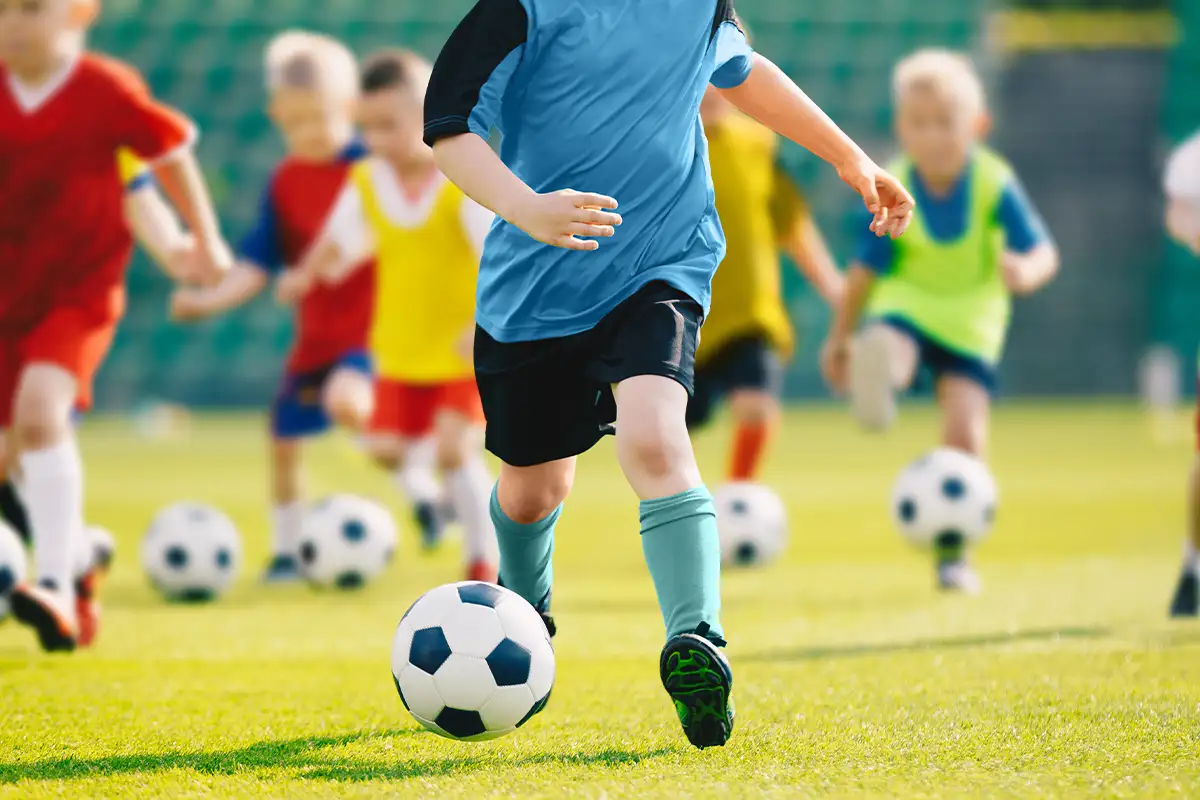
He separates activities into open-skill and closed-skill. The former includes soccer, tennis, basketball, and any sports that require planning and real-time reactions. “This may help with inhibitory control and executive functioning overall,” Shashidhara says. “You’re basically adapting on-the-fly, making decisions. They’re forcing you to be flexible.”
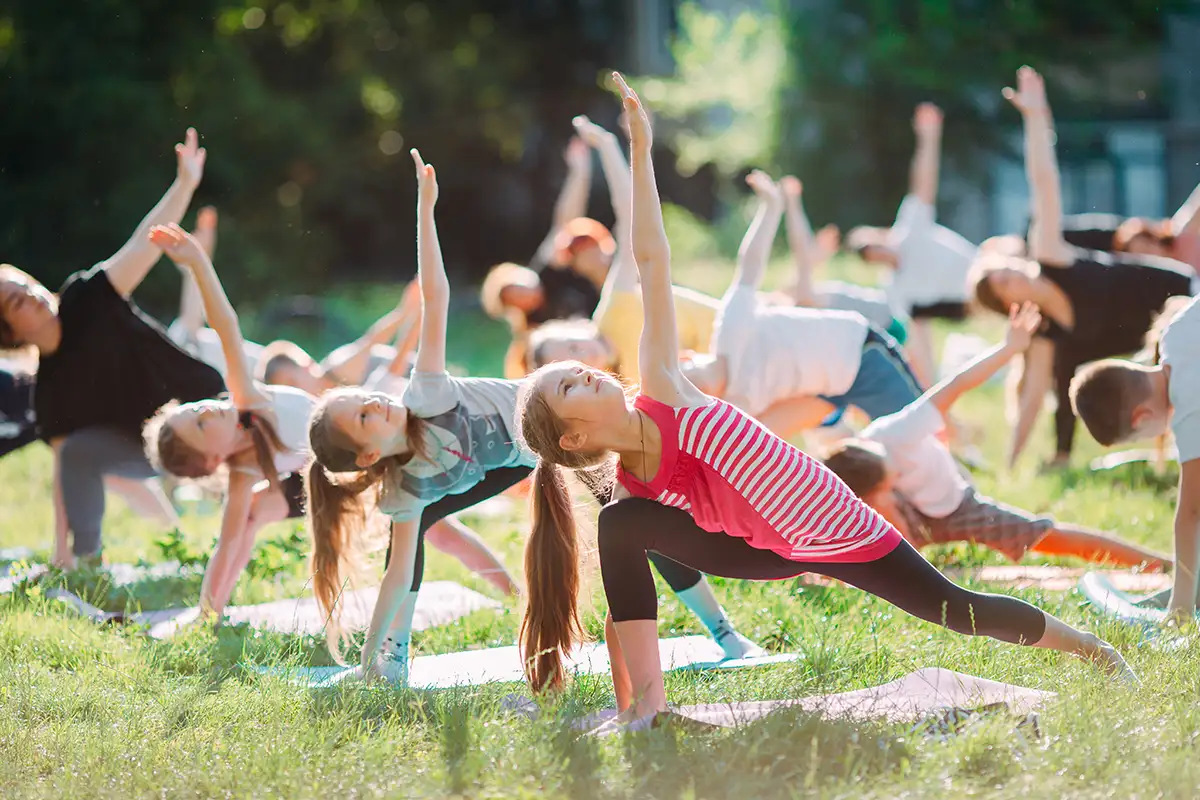
Closed-skill activities, such as swimming, cycling, running, and yoga, can be repetitive and set a rhythm. “That might be better in reducing hyperactivity/impulsivity and inattention,” he said. “[High-intensity interval training] and coordinated activities (think jump rope or even juggling or bouncing a golf ball on a club) can also help with attention, working memory, things like that.”
Shashidhara cautions that activity is not a substitute for medication or therapy, but rather an “excellent adjunct” to those.
Mind-Body Connection
Kristina Sawetz-Glasener, a licensed play therapist and founder of the Creative Counseling Center of Northern Virginia in Vienna, agrees that movement-based activities are especially effective for children with ADHD.
“When you have ADHD, it’s like you’ve got a Porsche for a mind: It goes fast,” says Sawetz-Glaesener, whose daughter takes lessons at DAV. “When you take a moment and make a connection between your body and your mind, you have this self-awareness and this ability to put yourself in the driver’s seat. Then you realize, ‘Wait, I can control how fast or how slow I move this car.’”
Once that happens, she says, kids with ADHD can apply that understanding in other settings, such as at school or in social environments.
The bottom line, Sawetz-Glaesener says, is that if your child with ADHD enjoys something, let them do it. “The more opportunities they have to recognize their strengths, then that will hopefully spill over in other places.”
Feature image, matimix/stock.adobe.com