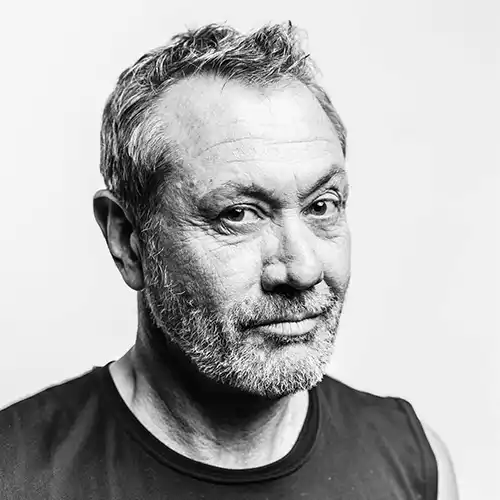
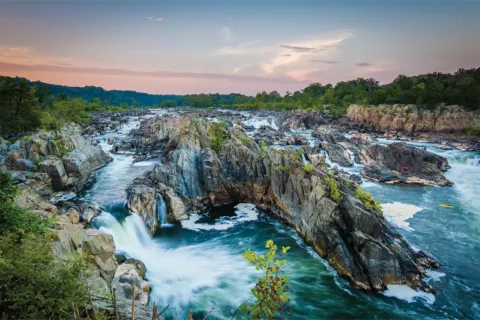
Pakan Penn discovered a love for painting when he was 8 years old. By age 12, the boy was selling his artwork in the gift shops of Phnom Penh, the bustling capital of Cambodia.
In the early 1970s, Cambodia, mired in a prolonged civil war, was an increasingly dangerous place. Americans were arriving as the U.S. advanced clandestine military operations, turning the country into a staging ground in the grinding Vietnam War.
One of these new American visitors, struck by Penn’s artistry, bought a painting and inquired about the artist. When he learned the painter was a young boy, he sought him out, searching the unwieldy streets of Phnom Penh for days, a perilous undertaking for a foreigner at the time. Somehow, and Penn himself is not sure how he did it, the man found his home.
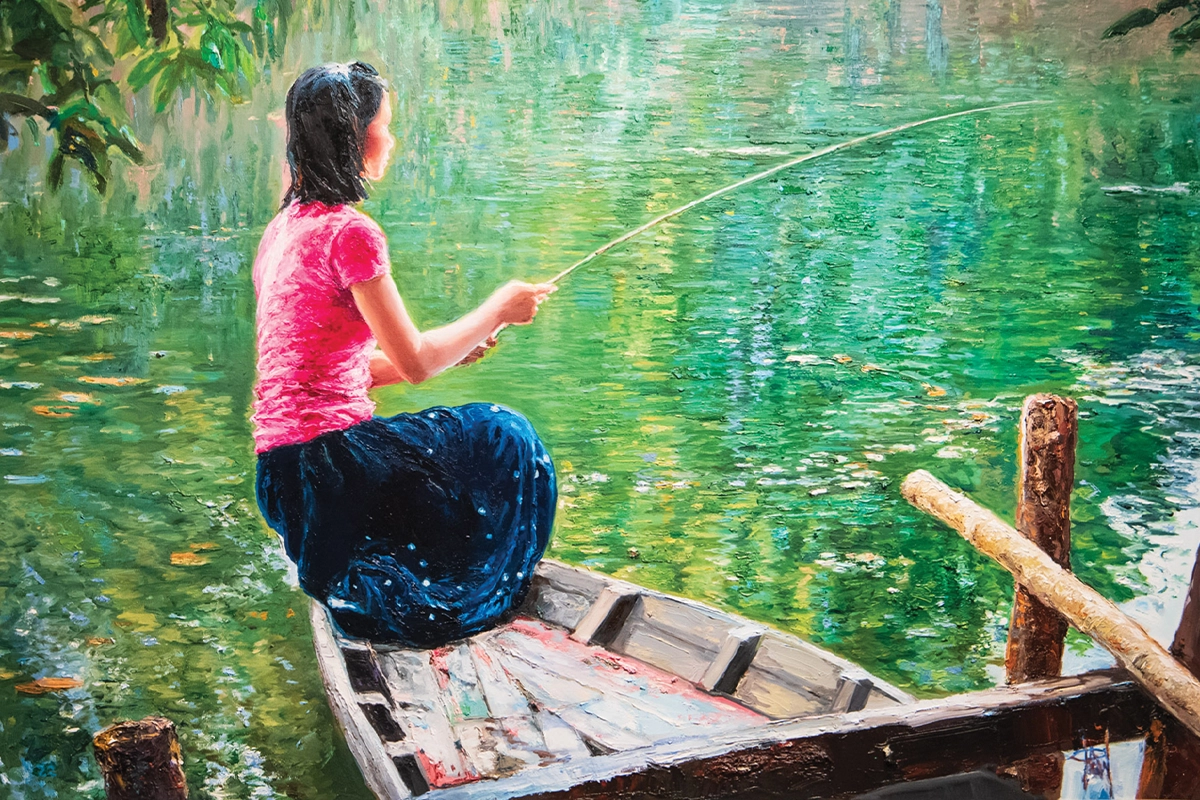
He befriended Penn’s parents, visiting nearly every evening, with a goal of convincing the family to send the gifted artist to the U.S., warning them that Cambodia was going to become even more dangerous.
Two years later, as rocket attacks grew closer, the family relented. The American wasted no time smuggling the young artist out of Cambodia through the countryside, into Bangkok, Thailand, where he remained for several weeks as the American completed arrangements to accompany the boy to Rosslyn, nearly 9,000 miles away. It was September 1973.
Penn would go on to study art under renowned painter Gene Davis at the prestigious Corcoran School of Art. Years later, Penn would create works that would sell for six figures. He became a favorite of American ambassadors and at least one president. Barack Obama exhibited three of his works in the West Wing of the White House.
In 2021 and 2023, the American Art Awards, juried by the top 25 U.S. galleries, named Penn the World’s Best Animal Impressionist. In 2022, his Keeping Secrets oil painting captured first place in the category of impressionism landscape with life.
He’s 71 now and continues his prodigious output of realism, impressionism, and abstract works — diverse schools of art that often share the same canvas. But none of this would have happened without the mysterious American who, Penn says, “saved my life.” They lost touch decades ago, when the American moved to, perhaps, Hawaii, although Penn is not sure. “He could be CIA, I don’t know,” he surmises.
His Secret Liberator
So, who was Albert Burger, Pakan Penn’s savior?
As it happens, Albert Milo “Skip” Burger was a former Marine who spent two years in Saigon and later attended the University of Michigan. After college, the Defense Intelligence Agency, the military’s intelligence agency, recruited him and he was assigned to the U.S. embassy in Phnom Penh for three years. He also spent two years stationed in Hawaii.
He died in July 2017, at the age of 79, at his longtime home in McLean. Efforts to reach his surviving family members were unsuccessful.
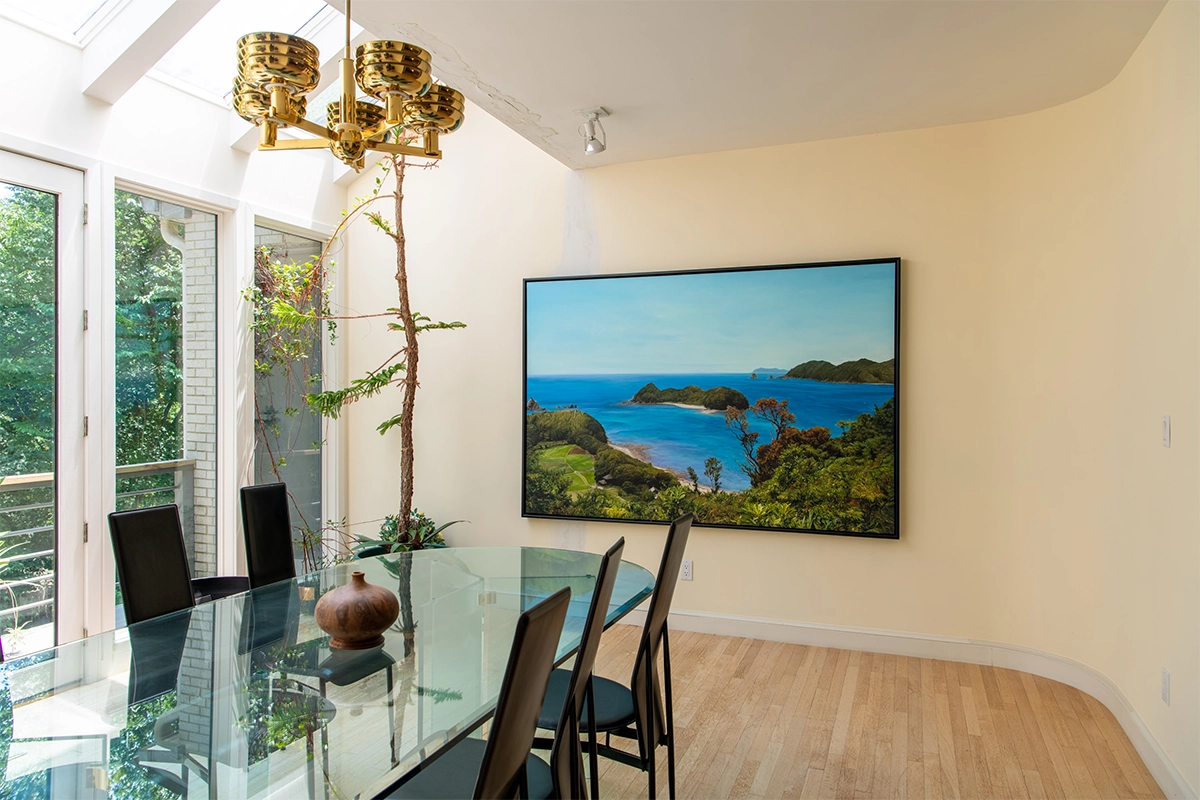
Just a few miles from where Burger lived and died, Penn lives in an elegant house that he designed in North Arlington 30 years ago with his wife, Phalasith (Paula to her friends), whom he met when they were both 16. She escaped Cambodia through Europe, and they were reunited in Paris before marrying and returning to Northern Virginia. Their daughter, Rita, who serves as her father’s business manager, also lives in NoVA.
While his passion for painting never left him, art needed to wait as he supported his young family. Penn became a general contractor “because I like building and I like design,” he says. “I never touched my brush for more than 20 years.”
A Passionate Process
Building and remodeling homes was lucrative, so much so that at age 49 Penn retired to finally become an artist, turning the spacious walls of his home into a showcase gallery and building a professional-grade studio on the lower level where he spends his days at the easel.
“I paint after dinner until 3 in the morning,” he says. “I never sleep. I get so intense with a painting, I sit for eight hours, and I don’t realize it. When I try to sleep, my brain won’t shut down. I keep thinking about that painting.”
Penn travels to Cambodia frequently, hiring locals to take him into the jungle to find new images to render on canvas when he returns to Arlington. Morning Lilies, a serene still-life from 2013, is an example of the extremes he goes to in order to make the photographs he will eventually paint.
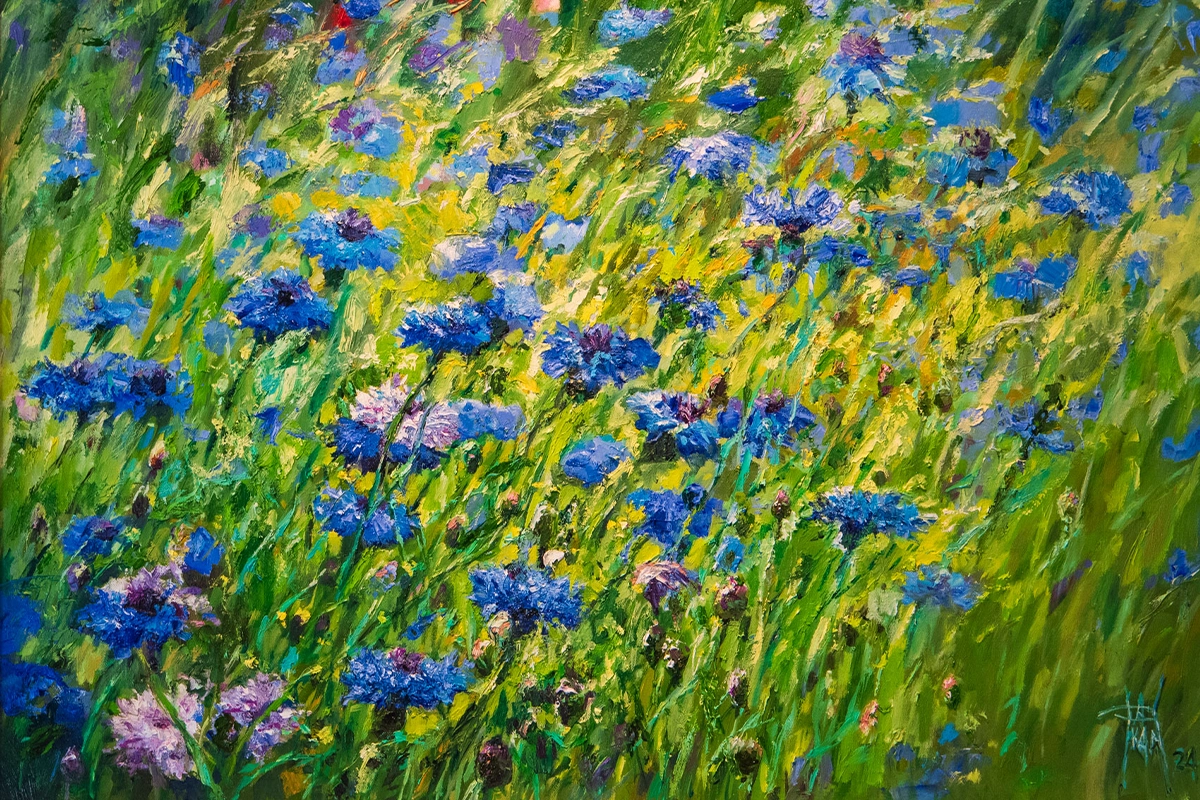
“We went to that place for three days, maybe 4 or 5 in the morning, to wait for that perfect sunlight to capture that lily,” he says. The lily only opens in the early morning, and the sun was not obliging. “We kept going until I got my perfect shot. And I got my perfect painting.”
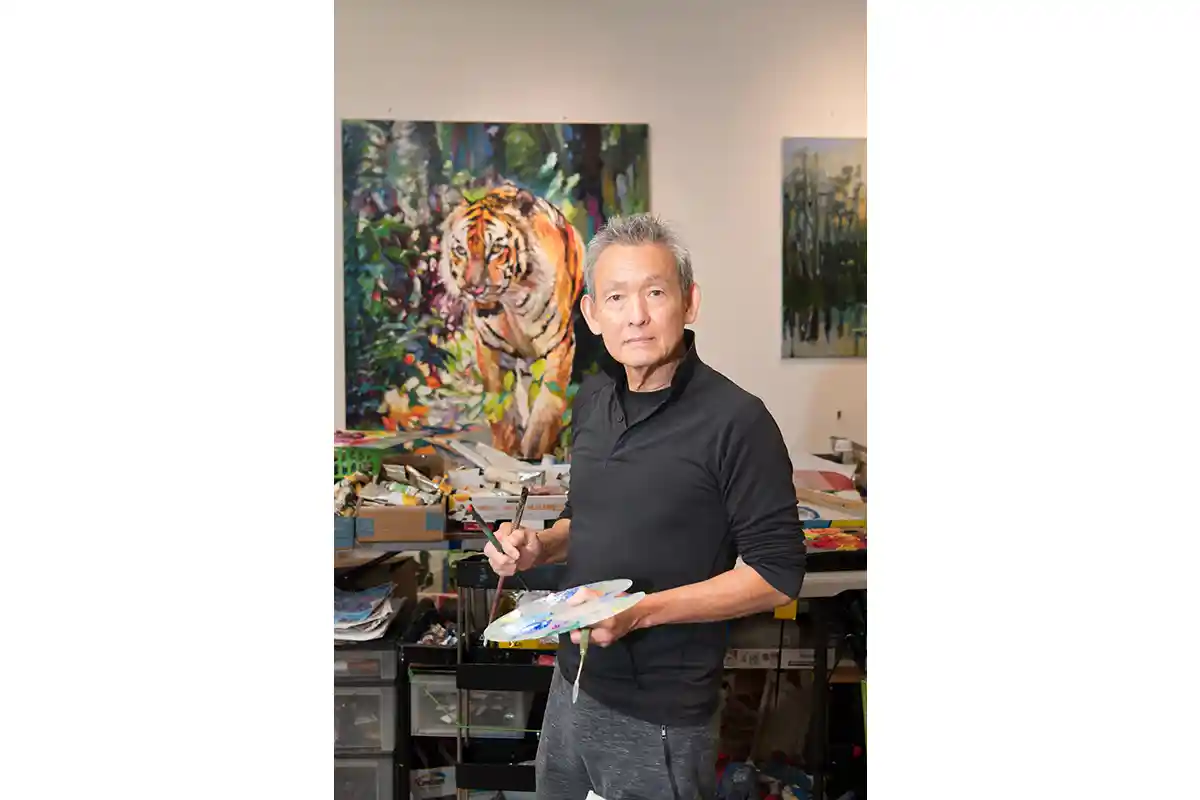
A handsome, menacing tiger pictured on one of his walls was in a remote zoo, “but the zoo in Cambodia is almost like in the wild,” he says. Penn paid the zookeeper to let him get even closer in the enclosure, close enough to notice the tiger’s body odor, something he says can make you gag. “You get very close. You can smell the tiger. And they are massive, an Asian tiger is humongous. I took the photo myself, so I experienced that myself,” he said. “Without that vision in your head, you cannot produce a good painting.”
The Art of Selling
Naturally, Penn uses a lot of paint. His studio is an explosion of colors. His paint library boasts hundreds of tubes in thousands of colors; bundles of brushes and pallet knives are everywhere. He usually has three or four works in progress, and when he finally signs a piece, it’s finished.
You won’t find Pakan Penn paintings in many retail galleries. “Galleries don’t know what to do with me,” he says. His confluence of styles stimies categorization. Besides, packing canvases, transporting them, insuring them, pricing them, and the rest of the retail process is cumbersome and expensive.
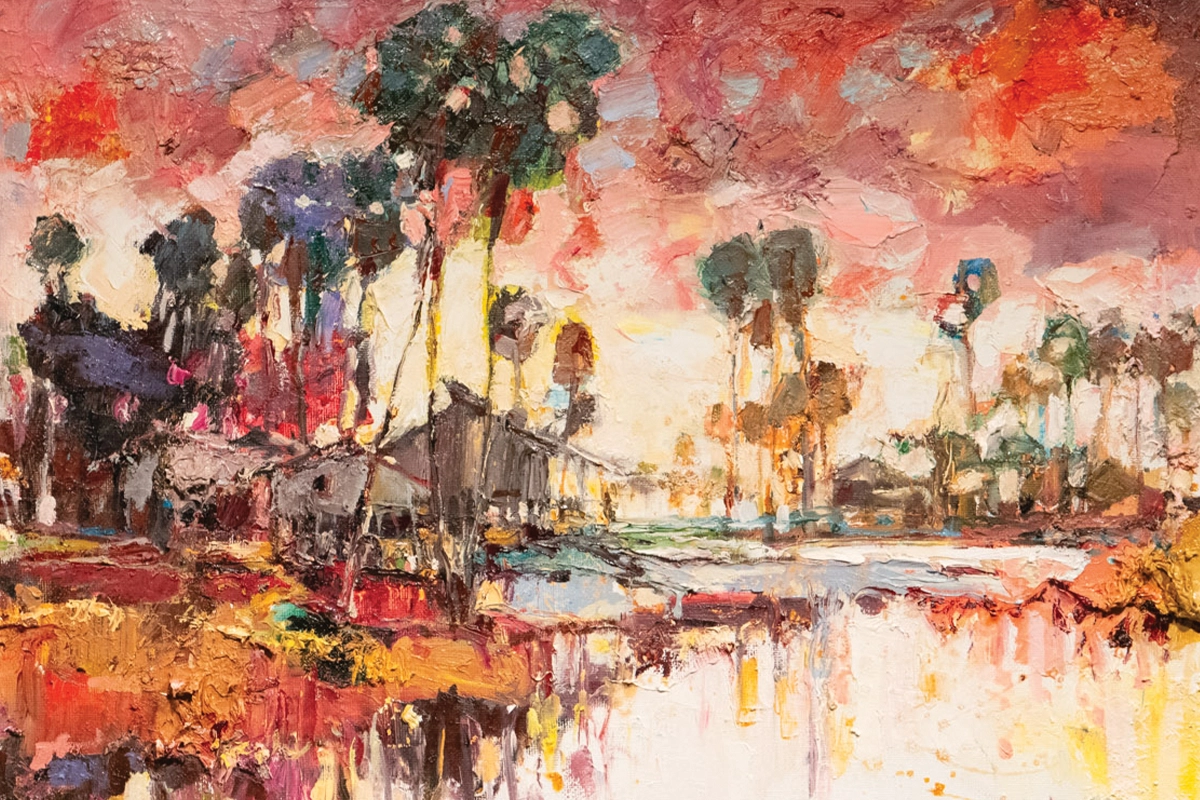
In 2006, the Penns staged their first invitation-only show at their home. It became an annual event, drawing high-income collectors and regional art fans who admire his flowers, horse races, cityscapes, tigers, boats, and countless other scenes, thick with paint and meticulously sculpted with a pallet knife, rendering many of the images into three dimensions.
His lowest priced painting, the first one he sold after retiring, was $4,000. “The buyer, a lawyer, said he doesn’t buy flower paintings because he sees them everywhere, but he ended up buying flowers. I told him the price and he said, ‘This is too cheap!’ He paid us $5,000.” The painting has tripled in value since 2006, Rita says.
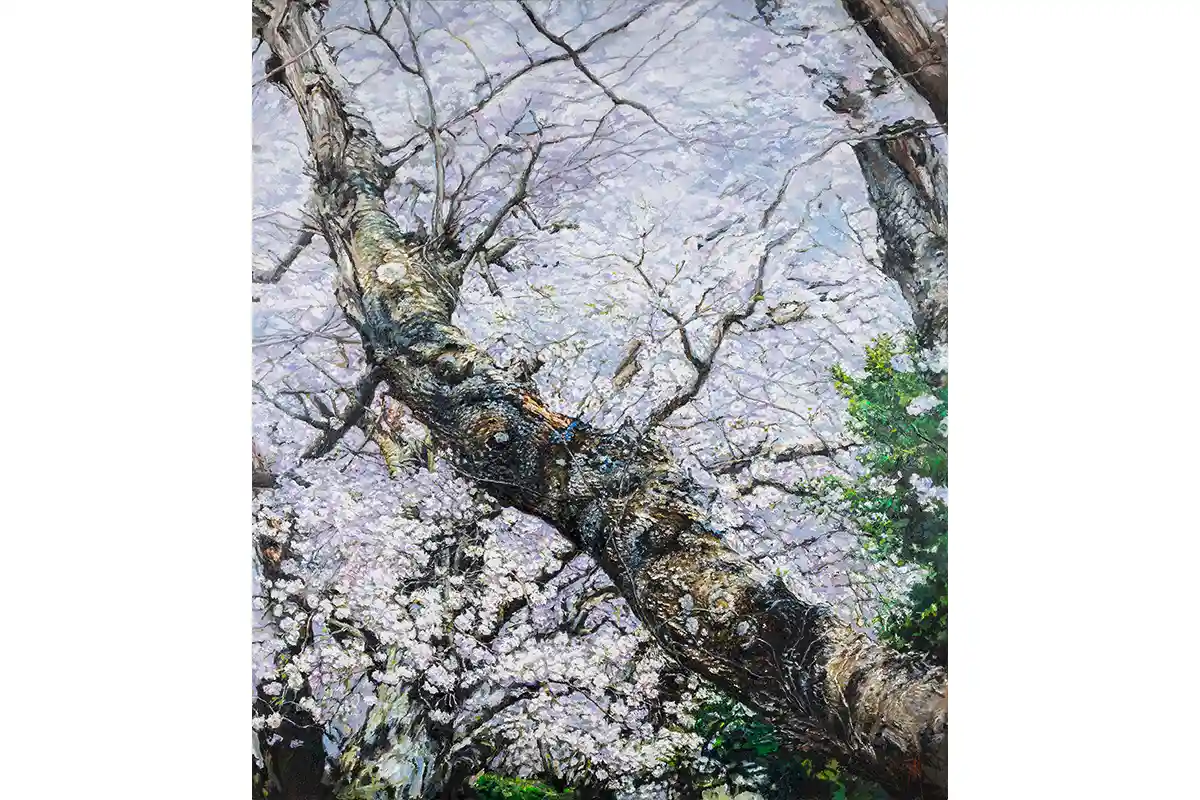
These days, Penn’s bestselling works have been going for between $15,000 and $30,000, but the oversized paintings, a specialty, are valued at $100,000. This summer, he was working on a six-figure piece, a spectacular and evocative 7-foot-by-8-foot cherry blossom branch, the canvas braced against the floor-to-ceiling windows of the billiards room, where the pool table serves as a temporary workspace. “I have to paint on a ladder,” Penn says. “Very dangerous.”
One of a Kind
Penn makes a point to never paint the same scene twice. “It’s a special moment when you paint, and you don’t want to create that thing again,” he says. “It’s not fair to the people who bought it. I respect that people value the painting.”
His clients return that respect.
“I collect Pakan because there is no mimicry here,” says Anthony Lombardo, an artificial intelligence entrepreneur in Naples, Florida. “His art is neither derivative nor re-interpretive of masterwork. Breathing outward is a soul — his soul. As Émile Zola wrote in his 1886 novel The Masterpiece, ‘What is art, after all, if not simply giving out what you have inside you?’”
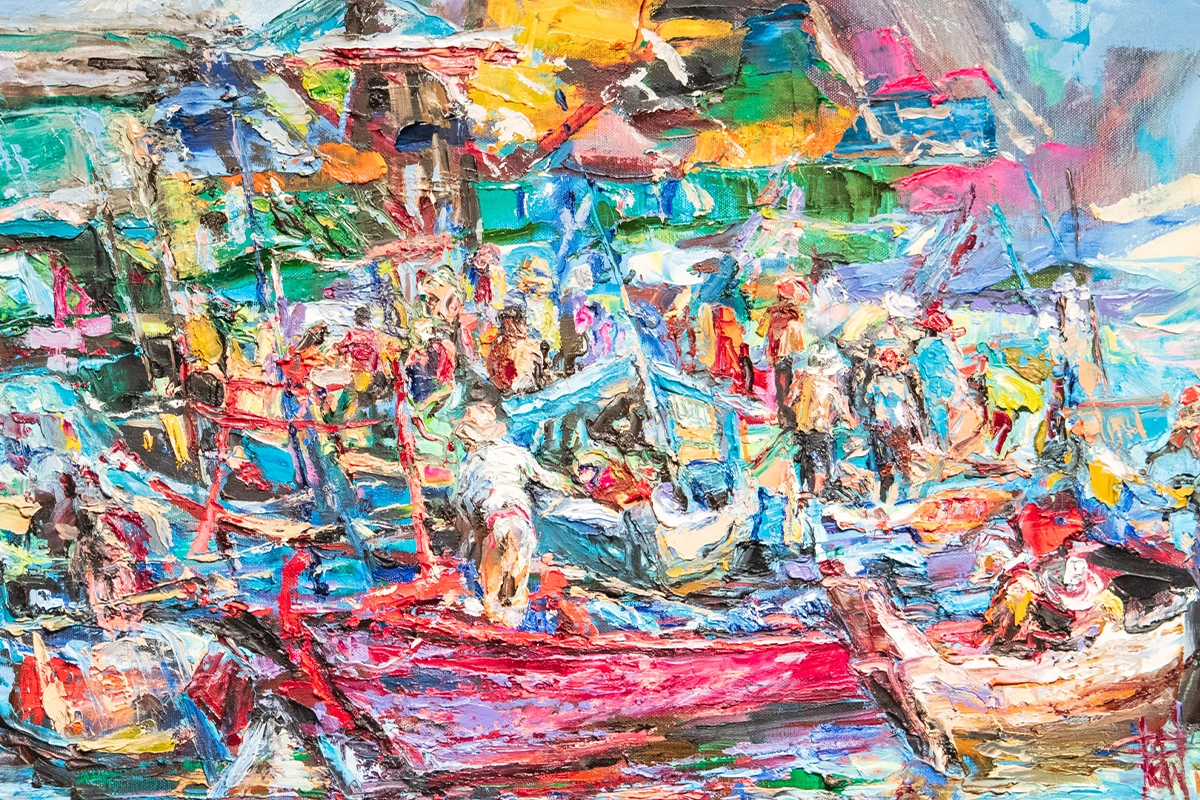
Lombardo collects late-century artists “who reimagine genre, who startle with originality — who transform canvas into a portal through which nature, society, and emotion open anew. Pakan Penn is such an artist,” he says. “Try to arrest movement in any of Pakan’s impressionistic paintings. You can’t. Whether botanicals, equine, marine, or village scenes, under Pakan’s command, images are never frozen, impersonal, or time stamped. Rather, the palette knife–applied oil swirls beneath your view, uncanny, unexpected.”
The effect, Lombardo says, “is kaleidoscopic. … Pakan’s art will be studied, experienced, and enjoyed for centuries to come. Here is an artist who proves that even in an age reduced by mass production and artificial echoes, human originality can still be found.”
That originality requires energy and enthusiasm. At Penn’s age, it’s not inappropriate to ask if the lure of fishing, his favorite pastime, might be stronger than laboring at an easel. He’s retired from a lucrative profession once, will he do it again?
“To me, art is life,” he says. “Art saved my life. The reason that I’m still alive today is because of art, and I will never quit painting ever, as long as I’m able to do so. It continues to inspire, challenge, and intrigue me.”
See more art on Pakan Penn’s website
Feature image by Jeff Heeney
This story originally ran in our September issue. For more stories like this, subscribe to Northern Virginia Magazine.