
After becoming the first Virginian to summit Mount Everest, 32-year-old Sean Burch returned home in 2003 to a life-changing revelation: He still wasn’t happy.
“I thought that if I climbed Everest, that would calm my mind, that I would be happy,” the Fairfax native says. “I came back and realized that wasn’t the case. … It didn’t give me contentment.” So, Burch channeled his mountaineer’s work ethic into discovering how he could “wake up every day looking forward to the day.”
Now, at 53, the multihyphenate wellness warrior says, “Every day for me is a Saturday.” He spends his days inspiring others to feel the same — whether that’s through his executive coaching, fitness instruction, documentary filmmaking, lifestyle books, or record-breaking expeditions.
Facing Fears
Burch holds eight world records in expedition achievements. These include the 2005 Guinness World Records for fastest ascent of Mount Kilimanjaro and fastest time in the 2004 North Pole Marathon. He scaled Everest alone and almost completely without bottled oxygen. In 2016, he completed 31 first ascents of previously unclimbed Himalayan mountains. He once held the U.S. record for speed ascent of Aconcagua, the highest peak in the Southern and Western hemispheres, which he performed solo. He did this all despite an intense fear of heights.
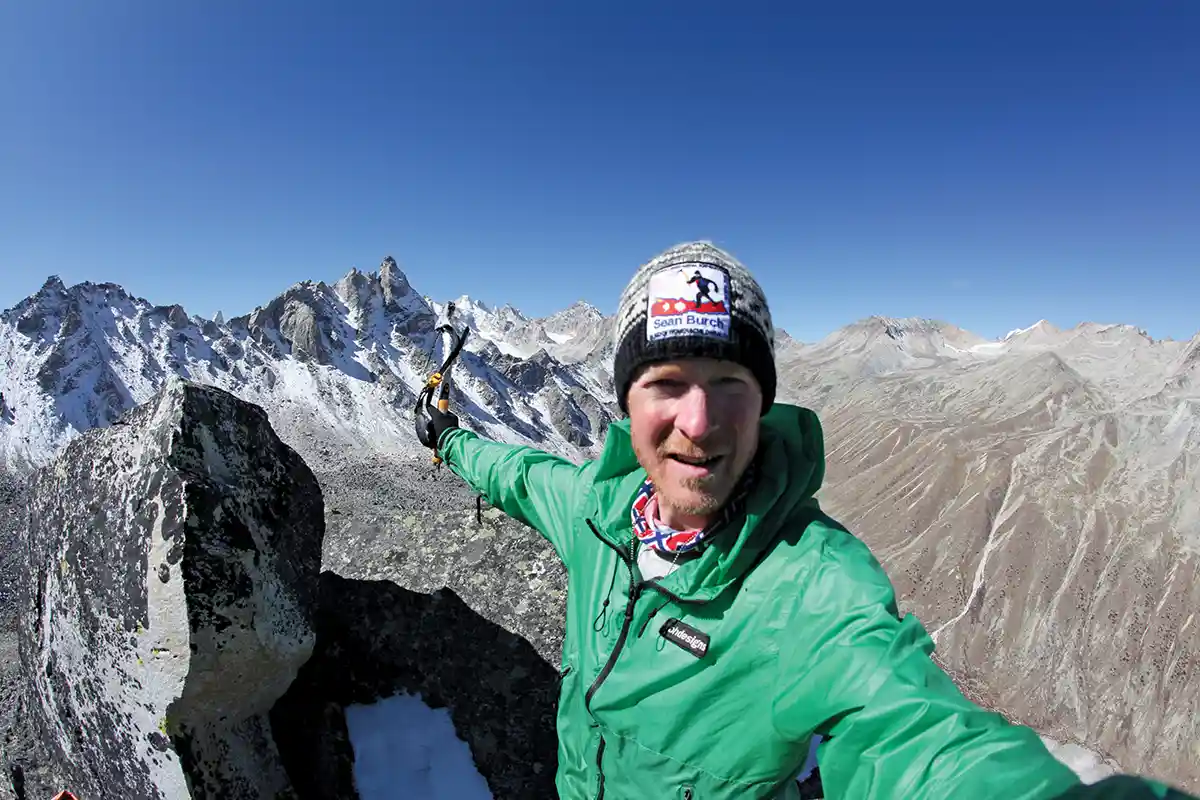
“In Argentina, there are a lot of heavy, really high winds, 150 kilometers per hour. And you’re on the summit, which is insane,” Burch says. “I was scared to death because you’re high up and then you’re being blown around.” At Everest, Burch completed his journeys without the aid of Sherpa guides that many hire to escort them up the mountain. In fact, climbers foreign to Nepal are now required by law to have a Sherpa accompany them. But not Burch — he wanted the challenge of going it alone.
Some may find it bewildering that a man afraid of heights scaled the planet’s highest mountain by himself, but one of Burch’s leading philosophies is, “whatever I’m scared of, I do.” It’s a tenet he shares in the book he’s currently writing, focused on motivation and geared toward Generation X, and in his 2007 book Hyperfitness: 12 Weeks to Conquering Your Inner Everest. And it certainly comes into play when working with companies to hone leadership skills of individuals and teams.
Leading by Example
Burch brings lessons from expeditions to every area of his life. When it comes to overcoming anxiety and being present, he’s worked with clients including FBI hostage rescue teams on breathing techniques and meditation.
Burch meditates “every single morning, no matter what” for 30 minutes. “And if I’m having a really bad day, I’ll do some breathing techniques.” He credits a meeting with a rinpoche, a respected spiritual leader, in Nepal with opening his mind to meditation. The meeting was ostensibly about philanthropy, but they ended up talking about life for two hours, Burch says.
“We talked about expeditions and life in general, kind of centering things on how perhaps I should be implementing some of the things in my life.” It was a year-and-a-half later, after a divorce and low point in his life, when Burch experienced “many mornings waking up and not caring whether I lived or died,” that the words of the rinpoche came back to him. He wanted to be better for his son. Hans, now 19 years old, lives with him in Warrenton. Burch started meditating, and he encourages anyone beginning a meditation practice not to give up: “I didn’t see a change in me until a year-and-a-half. And then it really started to change the way I looked at life.”
In the aforementioned untitled book that he’s been working on for 10 years, which caters to middle-aged people who may have become complacent in their lives, Burch outlines his program on motivation. He teaches self-talk, visualization, and conquering your fears. To inspire motivation, he teaches “hero planning,” which he explains this way: “Constantly run through scenarios where you’re the hero of your own life. By thinking about the scenario and a solution, you’ve already separated that emotion/s (fear, depression, anxiety), and it allows you to trick your brain into thinking you’re in control.” His mantra for that type of motivation: “Attitude is altitude.”
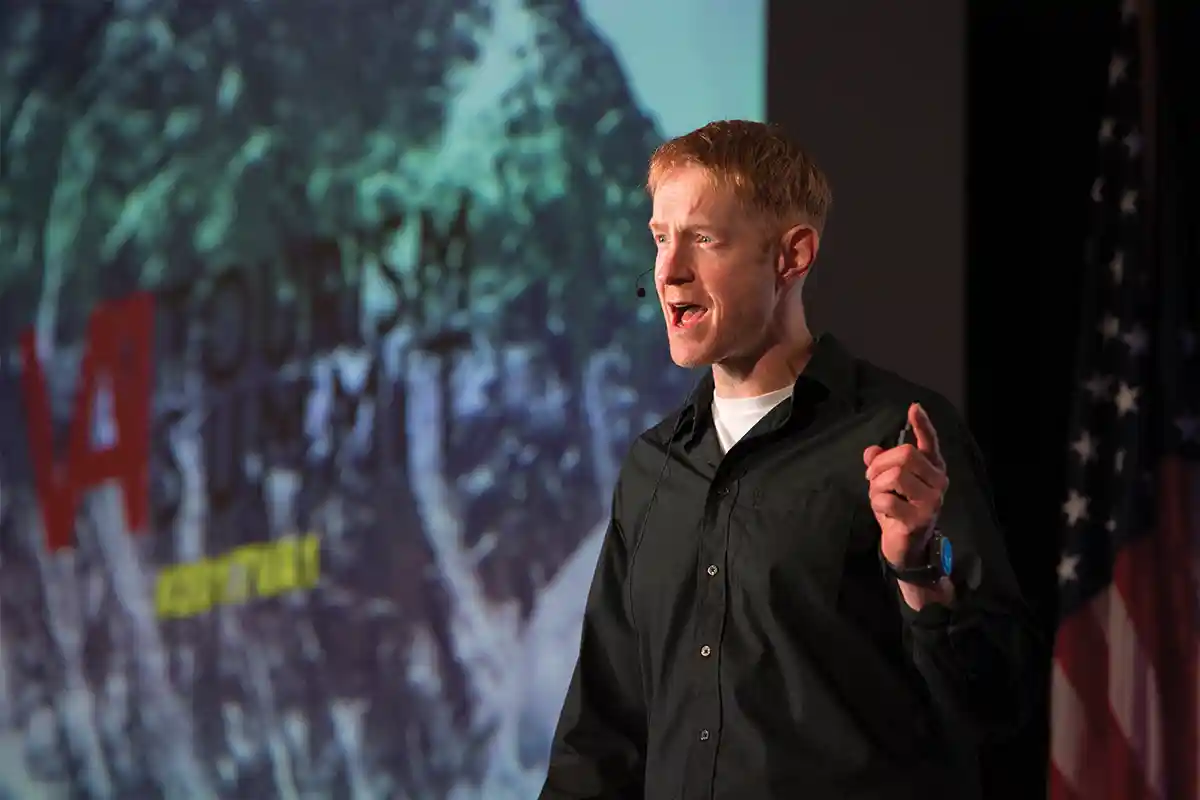
He also teaches movement. “Starting and staying with an exercise plan, which requires discipline, is a motivation for what else is possible … besides the fact that exercise is one of the best things for you. I’ve created over 100 novel exercises in the book to make your wellness routine more exciting and keep your mind engaged.” His mantra here? “Movement is medicine.” Burch himself walks every day. He cooks most of his meals and eats only two meals a day, only between the hours of 1 and 8 p.m.
A third area of focus is on “learn-based outcomes.” He says, “If you’re determined to achieve a big goal just for the result, you’re headed in the wrong direction. Have the motivation to be curious and to learn from the process. … It’s the journey, effort, and learning experiences that should be the motivation. Carry this and life will be that much more fulfilling.” His mantra here: “Trust the process.”
Hans has seen firsthand how his father practices what he preaches. “Throughout my entire life, my dad has made improvements to himself in both his mind and body, especially during my time in high school,” Hans says. “I could see a large change in my father’s demeanor on a day-to-day basis throughout my high school years. I think what helps with these positive changes is his consistency with healthy habits. He works out and meditates every day, and I think that this level of dedication is what helps him change in a positive way.”
A Changing Everest
Scaling Mount Everest is a different beast than it was 20 or even 10 years ago. It’s become more dangerous due to risks related to climate change, such as falling ice and the chance of avalanches. There are also more risks with more climbers, including inexperienced ones. More climbers can lead to overcrowding in the death zone, the area above 26,000 feet where there is limited oxygen, which leads to longer wait times and increased risk of illness. Everest, Burch says, “is not the same as it was before. There are too many crowds, too many people without experience” who are there to pay their way for a guided experience.
“I personally believe you shouldn’t be guided on the mountain,” Burch says. “My thing was the
journey. I wanted the journey. … I wanted to learn from it.” One such lesson became an award-winning documentary series, The Icefall Doctor (2021), which Burch wrote and directed. It follows Angnima Sherpa, one of the longest-serving “Icefall Doctors,” before his death. Burch said Angnima held the most dangerous job on Earth, securing the route on the slopes of Mount Everest, for more than three decades. Burch filmed in Nepal periodically over four years to achieve the cinéma vérité–style look at the life of Angnima and his family.
“Everyone has a story to tell,” Burch says. “What I’m trying to do is just tell stories that people will learn from and find interesting. … The idea is always to keep your mind open.”
Parting Words
Before he climbed Everest, in his late 20s, a conversation with his grandfather led Burch to rethink the direction of his life. “The last time I saw him before he died, he said, ‘You know, there are so many things in my life I wish I had done, and I won’t be able to do that. I don’t want that to happen to you.’” Burch recalls being surprised because he saw his grandfather as an adventurous person, a World War II veteran who spoke four languages and traveled the world. “I didn’t really look deeper until he passed. When he passed, I started to really think about life and what it meant and what my purpose was.” He started looking at the goals he had in life. One thing Burch always wanted to do was climb Mount Everest, so that’s what he set out to accomplish. “For me, complacency is the death of you … in business, life, dreams, relationships, everything,” Burch says. “To me, ambition in life should never cease.”
Feature image of Sean Burch courtesy Sean Burch
This story originally ran in our August issue. For more stories like this, subscribe to Northern Virginia Magazine.