In her new book, The Dirty Truth on Social Drinking: “Everything in Moderation” and Other BS, Ashburn author Hadley Sorensen describes how she walked away from a relationship with alcohol that began when she was just 14.
A friend’s grandmother was out of town, so she and her friend helped themselves to her liquor cabinet, says Sorensen, an Oakton High School graduate who grew up in Franklin Farm. “From then on, I associated alcohol with fitting in and having a good time. It wasn’t every day, but drinking helped me be the life of the party that I thought people wanted me to be.”
Sorensen graduated summa cum laude from Virginia Tech in 2002, despite regular binge drinking. “College confirmed that I was a blackout drinker,” she writes in her book. “Hours of my life could go missing while I was still totally conscious, walking around and partying.”
Two decades later, Sorensen, now 44, fell into a cycle of suburban weekend partying followed by hangovers, regrets, and vows to drink less, all while raising three sons and managing a successful online business as a health and fitness coach.
“How ironic,” says Sorensen. “I was great at preaching the essentials of a healthy lifestyle, but I always made exceptions for alcohol. I joked about it on social media and built a whole brand around being a wine-obsessed mom who loves fitness. On the outside, I looked like the perfect PTA mom, homemaker, and marathon runner, but on the inside, I was barely hanging on by a thread.”
Social Media Miscues
Sorensen’s book provides stark examples of how society perpetuates the notion that drinking makes every event more fun, and, worse, that it is the best way to cope with the stress of motherhood.
“It’s a bizarre message when you really unpack it, and I was a prime offender,” Sorensen says. “Facebook and Instagram are filled with jokes about how we need to chug one down before helping our kid with their algebra homework. … We are fooling ourselves if we think that the way drinking is represented through social media and pop culture is not influencing the way we interact with our children.”
Sorensen says people have been conditioned to think there are two types of drinkers, alcoholics and normal drinkers. “Alcoholic is a colloquial term, but the scientific diagnosis, Alcohol Use Disorder, actually represents a wide spectrum, ranging from mild to severe.” This includes those who teeter on the edge without tumbling into true dependency.
“Problem drinking doesn’t have a particular look. You don’t have to hit rock bottom to want to quit,” she says. “Many people, like myself, fall in a gray middle area, afraid to admit we are struggling and wondering if we are alone.”
Quitting for Good
On August 6, 2021, after consuming the equivalent of two bottles of rosé at the family’s weekend house at Lake Anna, Sorensen woke up with a pounding headache, chills, and spins. She gripped the bed and decided that would be her last hangover. Sorensen has not had a single drink since that day.
It wasn’t easy. For years, she had tried to “responsibly” drink in moderation, only to be lured by a friend’s bucket of Fireball shooters or a pitcher of margaritas. Sorensen realized that total abstinence was the only way she could break the cycle.
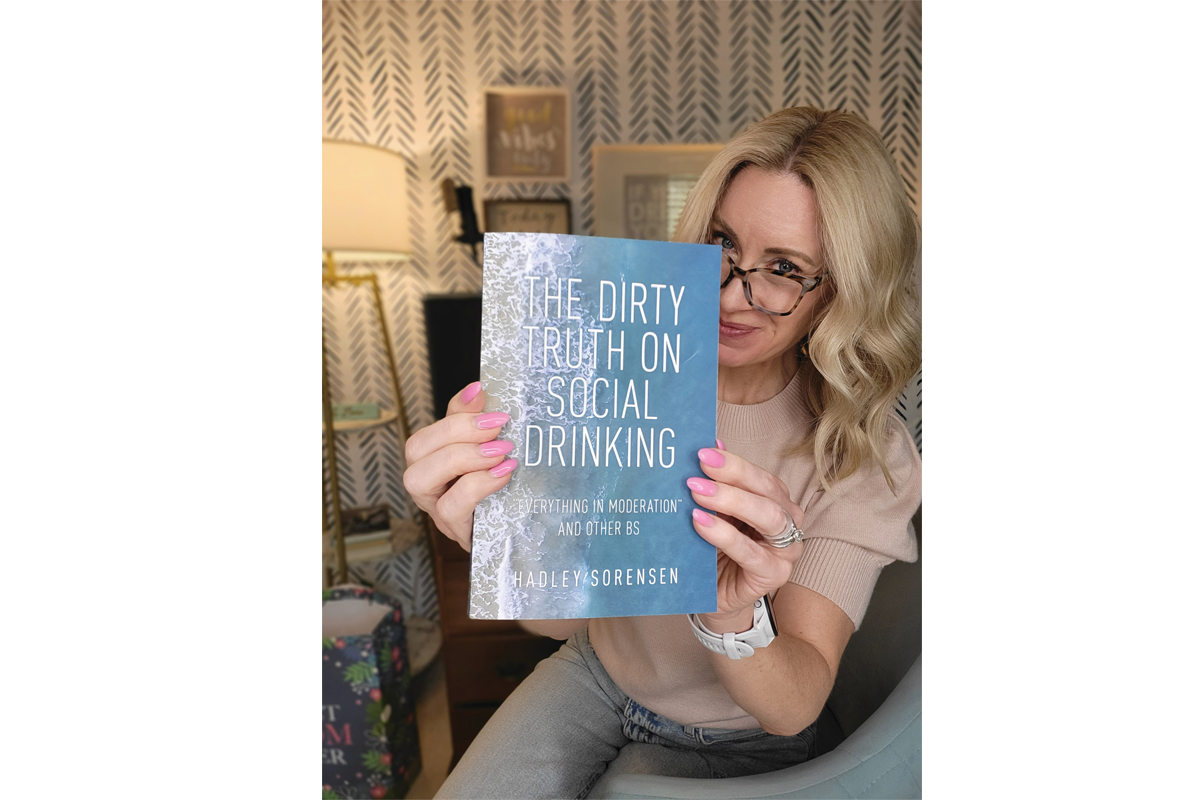
She turned to self-help books. “Arming myself with information was key,” she says. “The science is clear — alcohol is poison, and no amount is healthy. Once you learn the horrible facts and statistics about alcohol’s effects, you can’t unlearn that, making it much easier to walk away.” Sorensen compares alcohol to other drugs and carcinogens. “Alcohol rates at the top in terms of damage, yet society views it differently and gives it a pass. Can you imagine telling someone to just smoke cigarettes in moderation or to use crystal meth only on special occasions?”
Her Life Now
By sharing tidbits of her sobriety journey on her blog The Sobriety Hype Girl (on hadleysorensen.com), Sorensen realized that grouping her experiences into a book could help others. The first-time author’s print-on-demand title launched on Amazon in May. “So far the response has been great,” says Sorensen.
Since she stopped drinking, she feared her relationships with family and friends would change, but they haven’t. “They’ve been supportive. We still go to Wolf Trap, parties, and our favorite places, but I just don’t drink. I’m now truly healthy, inside and out, and that feels amazing.”
Feature image courtesy Hadley Sorensen
This story originally ran in our August issue. For more stories like this, subscribe to Northern Virginia Magazine.