Parenting comes with responsibility, and no one summarized this better than the late first lady Jacqueline Kennedy, who famously said, “If you bungle raising your children, I don’t think whatever else you do well matters very much.” The pressure is real. Parents invest in what’s good for their children, from swim and piano lessons to orthodontia and SAT tutors. During that hustle, one traditional activity is sometimes overlooked: social cotillion.
Long considered a rite of passage for middle school girls and boys, privately organized cotillions teach etiquette, social graces, and formal dance. Instruction often continues through high school and sometimes culminates with a grand debutante ball, where young women wear elegant gowns and are formally “presented” in a ballroom filled with family and friends.
If this seems outdated for today’s students, think again. Although deeply rooted in Southern tradition, cotillion in modern Northern Virginia has kept pace with our changing society, and based on discussions with cotillion directors, parents, and students, it may be exactly what this generation needs.

Not Your Mother’s Cotillion
Formal dances and fancy teas remain a component of modern cotillion, but today the primary goal is producing confident, contributing members of society who can navigate interpersonal situations with skill and grace. Gone are the days of encouraging young women to be politely subservient. Instead, the focus is on treating everyone with equal kindness and respect.
“If more families understood how current our curriculum is, it would reduce a lot of biases about cotillion,” says Devon Wellington, who, with her husband, David Wellington, directs the National League of Junior Cotillions’ Northern Virginia chapters.
“Our biggest challenge is overcoming the misconception that cotillion is frivolous or elite,” she says. “We work hard to make our programs substantive and available to everyone.”
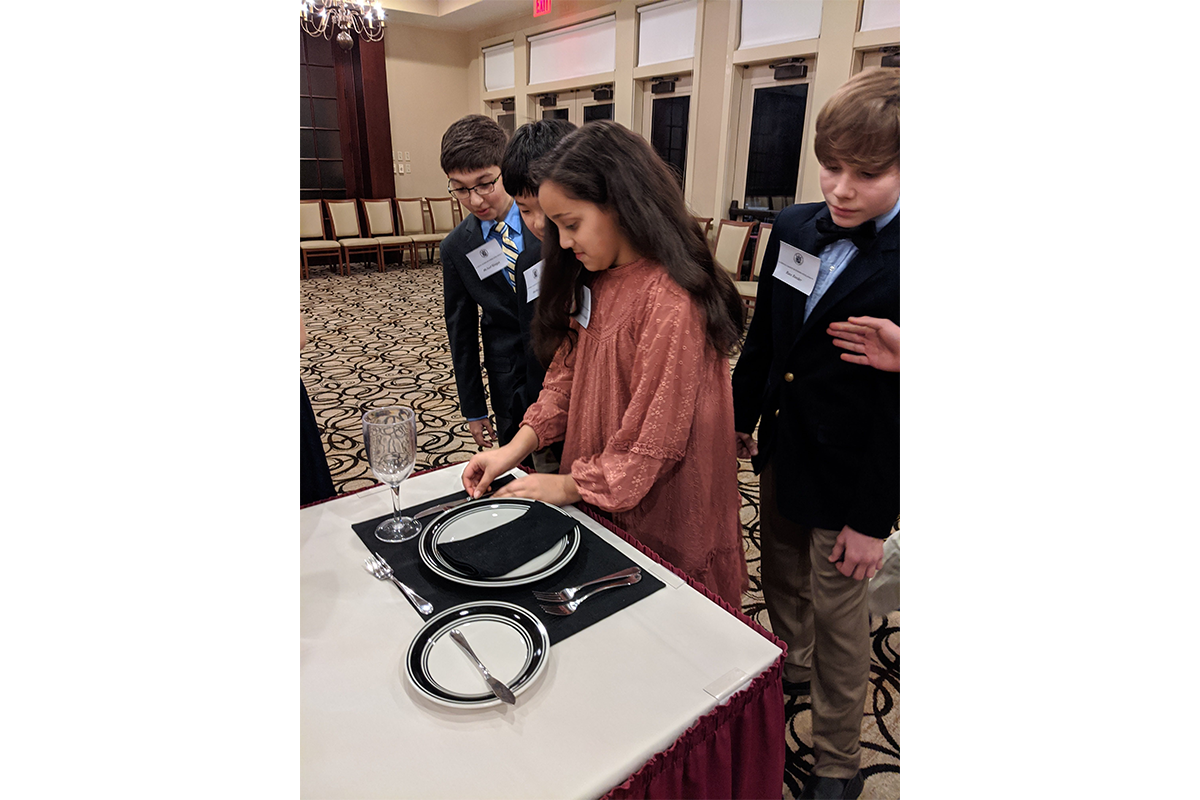
Students reflect a range of cultures and ethnic ties and are just as likely to come from public and home schools as private. Students meet once per month beginning in September and conclude with a ball in March. Besides dance instruction, classes cover everything from table manners to internet safety to personal correspondence. Payment plans and scholarships are available.
NLJC NOVA has been under Wellington family leadership for 30 years. “I grew up out West and never heard of cotillion before I met my husband, but he was raised with it,” says Devon. David Wellington’s mother ran chapter operations for 23 years before the couple took the reins. Devon estimates they have ushered at least 10,000 students through cotillion and currently instruct about 400 students per year.
“We teach young women and men how to interact with others using honor, dignity, and respect,” she says. “The skills they practice stay with them forever.”
Parent Vinita Rhodes enrolled four children with NLJC NOVA. “I wanted my children to be prepared to respectfully engage with adults and peers in any setting,” Rhodes says. For son Sonny, 19, that meant attending a business dinner at the Tower Club at Tysons. “I learned how to interact in a business setting, which helped me get recruited for college athletics and be a competitive candidate for internships,” says Sonny. For daughter Sabina, 16, who is currently a cotillion class assistant, it’s more about dancing and leadership. “My favorite memory is my first ball in sixth grade and winning one of the dance competitions.”
NLJC NOVA does not offer debutante presentations, but NLJC’s Loudoun County chapter does. Lisa Hale of Leesburg has been director of NLJC–Loudoun Chapter for five years. Loudoun currently has about 240 students, grades K through 12, registered in programs that cost between $225 and $425 per year. The debutante pro- gram, which is only offered every few years and involves a fancy dinner, live orchestra, fresh flowers, and photo sessions, runs closer to $1,200 a season. Hale says the next debutante ball will occur in 2025.
“Obviously, we aren’t presenting debutantes as available for marriage,” Hale says, noting that students leave the program bound for college and careers. “We focus on debutantes’ accomplishments, celebrating strong young women who contribute to society.” Each debutante completes a service project, which is highlighted at the ball.
Because Manners Matter
“Most parents want their children to present themselves well, to be kind and respectful,” says Ann Achiu of Burke. Achiu has led more than 30,000 students through cotillion during the 20 years she has been director of Northern Virginia Junior Cotillion Fairfax and Arlington chapters. This year, about 1,200 students are registered.
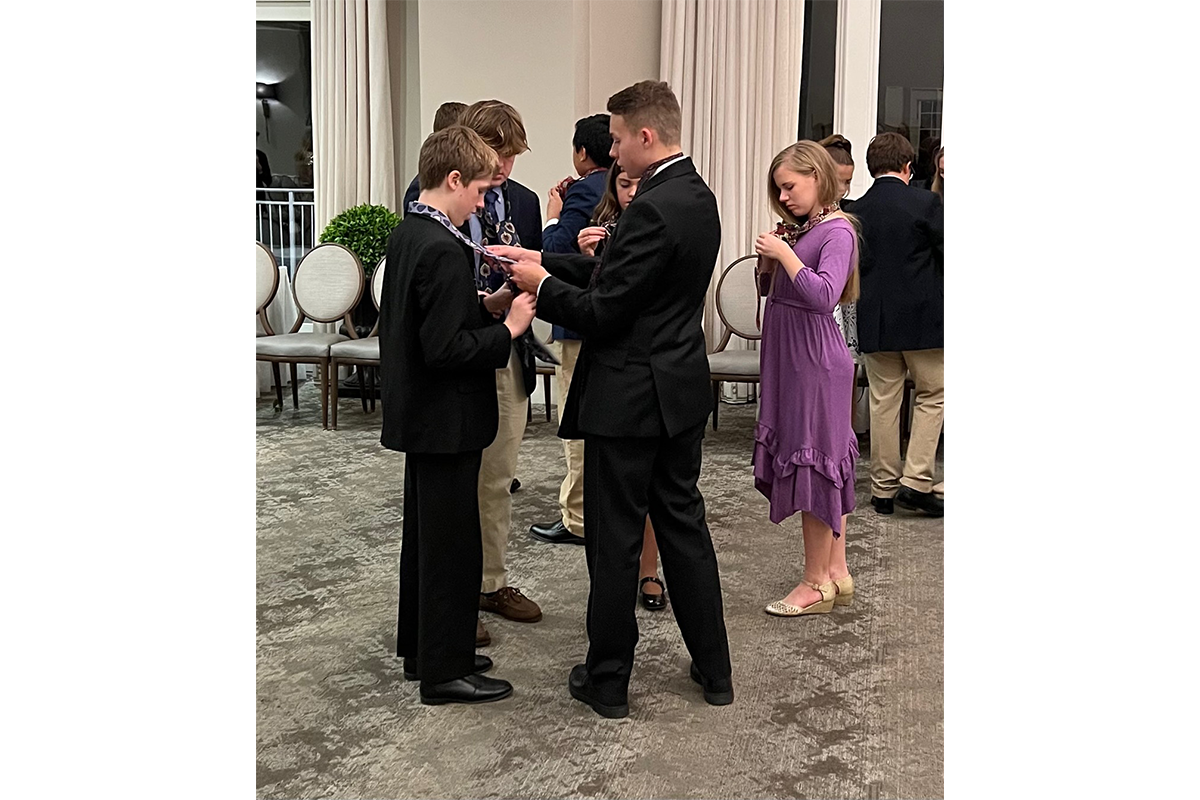
“Manners eroded during COVID,” says Achiu. “Kids didn’t learn basic things, like waiting in line or even that they can talk to someone of the opposite sex without it being romantic. Our world in general has grown more coarse and self-centered, so I think cotillion is needed everywhere,” she says.
“Seeing the boys and girls progress is like watching a science film where a flower slowly opens,” says Achiu. “It’s hard for middle schoolers to think beyond themselves, so we ask them to notice the classmate who is sitting alone in the cafeteria or to help the student who is struggling with something they have down pat. Any time we treat a person with kindness, we are doing the right thing.”
All of Achiu’s children completed cotillion, including her son, who is now an attorney. “We teach that after an interview, it’s important to send two thank you notes right away — an electronic email, followed by a written letter,” says Achiu. “When my son applied to law school, he followed that advice. The dean told him afterwards that he was the only one who sent a handwritten thank you, and that it was that extra effort that made him stand out.”
Learning Life Skills
“Cotillion has evolved,” says Lynn Williams, who has been directing the girls-only Old Dominion Cotillion since 1991. “This is not a Betty Crocker operation, and we are not grooming our girls for marriage. We build skills. One of our fathers taught the girls basic car maintenance, like checking the oil and changing a tire.”
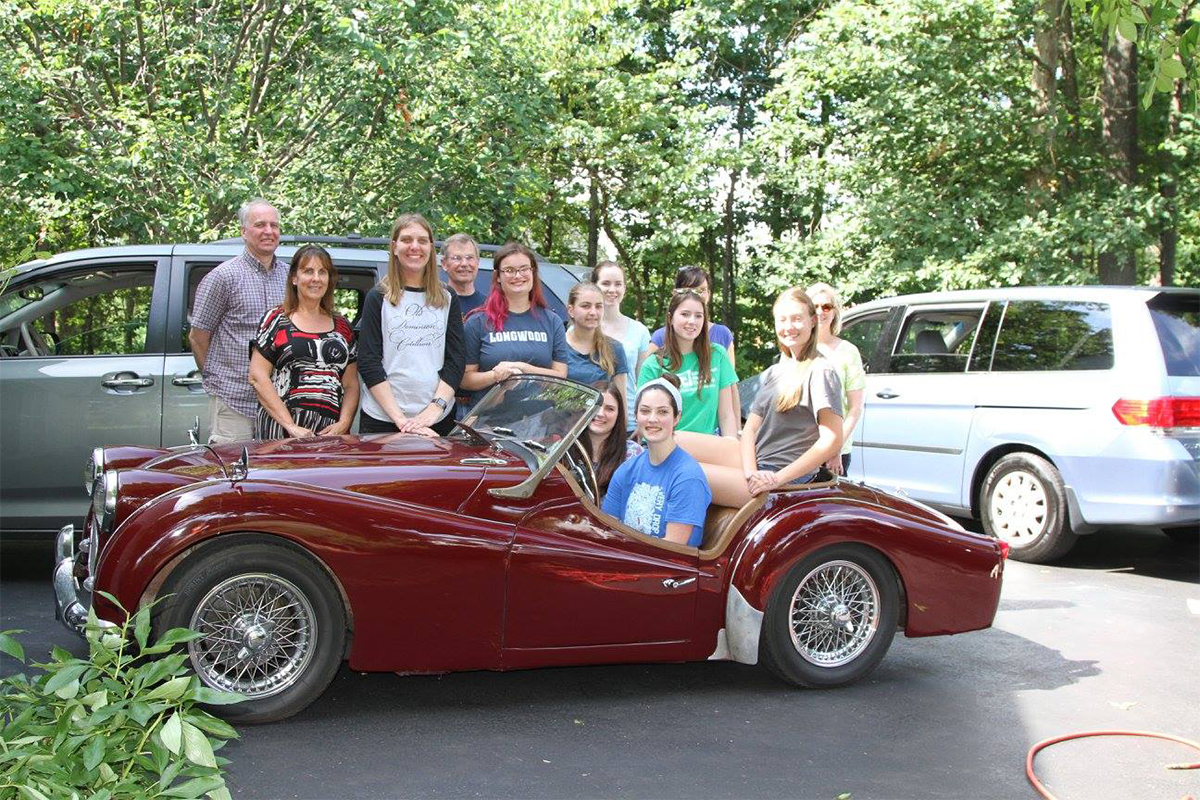
With girls who are just as comfortable working under a car hood as they are in a receiving line, ODC has presented more than 375 debutantes since its first ball in 1992. “We focus a lot on social development and participate in philanthropic service,” says Williams.
Parent Ashleigh Dorfman of Reston enrolled three daughters at ODC. “I never attended cotillion, and when I first entered college and then the workforce, I was ill-prepared for professional social interactions, and I felt it showed. I didn’t want my girls to experience that,” says Dorfman.
Daughter Lauren Dorfman debuted in 2021 as a South Lakes High School senior and is now a junior at George Mason University. “I meet people all the time who I think could have benefited from some of the simple things taught in cotillion, like how to hold a conversation, shake someone’s hand confidently, or being respectful in public and using a filter,” says Lauren.
“The hardest part for me was the debutante ball, because I’ve never been overly interested in the whole getting dressed up vibe, but I did love the gown I wore,” says Lauren. “I didn’t tell many friends I was in cotillion, because it’s hard to relate to if you don’t do it yourself, and I thought they might make fun of me.” Lauren says her favorite event was a flower-arranging class. “We made bouquets, and I am always using what we learned.” She also notes that she received compliments on the confidence and conversation skills she demonstrated during college internship interviews.
In the years following the pandemic, Williams temporarily put ODC on break before a fresh restart. “I’m talking with students and parents about what they want out of cotillion going forward, and that may no longer include the traditional ball with big white dresses,” she says, citing rising costs and decreased interest.
Grand Traditions
“I absolutely love cotillion season, because as a product of it myself, I loved what it did and meant for me when I was young,” says Adria M. Tippins-Owens, chair of the Ivy Foundation of Northern Virginia cotillion. IFNV was founded by members of the Zeta Chi Omega Chapter of Alpha Kappa Alpha Sorority, Inc., the first historically African American sorority.
For more than 60 years, IFNV and the Zeta Chi Omega Chapter have sponsored an annual cotillion, preceded by five months of cultural and educational activities. Activities have included formal societal events, such as going to The Kennedy Center to see the Alvin Ailey American Dance Theater perform. Proceeds from the cotillion fund educational stipends for the debutantes.
The cotillion experience takes Tippins-Owens back to when she was a debutante in the 1990s in Pontiac, Michigan. “I enjoyed my experience so much, I gladly got involved when I moved to Northern Virginia and became affiliated with the chapter,” she says. “When I watch these young women dance with their fathers, I know they are feeling what I felt when I danced with my own dad when I was just 18. It’s incredible to watch these daughters relate to their moms and dads in this formal setting.”
This past year, IFNV cotillion had 18 debutante participants, the largest class in several years.

“We equip our participants with the tools necessary to navigate today’s society and to become global citizens as they transition into college and young adulthood. We teach them that community service is just as important as their academic endeavors, and we want them to understand the strength in the heritage of African Americans.”
IFNV’s cotillion is a carefully coordinated formal affair, complete with long gloves and billowing white gowns and tuxedoed marshal escorts.
“Everyone looks so beautiful, everyone is so regal, and they know that all of their hard work is being placed on display at that very moment,” says Tippins-Owens. “They represent the epitome of their ancestors’ dreams, to be able to be on a platform where they are being celebrated, respected, and loved.”
Feature image, stock.adobe.com
This story originally ran in our May issue. For more stories like this, subscribe to Northern Virginia Magazine.