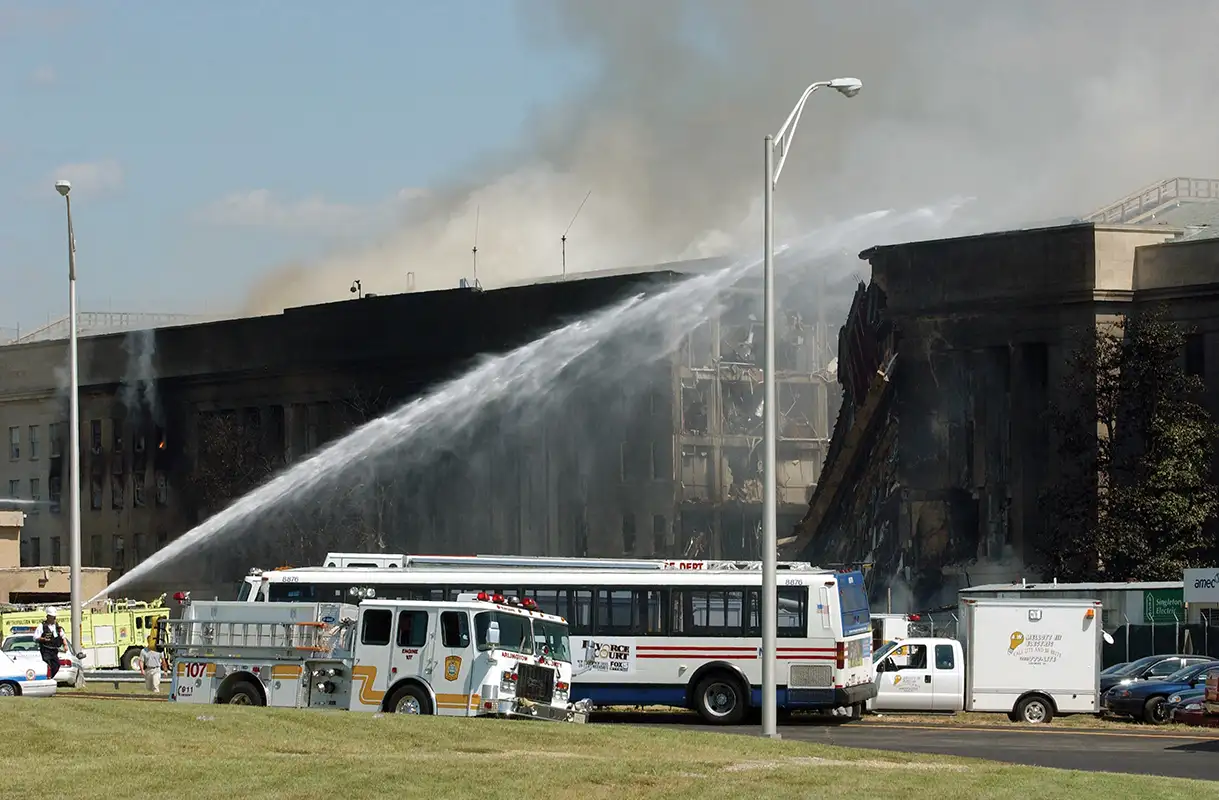
A quarter of a century has passed since hijackers crashed a plane into the west face of the Pentagon in Arlington, killing all 64 people on board (including themselves) and 125 personnel inside the building.
The Pentagon crash was part of the coordinated four-pronged attack soon known around the world as simply 9/11. On the 25th anniversary of the attacks, five NoVA residents share their firsthand accounts of the day that changed their lives forever.
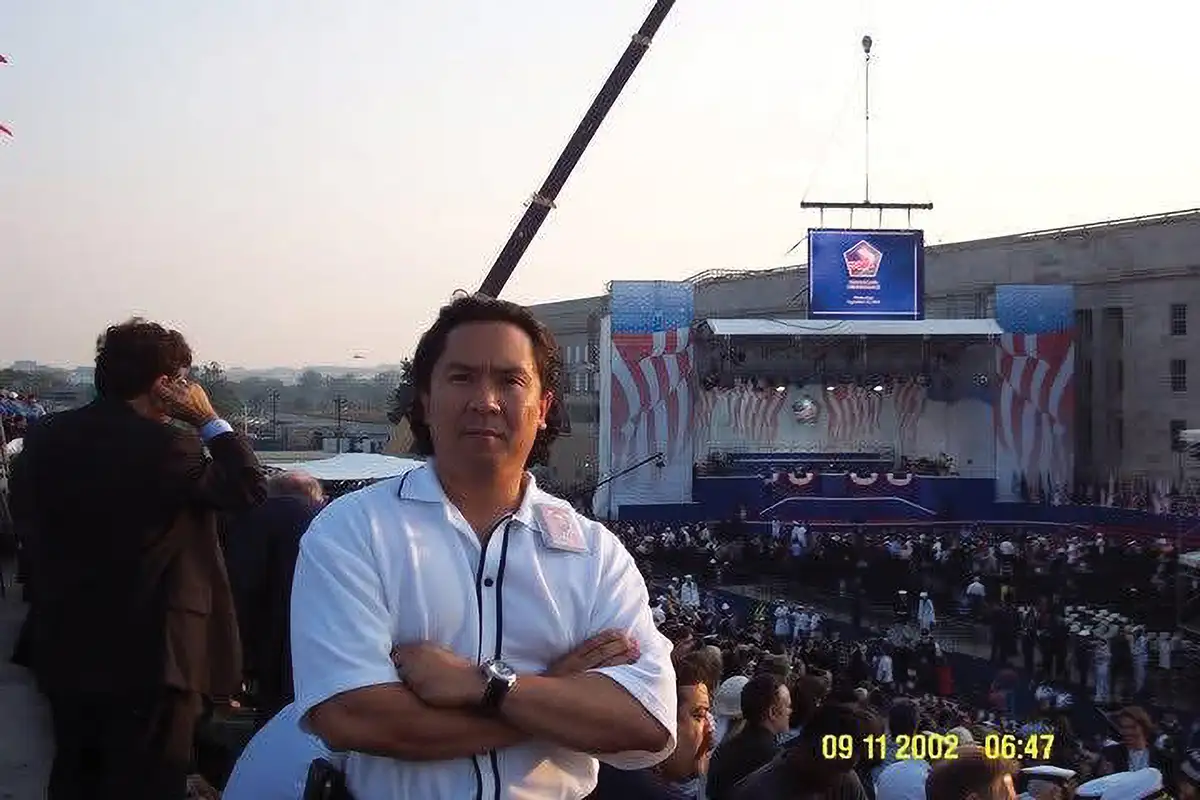
Herbert Valle
A contractor who was in the building when Flight 77 hit the Pentagon
Sterling resident Herbert Valle was feeling good the morning of September 11. “I had just returned from vacation, and it was my first day back at work. I felt really refreshed,” he says. A disabled veteran, Valle was working as a civilian contractor supporting Pentagon building renovations.
Valle parked at the Pentagon’s north lot at about 7:45 a.m. and followed the riverside walkway to the entrance. “Such a gorgeous day — a little bit cool, and the sky was blue.” His arms were full. “The Pentagon has lots of shops, so I brought my dry cleaning and some film rolls to be developed. I dropped everything off at my cube before making the rounds to chat with coworkers about our projects.”
Valle walked with his team down a hallway to an area called Wedge 1, the first phase of the Pentagon’s massive renovation program. Wedge 1 renovations were nearing completion on September 11. It was the very wedge destroyed in the attack.
“We met with the front office folks there and admired the new furniture and everything. Then we went up the corridor from our director’s office, to check out what would soon be our new space. We had not moved in yet, because of delays and a few things that remained to be fixed. It all looked really nice, and then we returned to our desks to continue the day’s work.”
Word soon spread that a plane had hit the World Trade Center in New York. “We gathered around a television in the conference room, and I couldn’t believe what we were seeing. At that point, none of us considered a terrorist attack. We thought maybe it was just a plane that lost control. When the second plane hit, we knew it was no accident.”
Valle returned to his cubical and started to gather the dry cleaning and film rolls on his desk, going about his usual business. “I heard a loud swishing sound, a big boom, and then everything seemed to move to the left. The lights turned off, the building shook, and I was pushed up against a cement column next to my cube.” The lights came back on. “A huge blast of smoke and flying debris was gushing down the hallway. My colleagues and I just stared at each other, trying to comprehend what was happening.”
Valle and other employees evacuated the building. “As we came out of the darkness and smoke, it seemed like we were walking into heaven,” he says.
Valle remembers hearing police and fire sirens. “I see lots of damage, and I think maybe there’s been a car bomb, but then I see what looks like parts of an aircraft frame. I look to my left, and everything is burning. I see fire and bright light. So surreal. I wonder if a helicopter blew up, or maybe a diesel generator from the construction area.”
His group proceeded up a hill, where they encountered a woman who was shivering and seemed to be in shock. “She had been driving on the highway, and a chunk of metal hit and collapsed the roof of her car. We tried to comfort her.” Still unsure of what exactly had happened, Valle and his colleagues returned to the Pentagon’s entrance to offer help but were turned away. “We were instructed to go home the best way that we could.”
The staff members in the director’s office Valle had visited minutes earlier were killed when the plane hit. “Everyone except our secretary, who had briefly stepped away from her desk. Just minutes had separated me and my colleagues from the blast. That realization was crushing. Had the renovation stayed on schedule, we would have been working in that space that morning. We were given the gift of another day, and I’ve never taken that for granted.”
Valle was treated for anxiety after the event. “For months, we all carried our backpacks with us everywhere we went in the building. The women, they carried their purses. Because if something were to happen again, we were worried we wouldn’t be able to get back in to get our stuff. A lot of us remained on edge for a long time. I did carry the weight of survivor’s guilt. Surviving that day was a blessing, but it came with invisible wounds.”
Valle’s experience also propelled him to a life of service. He honors military veterans through a nonprofit he co-
founded called Chariots of Honor.
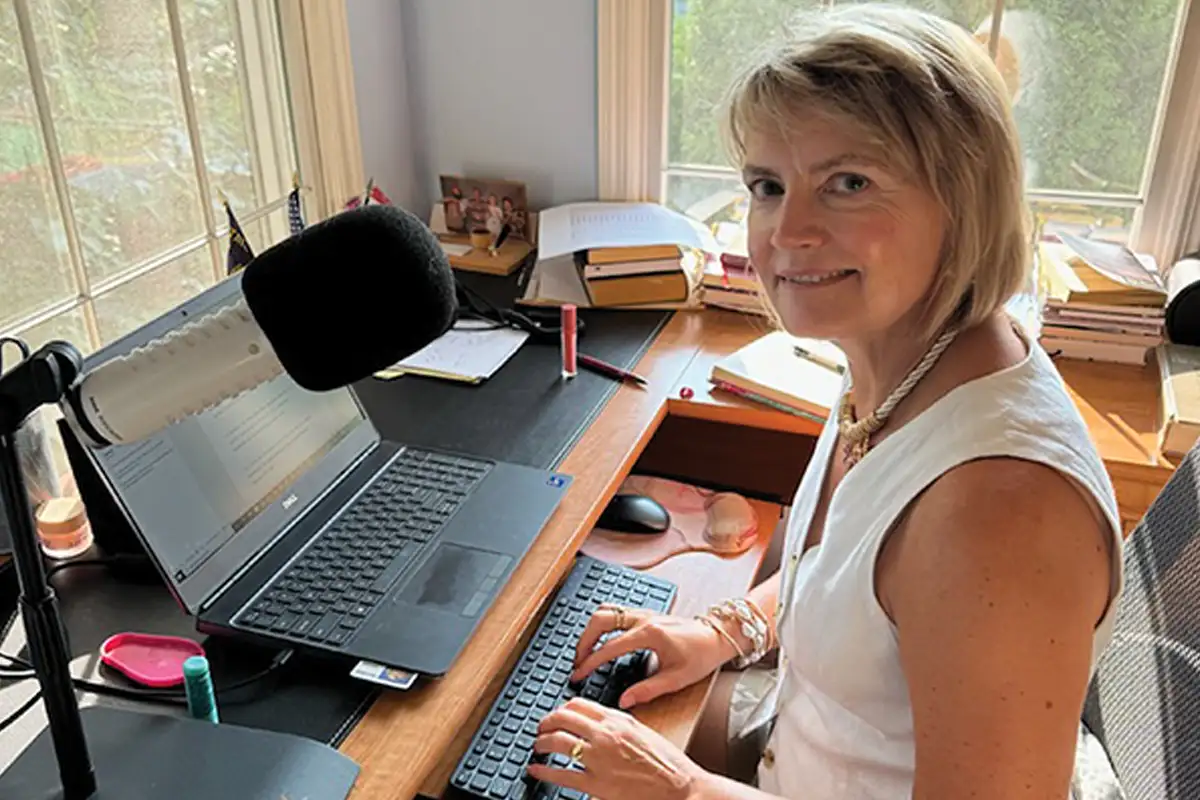
Kristine Thompson
A journalist who was stuck in traffic trying to get home to her children
September 11 began like any other for Reston resident Kristine Thompson. Rising before the sun, she and husband Mark tended to their two toddler sons before dropping them off with their babysitter.
Thompson then boarded the Metro’s Orange Line, and by 8 a.m., she was at her desk at 330 Independence Ave. in Washington, DC. Thompson is an editorial writer with the Office of Policy at the United States Agency for Global Media. “Our editorials reflect the views of the U.S. government and are broadcast on Voice of America,” she explains.
Someone in Thompson’s office turned on the television right before the plane hit the second tower in New York. “We all looked at each other and said, ‘This is Osama bin Laden, no doubt about it.’ And, of course, that is what it turned out to be. It was the first thing that came to mind, because, you know, we had been writing a lot about him and al-Qaida. We were always looking at terrorists and terrorist networks and writing about them, and he was a definite known quantity to our office.”
Thompson stared out the window of her third-floor office and wondered what would come next. “The rumors had started — that they’re planning to hit the White House or hit the Capitol. And we just didn’t know, because everything seemed possible at that point. We didn’t know how many other targets there would be, and I felt very vulnerable sitting in DC. We all decided that we needed to get out of there.”
A colleague offered Thompson a ride to Alexandria. “I didn’t feel safe taking Metro home, going underground in tunnels, so I contacted my husband. We agreed he would pick me up once I got across the river.” It took four hours in the car to get to Alexandria. “It was just crazy, because the roads were completely clogged. We’ve only got so many bridges, and everyone was trying to get out at the same time.”
Thompson never saw or smelled any smoke from the Pentagon. “Just blue, silent skies. Very strange to see no planes.” The long car ride gave her time to reflect. “We read about terrorism elsewhere, but this country had never really been hit by a major terrorist attack. So, it was shocking, and it was such a spectacular attack. So hard to believe that something like that actually happened here — that they were able to pull that off.”
Around 6 p.m., Thompson finally made it home to her children. Then she put on her editorial hat. It was “the beginning of almost nonstop coverage of the attack — what had happened, who was responsible, and what our response would be, which was the attack on Afghanistan. A steady stream of editorials flew out of our office for a very long time.”
Thompson says it’s important to never forget that day. “A lot of people lost their lives, and we need to remember why. There were a lot of things that led up to this. A lot of people didn’t do the right thing when they had the opportunity, which allowed things to develop. Immigration policies weren’t what they should have been. Expired visas were not gone after. Some people stayed when they should not have, so they were able to do the kind of training that they did and carry out an attack like that. We were not vigilant. There were plenty of warnings, but we did not heed them.”
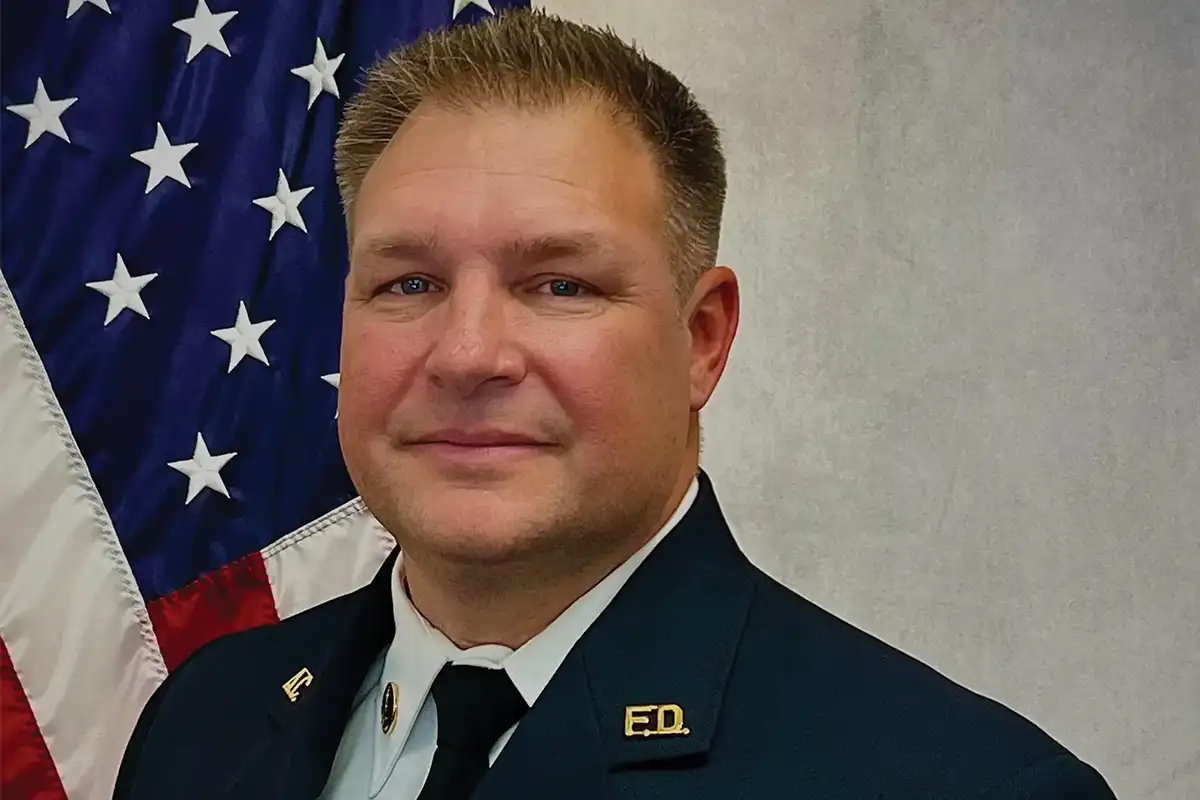
Chuck Guice
An Arlington County firefighter who joined other responders in fire, rescue, and recovery efforts
Chuck Guice retired from the Arlington County Fire Department as a lieutenant in February 2024. He lives in Herndon and works as a physical security specialist for a government contractor. But on the morning of 9/11, he had just finished a 24-hour shift at the department’s Station 5.
“I was 25, and, like a lot of firefighters, I worked construction on the side. I left the station and met my dad to do some painting in Bryans Road, Maryland,” he says. While eating breakfast at a diner, Guice saw a news report that the Pentagon had been hit.
“It still chokes me up,” he says. “I told my dad I had to get back to work and jumped in my truck. I’m flying down the road, and the lanes going toward the city are wide open, with no other cars. Roads coming out of the city are gridlocked, though, and I see a ramp filled with people walking away from the airport. There’s a massive black column of smoke coming down the river. I make it to my station in Crystal City, next to the Pentagon, and grab my gear and start running down Hayes Street toward the command post.”
Fire departments from all over the area responded. “People are everywhere, and by this time the [Pentagon] building has collapsed. There’s an entry point for accountability, and no crew is allowed in with fewer than four members.” Guice was spotted and pulled into service by Arlington Rescue 104.
“We’re going through the building and need to drop a hose out a window. We start hitting the windows, but nothing happens. The sledgehammers just bounce back. Then someone remembers that this side of the Pentagon was just renovated. The new windows are blast-proof. So, we have to find another route. We walk through an area that probably had been cubicles. There’s a wide pathway through the middle, and everything is burning. It’s so hot, I can’t put my arms down, because extremely hot air is collecting between my coat’s outer and inner shells. I had to get out to cool off.”
Guice spent the next few hours fighting a fire that was rapidly spreading beneath the slate roof. Then he switched crews and entered the area where the plane had made impact. “We could see this perfect spot, where the nose of the plane had come in. Pieces of the plane and office debris were everywhere.” Over the next nine days, Guice helped with everything from shoring up walls to finding human remains.
The Army regiment known as The Old Guard handled the removal of the victims. “We searched in a grid pattern through the debris. If we found anything that looked like human remains … we raised our hand and flagged it. The FBI’s forensics team photographed it, and then The Old Guard would carry it away. So, we did that for hours, digging in rows, hand over hand,” Guice says.
Arlington County mental health therapist Dodie Gill provided onsite counseling and support. “Dodie and her team helped us a lot, making sure we had anything we needed,” Guice says.
He also recalls enormous generosity from the community. “Like nothing I’ve ever seen. People showing up to clothe, feed, and encourage us. Everyone received a free cellphone. People were handing us socks, shirts, and new boots, providing hotel rooms for us to get rest. Bed Bath & Beyond gave us blankets. I slept with my blanket for 20 years, and I still have it.”
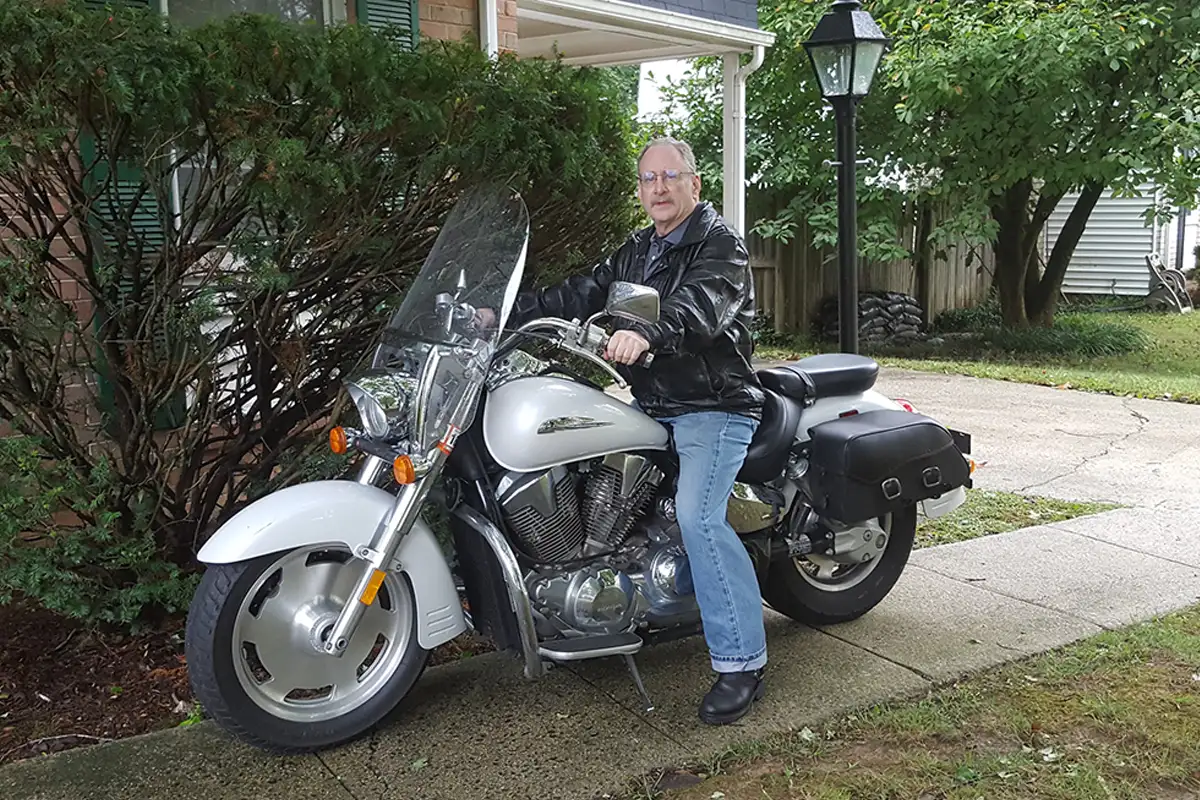
Vaughn Allex
A ticket agent who unknowingly processed two late-arriving terrorists at Dulles International Airport
American Airlines ticket agent Vaughn Allex was simply doing his job on September 11 when he had to make a split-second decision. He was in the process of closing out Flight 77 to Los Angeles when he spotted two men running through the front entry and toward his counter at Dulles International Airport. “I was the station instructor that day and was training new agents,” says Allex, a Leesburg resident. “It was very quiet at the airport. The morning operation was finished, and I told my trainees, ‘Watch, they’re here for Flight 77,’ which they were. They were looking all around, like they had no clue where they were going or had never been in a terminal before.”
Allex could have insisted on rebooking the late arrivers, but he decided to take their full-fare, first-class tickets and turn it into a training experience for the new agents. “I wanted to show them how we handle late passengers, so I checked them in.”
The duo turned out to be brothers, Nawaf and Salem al Hazmi, and their odd behavior triggered additional scrutiny.
“There were things we looked for in passengers who could become a problem. The profile at the time was a passenger who paid cash for a one-way, first-class, paper ticket written by a travel agent. And these two guys hit all five of those,” Allex says.
In those instances, ticket agents routinely asked passengers a series of questions “about whether they packed their luggage themselves, if they had been separated from their bags once they packed them, that sort of thing,” Allex explains. “One of the brothers could speak no English at all. He was standing a few steps back and kind of dancing, not something you typically see people do. Like he was nervous. And the other brother, even though we were using a loose-leaf binder with all the questions translated in many languages, was having a hard time communicating and responding.”
Allex says he made the pair “what we called selectees, so they would get extra scrutiny at the security checkpoints. That meant their bag would not be put on the airplane until after they boarded. Back then, our concern was with bombs being put on planes by passengers who never ended up boarding — we weren’t even thinking in terms of suicide hijackers.”
After the ticket counter, the brothers went to a security checkpoint down the hall. “There was no line, and then from there it was on to the mobile lounge and out to gate D26. They checked in one bag. It wasn’t like a suitcase. It was like an old-fashioned carpet bag, and it didn’t even close all the way.”
Allex says he knew all the flight crew and attendants on Flight 77. “I was either opening the gate or making sure everything was OK with the aircraft. And I was the last person they’d see before we closed the door,” he says.
A short while later, Allex was re-opening the ticket counter to process more flights. “A friend walks by and tells me a plane had just hit the World Trade Center. So, I call my wife and ask her to turn on the television and find out what’s going on. I didn’t hear back from her, so 30 minutes later I call again. She tells me it’s on every station, all over the news. We were in a complete vacuum at the counter. Airline management had not come down to tell us anything at that point.”
Based on scant information, Allex advised other agents at the counter to brace for a shutdown of the East Coast airspace. “I knew that if New York goes down, it affects everything. But I had no idea they would shut down the entire airspace system.”
He heard rumors that Flight 77 had been diverted. “I walked into the agents’ break room and was shocked that the on-duty supervisor was in there. The FAA and police were also there. I asked if the rumor about Flight 77 was true, and my supervisor just stared at me and told me to go back to the counter. Then we heard rumors that Flight 77 hit the Pentagon and that the terminal was to be evacuated. Passengers were queued up in line at the counter, and we got word to shut down. But there were no supervisors at the counter. So, I walked up to each agent and told them to sign out, and then I shut down the counter. Passengers didn’t understand what was happening. They were getting angry. They wanted to get rebooked.”
After watching television reports at home all evening, Allex returned to work the next morning. He knew there would be no flights, but management had asked him to come in. He parked in the employee lot and walked up to the ticket counter. “My coworkers were acting strange and told me I was wanted at the midfield, where the operations and administrative offices were. So I go to the midfield, and I ask them what’s going on. They tell me I need to see the [American Airlines] general manager. I ask why, but no one seems to know. … [The general manager] puts his arm around my shoulder and leads me to an outer office. There are a lot of people there. He introduces me to this woman, and she tells me she’s an attorney for the airline, but that she’s not my attorney.”
The FBI was present. “They started asking me about the day before. Had I noticed any passengers who stood out as a problem? Then they showed me a printed flight manifest, and it’s listed by cabin in alphabetical order. When I reached the names of the brothers, I just stopped and said, ‘I did it, didn’t I?’ and they asked, ‘What?’ I told them I checked those two in, and seeing those names made the whole transaction, late arrival, and everything flash back.” That’s when Allex realized that the two late-arriving brothers he had processed had joined three other hijackers already onboard intent on taking down Flight 77. “The FBI was professional the whole time, but once we came to the realization, I needed to step out in the hallway to collect my thoughts. Then I called my wife.”
Allex says he felt guilty and hurt for a long time. “When I tried to talk with coworkers, no one wanted to talk with me.” Eventually, Allex was approached by the press. “My name was being bandied about on the internet with a lot of misinformation, and that was pretty bad to read. So, when CNN reached out on the 10th anniversary of the attack, I decided to speak publicly and set the record straight.”
“I realized that the whole system failed. No one allowed the attack to happen. It happened because there was a general lack of imagination. I mean, nobody was thinking of suicide hijackers. The mindset prior to September 11 was to just go along with hijackers. That the worst that could happen would be we go to Cuba and come back with some cigars.”
In 2008, Allex retired from American Airlines to take an administrative position with the Department of Homeland Security. “Going to work for the government probably saved my life. I’m the happiest person at DHS, because now I’m part of a system that is working to prevent something like this from happening again,” he says.
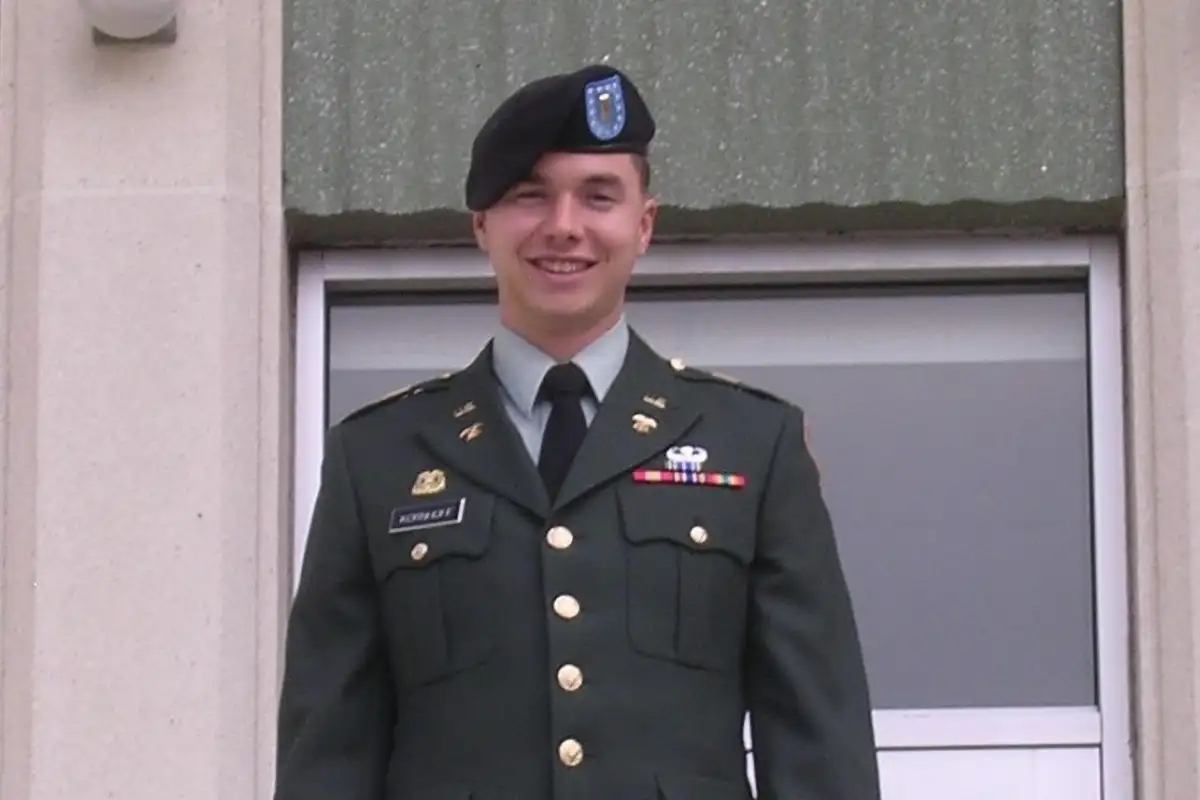
Joseph Kornhoff
Executive director of the Pentagon Memorial Fund whose mother was working inside the Pentagon on 9/11
As executive director of the Pentagon Memorial Fund, it is Joe Kornhoff’s job to ensure that the victims and circumstances of the September 11 Pentagon attack are appropriately and accurately remembered. But Kornhoff also has a personal connection to that deadly morning. His mother, Carol Kornhoff, was in the Pentagon when the plane hit.
Kornhoff was a 15-year-old student at Robinson High School in Fairfax when his ceramics teacher turned on the classroom television after the first airplane strike at the World Trade Center. “We watched the second tower get hit, and later word spread around school that the Pentagon had been hit as well,” says Kornhoff, who now lives in Arlington.
“I grew up with military parents. We moved to Fairfax in 1987, and both my mother and father worked in the Pentagon,” Kornhoff says. “On September 11, my dad was doing a stint in Crystal City, so he was not in the building that day. But my mother had never worked anywhere else. She lost a number of friends and colleagues when the plane struck the building.”
There was no official announcement at school, but Kornhoff recalls significant activity in the hallways between classes. “All heck was breaking loose among the students, because a lot of us had parents in the military and active duty, many working in the Pentagon. A lot of kids were going home, but I wasn’t driving yet, so I couldn’t just leave.”
Kornhoff’s parents rode to work every day with the father of one of his classmates. “She saw me in the hall and came running up to me, crying, screaming. She’s like, ‘I don’t know where my dad is. Have you heard from your parents? Have they made contact?’ That’s when it all hit me, and I got really worried.”
It was hard to concentrate for the rest of the day. “There wasn’t much I could do. My sister was away at college, so she wasn’t coming to get me. The cellphones weren’t working. The landlines weren’t working. I had no way to get in touch with my parents,” he recalls.
A neighbor dropped him off after school, and Kornhoff walked into an empty house. “The phones still weren’t working, but the answering machine had hours of messages from concerned relatives and friends. I could listen, but I couldn’t call anyone back.”
Neighbors and family started showing up to check on Kornhoff. “As things progressed, I started realizing this was really serious. I had held it together at school, but at home I was bawling my eyes out. I think I cried for four hours.”
It wasn’t until late that Kornhoff finally learned his parents were safe. “My mom was able to contact my aunt and told her she had gotten out and met up with my dad.” At about 8 p.m., Kornhoff heard his house garage door roll open, and he ran out in the dark to greet his parents. “I still get a little teary thinking about that,” he says.
Although her dress suit was tattered and dirty, Kornhoff’s mother suffered no injuries. Three days later, she was back at work. “She served at the Pentagon until the day she retired. While the nation was healing, the people in the Pentagon had a mission to do. They continued to operate to keep our nation safe.”
Kornhoff notes that about a third of the nation was not alive on 9/11. “We need to remember the significance of that day, because 25 years ago, our nation made a promise to never forget. The establishment of the Visitor Education Center at the Pentagon Memorial will tell the unique, largely untold story of that day.”
Feature image courtesy National Archive Catalog/Photo by CPL Jason Ingersoll, USMC
This story originally ran in our September issue. For more stories like this, subscribe to Northern Virginia Magazine.