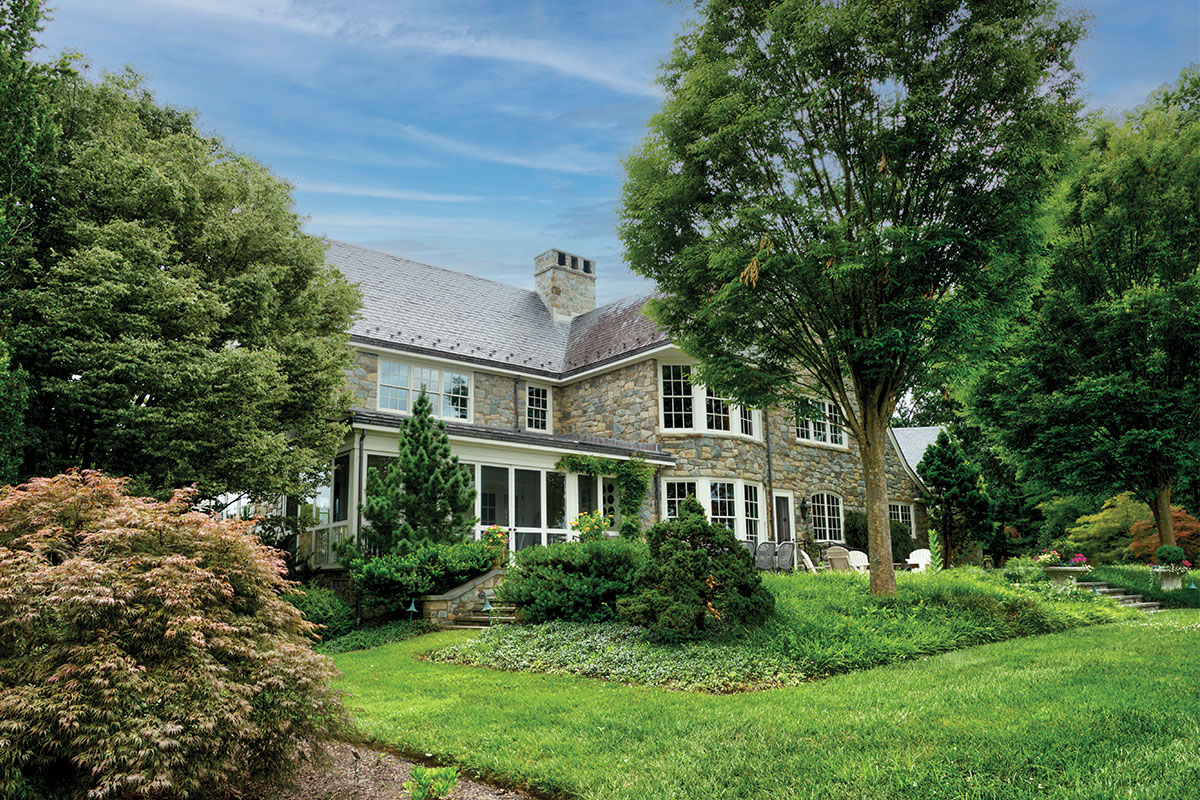
In 2010, Birchwood Arboretum started to disappear. The 30-acre botanical collection is set on a 100-acre parcel of land in Leesburg. The property was established in 1995 by a gentleman farmer who was a collector of rare specimen trees, according to Brian Katen, associate professor emeritus at Virginia Tech and former head of the landscape architecture program, who designed the property’s original landscape, including the arboretum. The farmer left the property under mysterious circumstances, and, a few owners later, it entered foreclosure.
In 2019, a couple intended to purchase a small cabin in the woods but were instead brought to the land on a whim by their real estate agent. They settled on what looked like many acres of underbrush with a house tangled up in weeds.
“When we bought the property, it was abandoned and overgrown. We spent a year weeding out huge invasive plants to discover all these beautiful trees — thousands of them.” The owners, who prefer to remain anonymous, felt a responsibility to bring it back to its former glory.
Digging In
“The original owner left a large binder in the house that had all the horticulturists, groundskeepers, and landscapers who worked on the property originally, and he also left the original ground’s plot plans, too. There were pages of notes about each tree in the arboretum,” say the owners. “We spent the pandemic looking for [these professionals] to expose the living trees to light and remove the dead ones. We called the contacts in the book and told them what had happened with the land, and they were sad to hear that it hadn’t been maintained.”
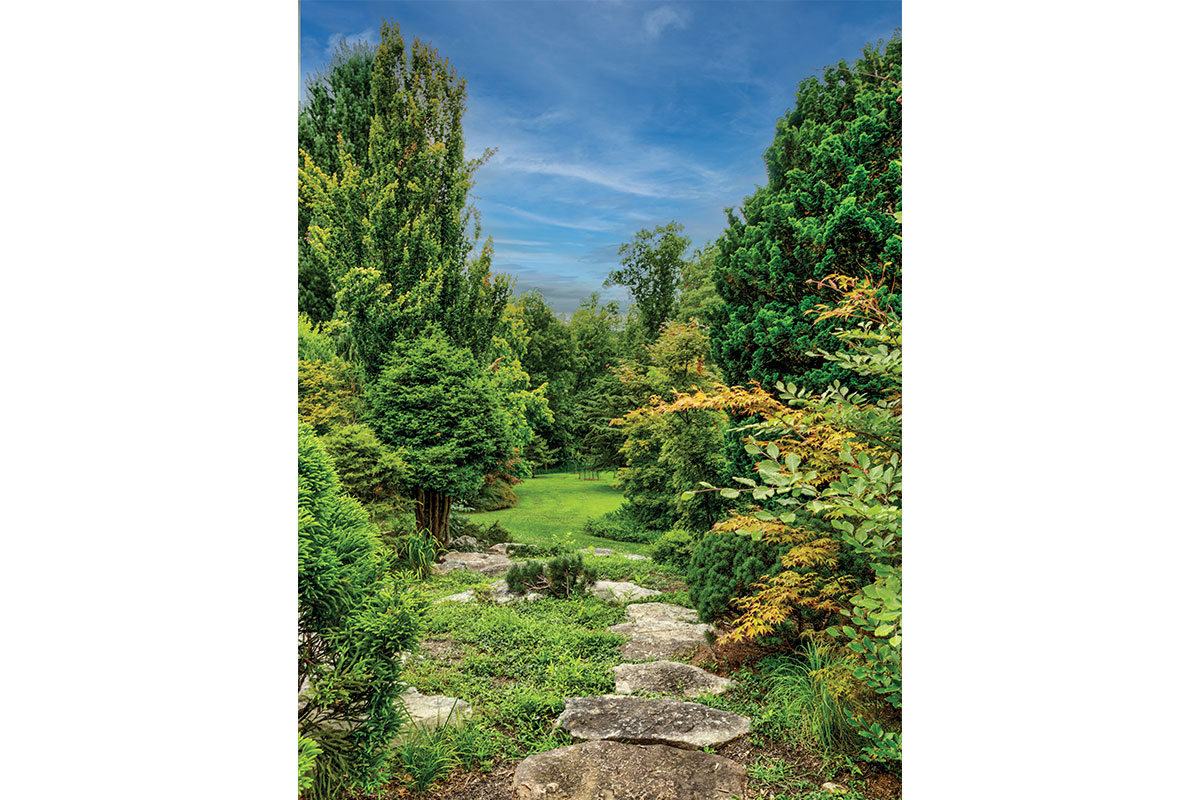
The arboretum had been sitting in dereliction for nine years. In that time, thousands of trees, including several varieties of Japanese maple, various types of conifers, European beech trees, and ginkgo trees, had been taken over by dense underbrush. Some of the trees on their property, like the Benjamin Franklin Japanese cedar, were among the only existing specimens of its variety in the U.S. “We spent the pandemic weeding, and we were trying to get rid of the weeds without accidentally getting rid of the valuable plants caught in them.”
Katen says, “The original owner did all the travel to find the plants in his collection. I worked on a master plan that used that collection of trees to anchor the larger property’s design and show off the trees. The collection was the anchor for sections of foliage throughout and established the bounds of the arboretum.”
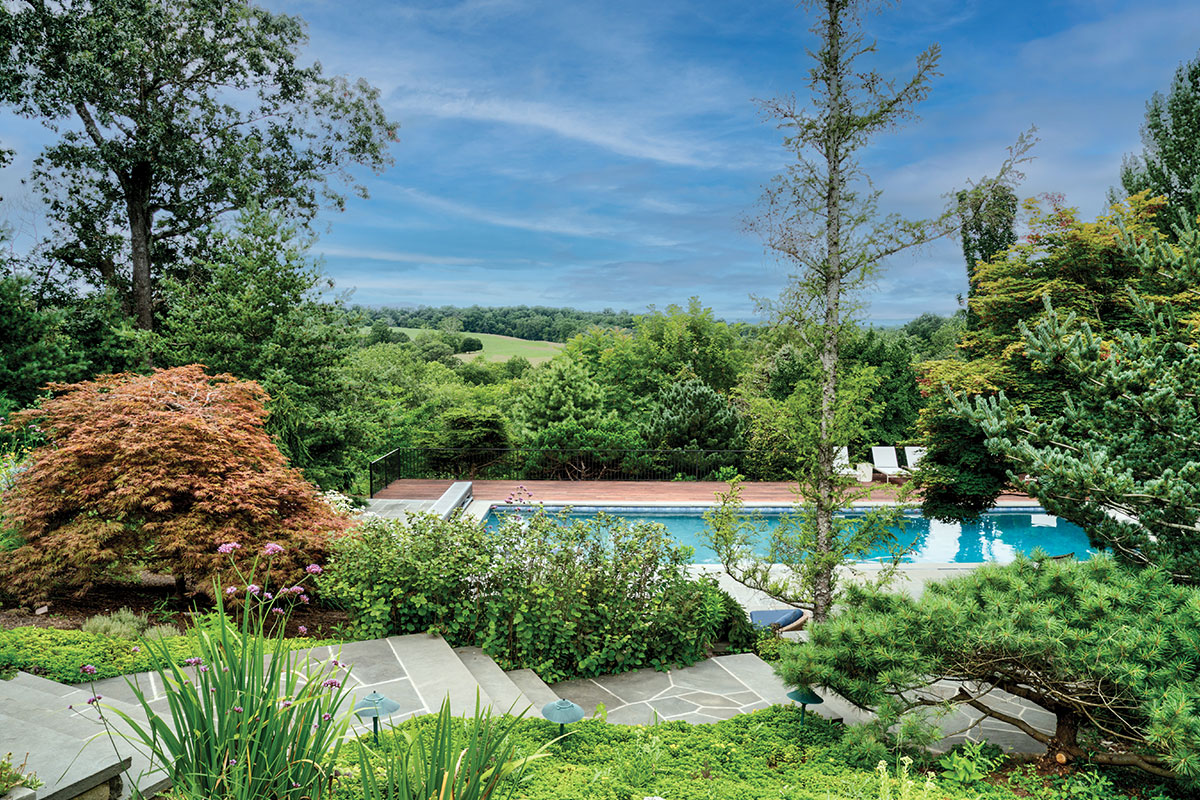
Birchwood Arboretum’s 30 acres are irrigated once again by an underground system that had to be repaired to continue to provide the exact amount of water each individual tree needed every day. (They all require different amounts based on what’s best for their variety.) The owners replaced the lines and repaired the irrigation system so they wouldn’t have to manually water thousands of plants daily. They also spoke to landscape professionals about how and when to prune their trees, which had been growing wild for years.
Katen says that a collection of this type requires a significant amount of upkeep. “Once a collection is in place, it depends on having a good groundskeeper come in and really plan a four-seasons maintenance program. There may be a best time to prune the deciduous trees that’s not necessarily the best time to work on the conifers or shrubs, and the groundskeeper should really look at the seasonal aspects of the collection over time.”
The owners started to discover markers at the base of some of the trees that were still stuck in their original spots. Others were embedded in the dirt, and many were lost. Each marker contained a number for the specific tree and its variety and cultivar in Latin.
“We’re in the process of labeling and relabeling the trees,” they say. “It’s a big process because there are several thousand plants, and maybe 30 percent of the labels still exist. It really requires people with specialized expertise that know the variety and cultivar of each tree because they’re fairly hard to identify as there are literally hundreds of cultivars.”
The owners are looking for help relabeling their trees on the original planting lists. “Some of the planting lists are accurate, but other things were planted that weren’t listed, so it’s a lot of work to get accurate documentation of what’s still here,” they say. “We’re hoping that perhaps a university could look into some of these trees to help with accurate labeling.”
‘More of a Natural State’
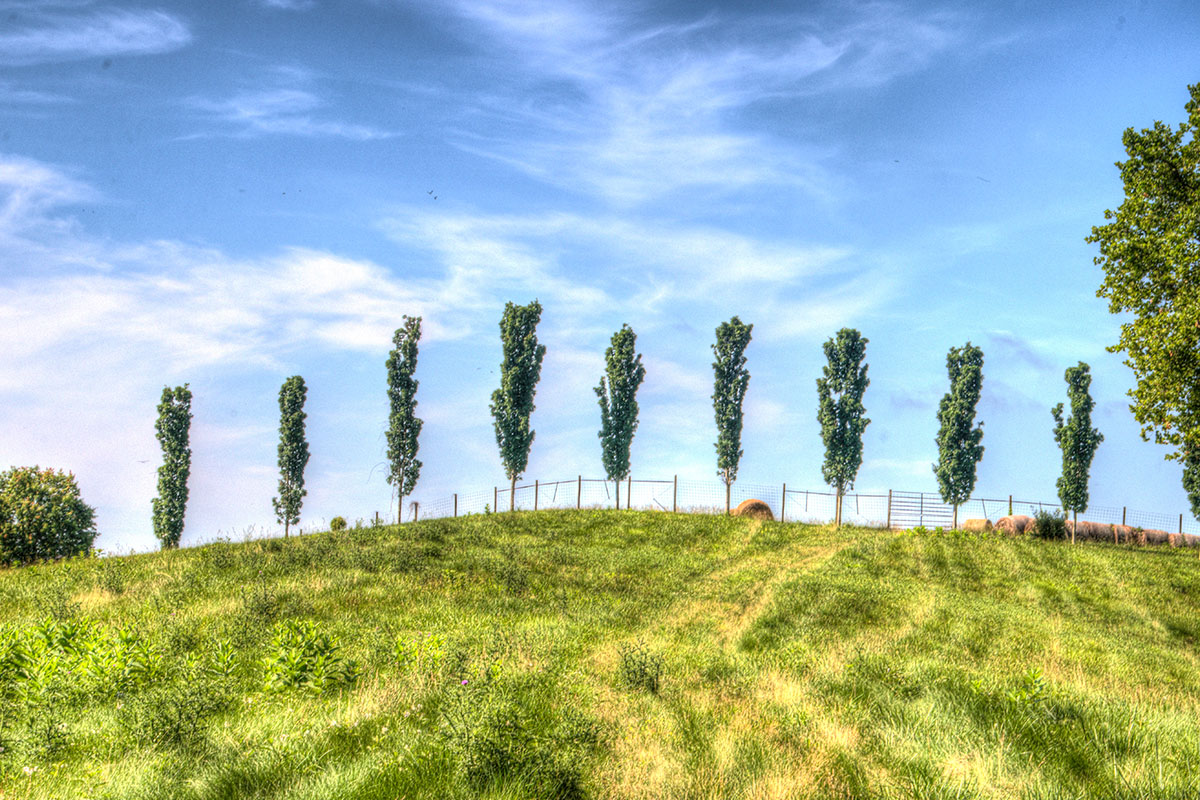
When the owners began to consider that their vast collection of trees might be more than a neat story for their next cocktail party, they researched grants and support through the United States Department of Agriculture Natural Resources Conservation Service. They worked with Casey Iames, the district conservationist for the USDA NRCS in the Warrenton field office, to plan a 6-acre wildflower meadow, and they applied for the Environmental Quality Incentives Program, which provides free technical support and cost-sharing assistance to people interested in protecting and planning their natural resources.
“The Environmental Quality Incentives Program is one of the bigger programs that our agency offers,” says Iames. “With the wildflower meadow, we’re re-creating a beginning-stage, early successional habitat — that’s what EQIP is set up to do. It’s cost-shared to re-create that land, to set things back to more of a natural state, which, for this area, is like a prairie meadow that has been in decline since urbanization has taken over. That beginning habitat is crucial for our pollinators and early bird species.”
With the wildflower meadow, the owners hope to create a place where pollinators and other birds will thrive on their own. “The owners are interested in setting things back to a natural meadow. The cherry on top is getting the quail reestablished in the area,” says Iames. “One challenge we’ve had is that we can’t bring the birds themselves to the property. We can re-create the kind of [habitat] they live in, though. The hope is that they will come on their own to repopulate naturally.”
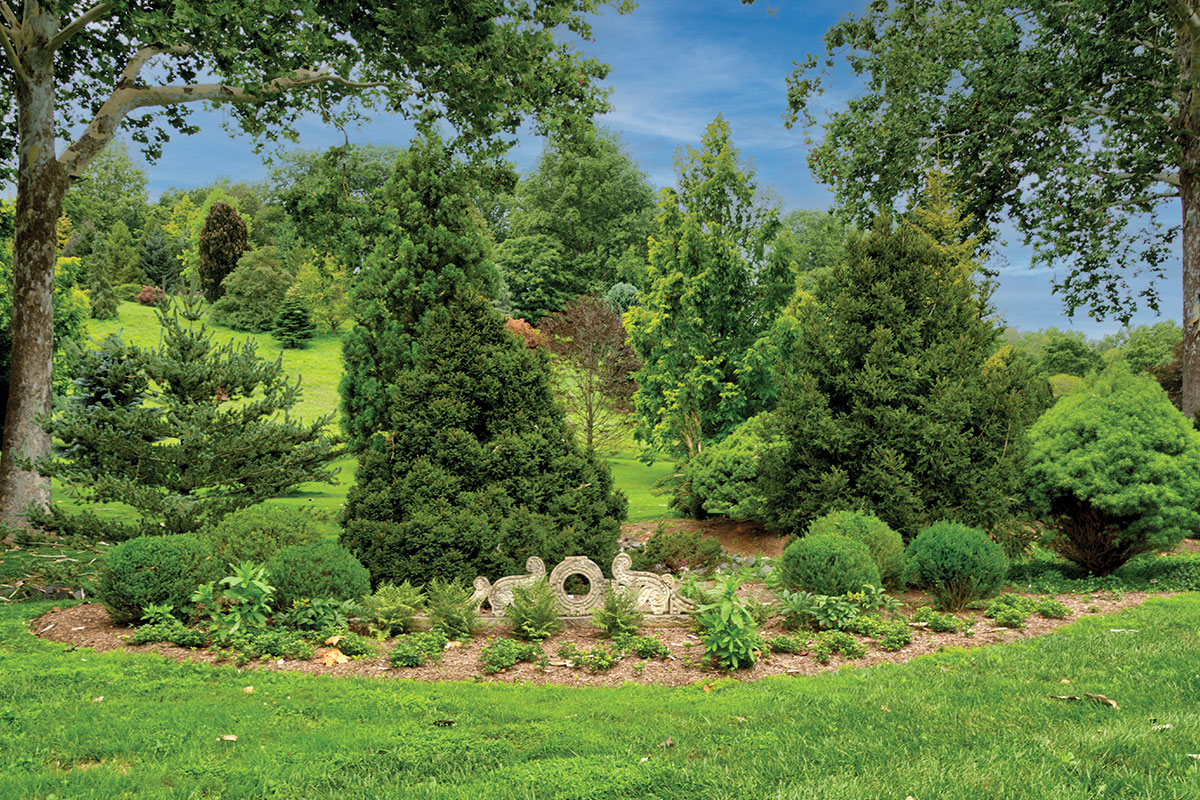
The owners are preparing to open the land on a case-by-case basis. They’ve had conifer societies, horticulture groups, and people who do silent meditation come onto the land to experience the arboretum. They’ve also allowed classes that teach students how to properly maintain and cultivate trees. “We grew to love and appreciate what had been planted here, and we are dedicated to restoring it to its original pristine state,” they say.
Today, with the underbrush cleared and the ongoing landscaping underway, the property is returning to its original state. As it reemerges, the owners are imagining the future of the land. “Preparing and planting the meadow is a three- to five-year process,” they say. “The selection of wildflowers that will attract specific native birds and insect species is going to be a huge focus for us. Further down the line, we want to work in plant propagation to regenerate some of the trees we have here. But mainly, we want to be good stewards of the land so that people can learn and benefit from this space for generations.”
Feature image by Roger A. Lancaster
This story originally ran in our August issue. For more stories like this, subscribe to Northern Virginia Magazine.