
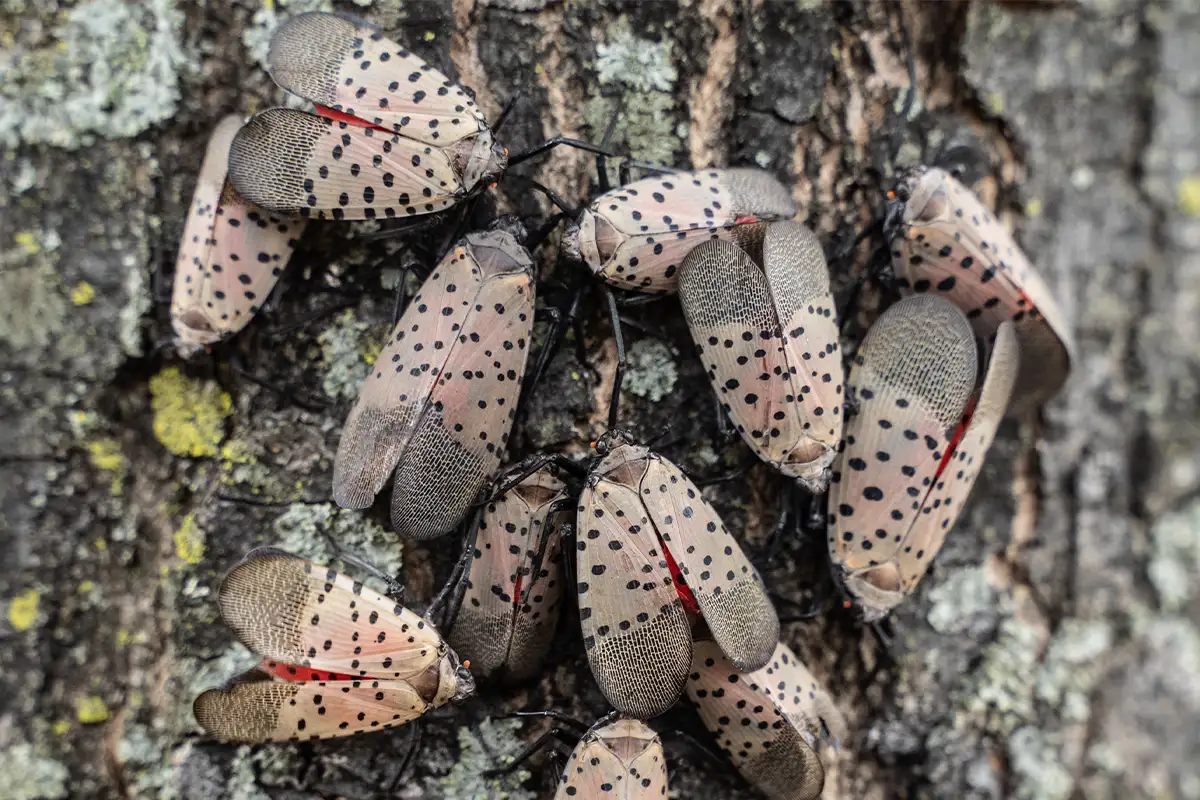
It’s been a few years since the spotted lanternfly, an invasive species of insect, first arrived in the Northern Virginia area, and the pest is here to stay. If you’ve been noticing lanternflies popping up around NoVA recently, you’re not alone. David Gianino, program manager of the Office of Plant Industry Services with the Virginia Department of Agriculture and Consumer Services, shares information about the insect’s Virginia population and what residents can do to help.
Here to Stay
The spotted lanternfly first appeared in Virginia in 2018, in Frederick County. Since then, it has slowly spread throughout Northern Virginia. Spotted lanternflies tend to establish new populations by hitchhiking on cars or trains that travel from infected areas. The lanternfly is now present in about 50 percent of Virginia, Gianino estimates.
And NoVA is in for a population boom very soon, he predicts.
“When populations are small, they tend to lay their egg masses very, very high up in the tree,” Gianino says. “It’s not until later, when populations are very large, are they starting to come and work their way down.” This means that, by the time a population makes itself known, the bug has already been in the area for one to two years.
“What you then see is … over the next two years, populations swell, and they get really, really high, really, really noticeable, and they start to kind of impact quality of life,” Gianino says.
NoVA is “right on the cusp” of that type of swell, he says, and he suspects that residents will likely see the bugs more and more in the next one to two years.
There are some ways to control the population, he says, but lanternflies reproduce quickly and have no natural predators.
“It is an invasive species with very limited control and survey options. And so ultimately, this is going to be a situation where this bug is here to stay,” Gianino says.
“So I don’t want to give the false impression that we’re going to be eradicating it, or it’s going to be going away. There may be years where we see fewer, maybe years where we see more, but spotted lanternflies are here to stay for a long time in Virginia.”
Environmental Threat
These pests feed on several popular Virginia crops, including apples, hops, and grapes. They are of particular concern for winegrowers, who have to implement integrated pest management programs totry to control them.
Growers may have to spend extra time processing their crops to remove spotted lanternflies during the harvest. Producers and growers also have to meet certain requirements that will prevent further spread before transporting any goods to different localities.
“One of the big impacts of it being here is that those businesses … have to take extra precautions before they can move their product to another state,” and that contributes to some economic strain, Gianino says.
The spotted lanternfly also secretes a kind of “honeydew” when it feeds, which can attract wasps and hornets and encourage the growth of sooty mold. In addition to the agriculture industry, residents are reporting difficulty controlling populations on their own properties, he says, and it’s likely residents will see many of the bugs in their lawns and on buildings and cars.
How to Help
To help control the population as much as possible, people can learn to identify the bug in its different stages and kill it whenever possible.
“This is an OK-to-kill bug. There’s not a lot of good that this bug brings with it,” Gianino says. “There’s no research saying that it’s going to be beneficial for anything here in the United States or in Virginia, and so we’re just trying to get folks prepared and ready to kill it when they see it.”
Being able to identify and scrape egg masses in particular will help control populations, as one egg mass can contain 35 to 50 insects.
Online resources like this one from the USDA with photos can help identify lanternflies, and a brochure from the Virginia Cooperative Extension compares the bug with common lookalikes so you don’t kill other species by mistake.
USDA has a video of what the invasive species looks like:
You can kill spotted lanternflies with a combination of soapy water and vinegar or by crushing or swatting them. If you use a commercial insecticide, make sure the product is designed for use on lanternflies and follow all directions on the label.
Also be sure to check your car before traveling, to ensure you don’t introduce the species somewhere new. Spotted lanternflies have a strong grip and can withstand 55 to 60 mph winds. Similarly, if you’re disposing of an old tree or other lawn debris, check for signs of spotted lanternflies before it goes to the landfill.
And, if you live in an area where there is a known population there’s no need to report the sighting. If you are in an area without a known population, you can report it to VDACS.
Feature image of spotted lanternflies, stock.adobe.com
For more stories like this, subscribe to Northern Virginia Magazine’s News newsletter.