
Loudoun County residents were washing dinner dishes, putting children to bed, and tending to ordinary evening routines on Friday, February 16, when the unthinkable happened: a massive explosion on Silver Ridge Drive in Sterling that was so powerful it shook pictures off the walls of homes miles away.
Details of the surreal event immediately spread across news channels, with reports of leaking propane, a house destroyed, multiple injuries, firefighters trapped beneath rubble, and, most heartbreaking, the confirmation of one fatality, later identified as Sterling firefighter Trevor Brown. As the smoke cleared, one revelation emerged that weighed heavily on everyone’s heart: Brown and many of the injured had responded to the 911 call as volunteers.

For those not part of the tight-knit family that is volunteer firefighting, it may come as a shock to learn that most U.S. firefighters are unpaid. According to the National Volunteer Fire Council, volunteers comprise 65 percent of the nation’s firefighters. Of the total 29,452 fire departments in the country, 18,873 are all-volunteer and 2,785 are all-career, with the rest having a combination of staffers. Virginia has 5,635 career firefighters and emergency medical services personnel and 13,653 volunteer firefighters and EMS staffers. NVFC estimates that the time donated by volunteer firefighters saves localities nationwide almost $47 billion per year, making it cost-prohibitive for most communities to switch to a full-career staffing model.
Northern Virginia, home to some of the wealthiest counties in the nation, is among those communities that depend in part on volunteer fire companies. What motivates those volunteers to risk their lives to protect others? We asked two fire chiefs at the center of the Silver Ridge incident, as well as some boots-on-the-ground fire volunteers, to share their thoughts.
Loudoun County Combined Fire and Rescue System
The Loudoun County Combined Fire and Rescue System provides fire and emergency services to county residents through highly trained volunteers and career employees. As part of the combined system, Loudoun County Fire and Rescue operates 24 hours a day, seven days a week, from 21 fire/rescue stations, with some volunteer stations providing nighttime staffing from 6 p.m. to 6 a.m. The department is primarily funded by local taxes, with the majority of its expenditure budget dedicated to personnel costs.
Overseeing the entire system is Chief Keith Johnson, a fourth-generation firefighter who began his career in 1982 as a teen volunteer in New York. Johnson became a career firefighter in 1983, serving in Fairfax County for 30 years before joining Loudoun in 2014. He became chief in 2018.
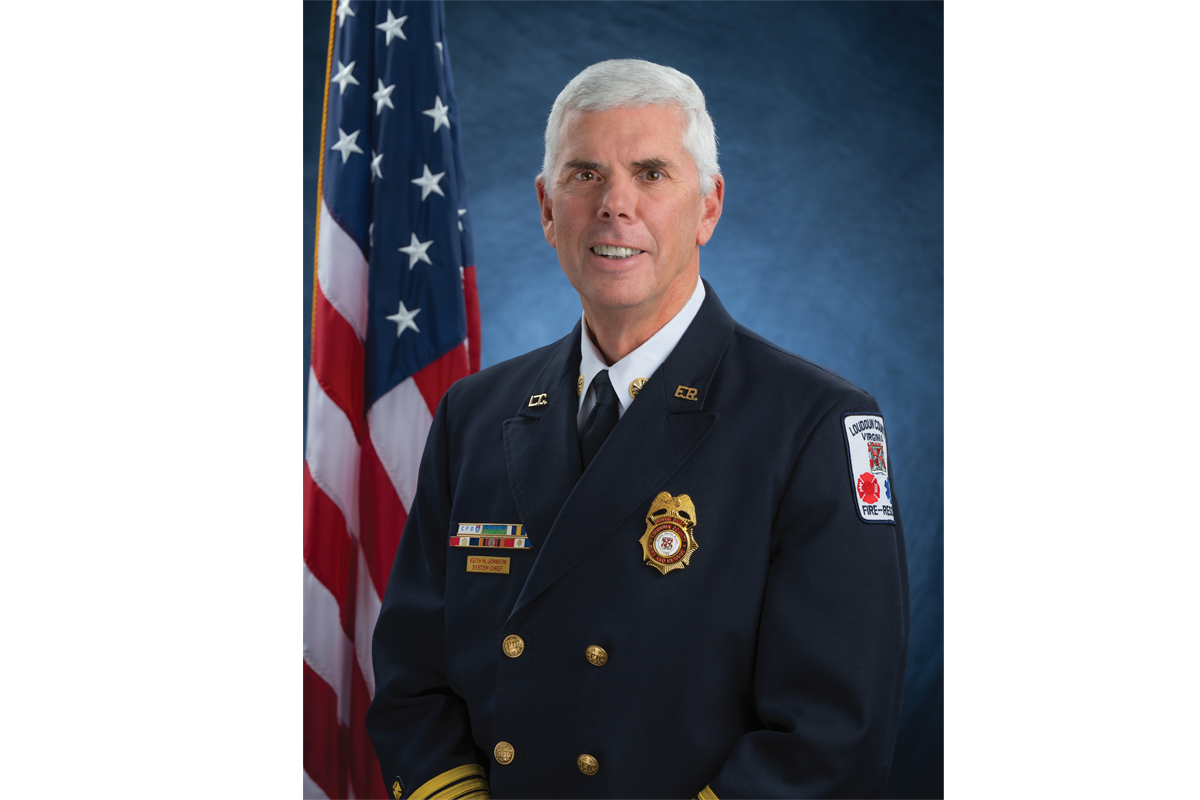
“My whole family — dad, uncle, brother, mom — was connected to firefighting,” says Johnson. “I wanted to be a firefighter since the day I was born. When I started, there was a waiting list to become a volunteer, but that’s unheard of nowadays.” Johnson says volunteers formed the base of fire departments in every locality in the world. “You could call it tradition, or culture, or necessity, but at one time there were no career firefighters. Everything was about serving the community and giving back, and Loudoun County was no different.”
Today, Johnson says LC-CFRS has 759 career employees, 649 of whom are uniformed firefighters. His 1,396 volunteers include 778 operational firefighters, and the rest hold administrative or support roles. “That might seem like a lot of volunteers, but remember, some serve shifts only once per week or month.”
Volunteers come from all backgrounds, and most hold day jobs that range from delivery drivers to military officers to corporate executives. Training requirements and duties for career and volunteer firefighters are practically identical. Johnson says volunteers will always be vital to Loudoun firefighting, but as the county grows, the need for career firefighters will increase. “Northern Virginia is just so populated and commercialized, with so many potential hazards, that we cannot rely solely on volunteers. Plus, there’s been a significant decrease in volunteering nationwide.”
Reasons for the decrease include increasingly lengthy training requirements (which can take more than a year to complete for volunteers who work day jobs), time constraints of busy families, and the increased cost of living. “Frankly, there are just more opportunities to be paid career right now, although many of our career firefighters can no longer afford to live in Loudoun County on one income, so they drive in from Maryland, West Virginia, or even Pennsylvania to serve their shifts,” says Johnson. “If you want to be a firefighter and have a clean record and can pass all the tests, you will become a career firefighter — there are so many departments hiring.”
Sterling Volunteer Fire Company
As chief of Sterling Volunteer Fire Company, Dave Short is the operational officer in charge of providing primary fire and rescue services to roughly 79,000 residents in the Sterling, Cascades, and Dulles areas. Overseeing two stations, Short works in cooperation with LC-CFRS to manage about 100 volunteer firefighters and 40 volunteer administrative members.
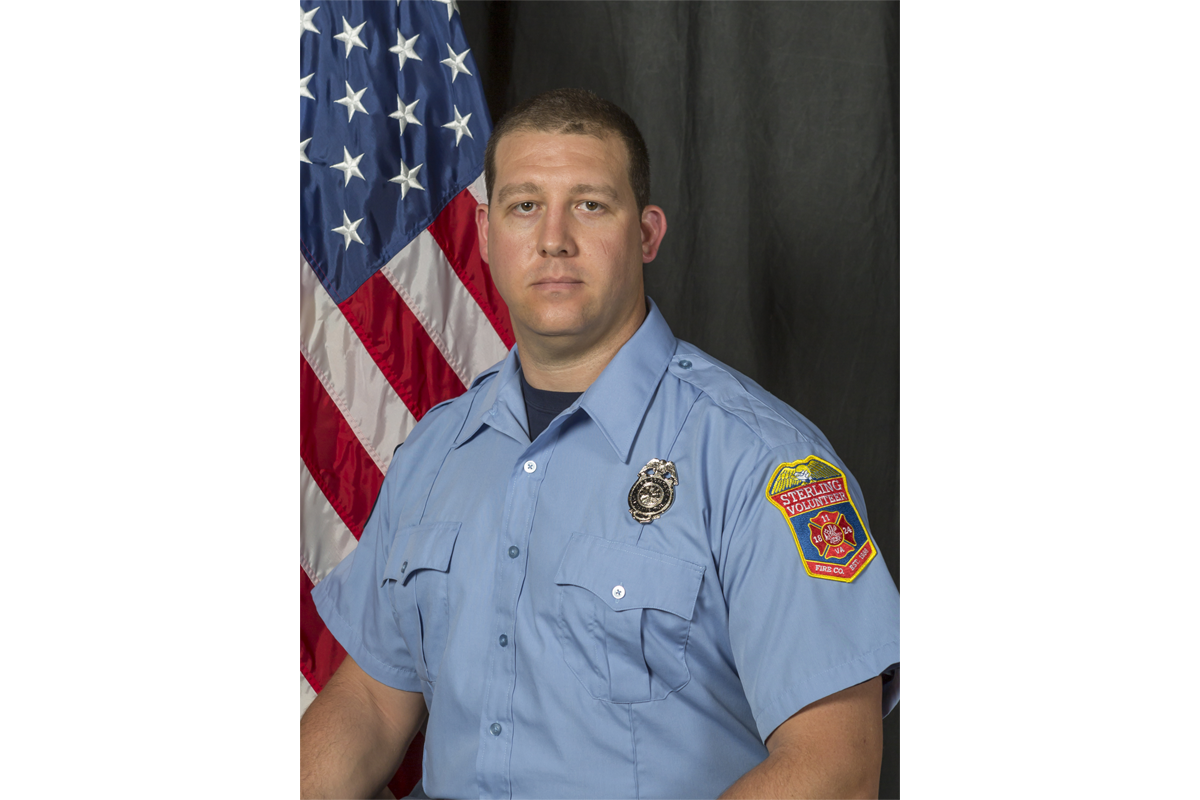
SVFC was the first to respond to the Silver Ridge emergency, and Trevor Brown and several of the firefighters injured that night were SVFC members. To respect their privacy, Short declined to discuss his injured crew. Volunteer firefighter Brian Diamond, who teaches eighth-grade English at J. Michael Lunsford Middle School in South Riding, received a hero’s welcome at the Sterling station when he went home from the hospital on March 20. He was the last to be released. He spent 33 days in the MedStar Washington Hospital Center burn unit and underwent five operations. During his brief visit, he said he looked forward to getting back to his family, to a full recovery, and to getting back on a fire truck. Diamond was brought home in a Sterling ambulance, in a procession that included a sheriff’s office motorcycle escort and a bevy of Sterling fire vehicles.
Like his crew, Short wears multiple hats. By day, he is an emergency management consultant, serving clients worldwide. Short became a volunteer in Prince George, about 30 miles south of Richmond, when he was only 14. “I pedaled my 10-speed to the station and signed up,” he says. “My dad got tired of driving me to fires, so he joined, too, and when we later moved to Northern Virginia, my brother, sister, and mother got involved as well. It became a family affair.”
Short’s wife volunteered with Sterling’s rescue squad before switching to career EMS training. She is now a paid county employee. “It’s not uncommon for volunteers to springboard into a career, but many just want to get involved with their community and become part of a team, something larger than themselves,” he says.
“With my day job, I observe fire departments all over the country, and I can tell you with authority and confidence that our training standards in Northern Virginia, whether volunteer or career, vastly exceed the national average,” says Short. “We offer some of the best fire and rescue protection services in the nation.”
Short says he stays mentally tuned in to the company every hour of the day, even while tending to his day job. “I clock at least 1,000 hours of duty a year on the truck running calls and half as many again in administration, with training, answering emails, and tending to HR matters related to running the equivalent of a 140-person business.” When Short is not at the station, he relies on the knowledge that his highly trained team is always prepared.
After the Silver Ridge explosion, the station was inundated with expressions of support and sympathy. “Hopefully, others will be inspired to volunteer,” says Short. “We appreciate all the cards and cookies, but I would really love to have their smiling faces and sweat working in the station.”
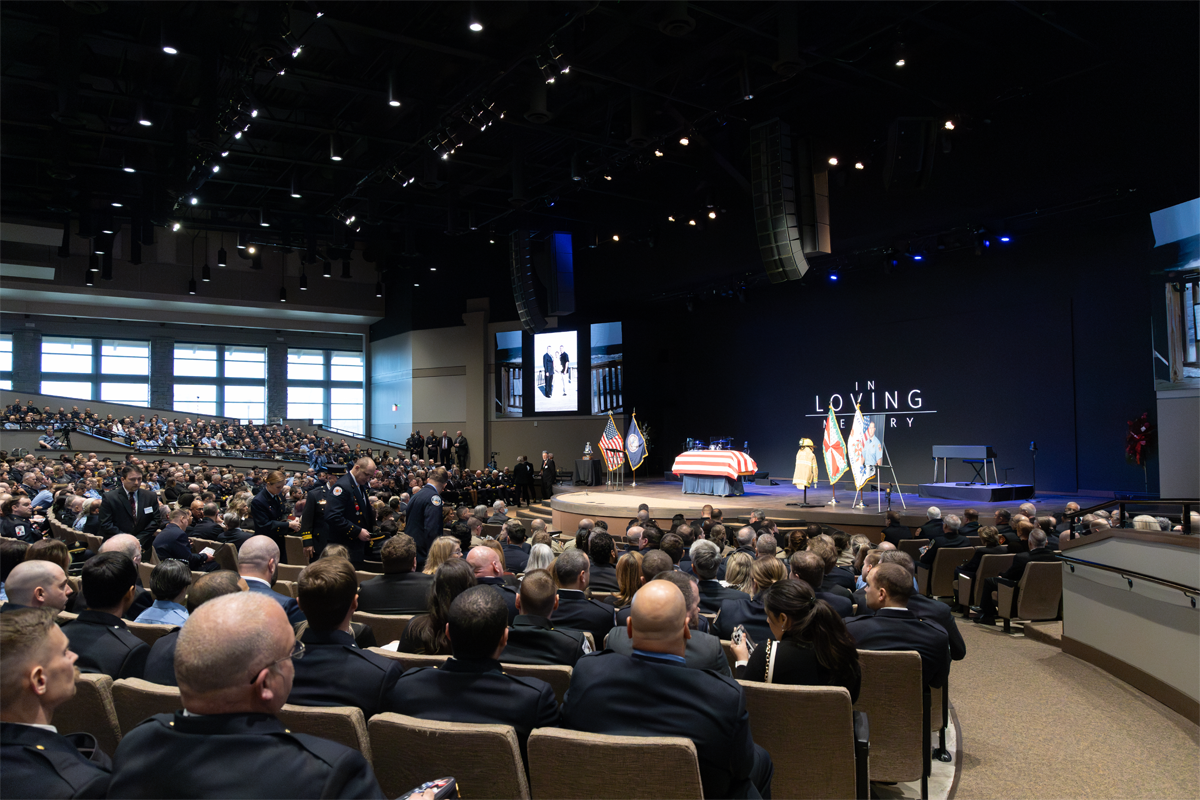
More than 3,000 people attended Trevor Brown’s March 4 memorial service at Cornerstone Chapel in Leesburg, during which every speaker reflected on the value of volunteer service. Loudoun County Board of Supervisors Chair Phyllis Randall gave thanks for those who “run towards danger … with the knowledge that no call is routine, because every call could be the last.” Virginia Gov. Glenn Youngkin told the fire and rescue personnel in attendance: “You are the very best among us.”
Speaker Tom Owens, Sterling’s past chief, summarized the qualities of a volunteer. “There are two kinds of people in this world. There are people who stand in the shadows, and they only watch as others do the work of building a community … and when they reach the end of their life, these people will easily be forgotten. The other kind of people … they are the doers in our society. They are active participants in the critically important work of creating and sustaining a viable community. … They will leave a legacy for others to build upon, and they will long be remembered.”
The Doers
SVFC volunteer firefighter and emergency medical technician Jake Starrett, 25, dreamed of serving in the military until a serious accident in high school derailed those plans. “I wasn’t sure what to do with my future, so I gave volunteer firefighting a chance and fell in love with it,” he says. Starrett then studied fire, arson, and explosion investigation at Eastern Kentucky University. Today, he works full-time as a Clarke County firefighter and EMT by day and volunteers occasionally at SVFC.
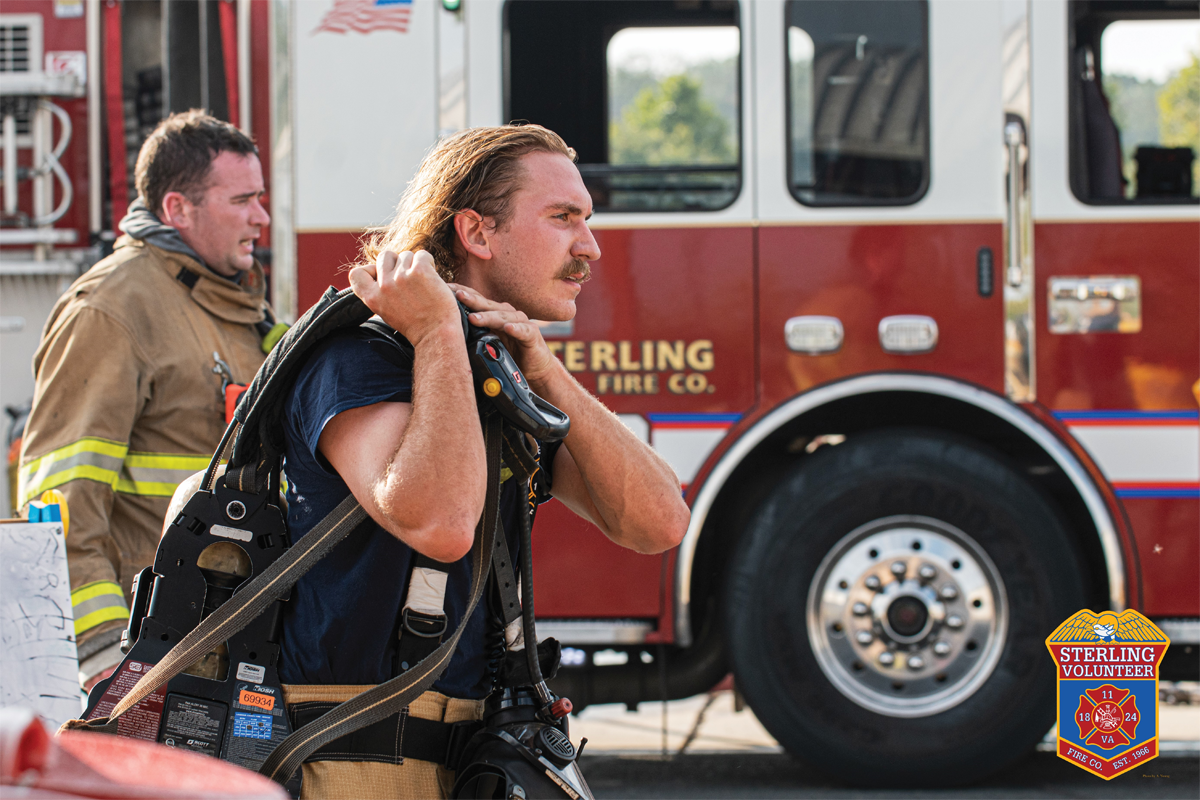
“I’ve been a SVFC volunteer since getting out of college,” says Starrett. “I’ve worked as a whitewater rafting guide, juggled part-time jobs at breweries, and delivered pizzas just so I can afford to live in Loudoun and continue volunteering.”
Starrett was off duty the night of the Silver Ridge explosion, but he still answered the call for help. “I ended up on Engine 618B. We were the ones who went to the scene and recovered Trevor’s body and carried him by stretcher for transport to the medical examiner’s office,” he says. “I went through all that and got back to the station at 4:30 a.m. Then I gathered my stuff, drank a Gatorade, drove out to Berryville, and clocked in for my job duty there.”
Paul Schomburg is a vice president at Herndon software company TechSur Solutions, but he volunteers at SVFC as a captain. Schomburg has been a volunteer firefighter for 25 years, starting out in Falls Church, where he was a responder to the Sept. 11, 2001, attack at the Pentagon. He switched to the Loudoun County system in 2016. “Loudoun is a great example for the nation as to what a combined fire and rescue system should look like, and that’s why I’m here,” he says.
Friends who were already serving introduced Schomburg to firefighting. “I was at the station with them frequently, helping with errands and such. One day someone looked me in the eye and asked why I wasn’t doing this, so I joined. I have made lifelong friends in the fire service. We are very much a family, and it’s a second home.”
Amy Cannon, an Ashburn mother of four, serves the Ashburn Volunteer Fire and Rescue Department as an administrative volunteer. “I support the operational side with fundraisers, peer support, and community activities,” she says. Cannon schedules student volunteers who are interested in short-term opportunities at the station, including the community pancake breakfasts, open houses, and spring cleanups.
“Our motto at AVFRD is neighbors helping neighbors,” says Cannon, who works during the week for the Arlington-based Student & Youth Travel Association. Cannon joined AVFRD in 2021 after attending a station breakfast with her family. “I saw all the people volunteering and realized that they really were my neighbors, so I submitted an application.” Cannon’s position does not require the same training as firefighters, nor does she spend overnight shifts at the station. “Compared to first responders, I see my role as incredibly minimal, but if what I do supports the people who are out there saving lives, then I’m all about it. What I do helps, and that makes it important.”
Short says he understands the personal sacrifices his volunteers make in order to serve their community. “We have good people here. If you really want to make a difference, consider stepping forward to help. What other organization can you join where you can go to a house and save someone’s life? It really does feel good and is so rewarding.”
The Need for Funding
Virginia’s fire departments are primarily funded by localities, not the state. In Loudoun County, 96 percent of the Loudoun County Combined Fire and Rescue Service budget comes from the county budget.
LC-CFRS Chief Keith Johnson says the Loudoun County Board of Supervisors, through its commitment to local funding, is a role model for putting public safety and the health of residents first.
“But there is no direct state funding for Virginia firefighters, none,” says Johnson. “It only comes through some pass-through grants and things of that nature, but basically there is no general fund money going to firefighting in the commonwealth, and we’ve been fighting that.”
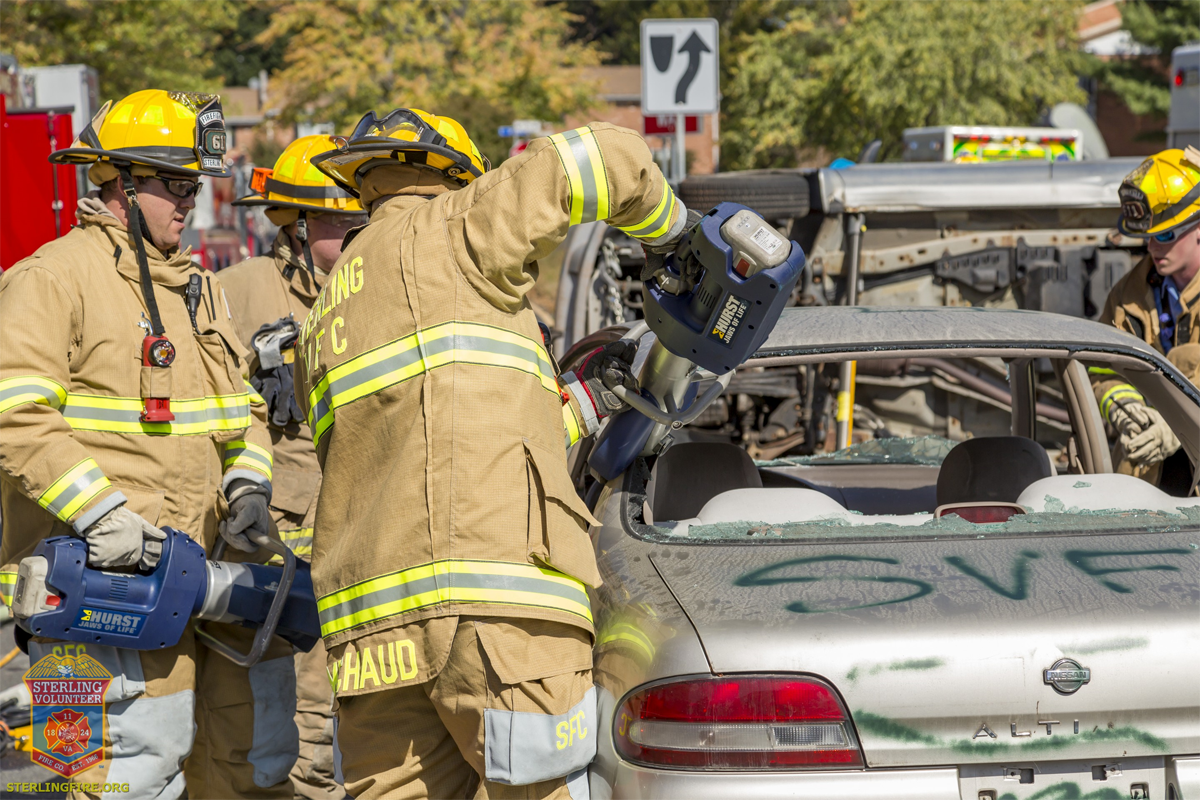
The need for funding is something that continues to grow. In three years, Virginia saw call volume increase 40 percent and the number of volunteers decline, the HB 2175 Workgroup, a committee of state agencies and stakeholders, found last year.
The state supplements local funding with grants for training and equipment. Through a grant administered by the Department of Fire Programs, the Virginia Fire Programs Fund derives 1 percent of fire-related insurance coverage but only one in five grants is guaranteed, according to the report, which offered multiple recommendations to increase funding. About 75 percent of the fund goes to localities for very specific expenses, including training and protective clothing. In Virginia, a $6.25 fee is charged for each vehicle registration, with $4 of that going to emergency medical services for very specific uses, while $2 returns to the state’s general fund. Lawmakers this year tried to increase how much EMS would receive of that $6.25, but the issue was continued into next year in a Senate committee.
As chair of the Virginia Fire Service Board and as past president of the Virginia Fire Chiefs Association, Johnson actively champions legislation that relates to emergency services. “If our legislators want to support public safety, it’s not enough to just say, ‘I’m here to support public safety.’ They really must put their money where their mouth is,” he says.
“The incident at Silver Ridge highlighted traumatic injuries to firefighters, but that’s only a part of what our staff deals with. There were 10 Loudoun County fire and rescue personnel and one sheriff deputy injured at Silver Ridge, one of them deceased, but right now I have a whole department of 2,000 people, including our dispatchers, who suffered psychological trauma from that incident. They, too, have been injured and deserve equal PTSD enhancements and benefits. Also, firefighters have one of the highest rates of dying from cancer, and we suffer higher rates of heart disease and stress. My own dad was a firefighter his whole life, and he died of brain cancer at 56 years old,” says Johnson.
With the consent of Trevor Brown’s family, Johnson made a formal appeal during his consolatory remarks at the memorial service. “As a fourth-generation firefighter, I have learned that what I and we do as a system is important, but this is bigger than Loudoun County or the Sterling Volunteer Fire Company. It is about that fire and EMS service in the most rural part of Southwest Virginia, or the most populated city of New York or Washington, DC,” he said.
“Today’s fire service has critical needs, and if I could speak to all our national and state elected officials, we need your help to prevent others from dying in the line of duty and help protect less fortunate fire and rescue departments from not having adequate personnel, career and volunteer, apparatus, training, and equipment to do their job of serving their individual communities.”
Gov. Glenn Youngkin told us that he hears the plea. “There are no better or more dedicated firefighters than in the Commonwealth of Virginia,” wrote Youngkin in an email response to our question of what Virginia firefighters should expect from state legislators going forward, in light of the Silver Ridge explosion.
“We should continue to lift up the brave men and women who battle fires from Page County to Sterling to every corner of the Commonwealth. Volunteer and career firefighters put themselves in harm’s way to protect communities, Virginians, and eliminate danger — they deserve to receive adequate funding. I’m committed to continue engaging with the General Assembly to make this happen.”
Interested in becoming a Loudoun County firefighter or EMT? Career: loudoun.gov/5093/Recruitment-Process, Volunteer: opennewdoors.org
Feature image Courtesy David Payne, Sterling Volunteer Fire Company
This story originally ran in our June issue. For more stories like this, subscribe to Northern Virginia Magazine.