
Every house has a story, no matter how humble, but the stories of three houses in Northern Virginia — the home of a president, the temporary home of the Constitution, and the site of a momentous decision — played roles in the history of the nation in ways you may not have heard about.
The Gerald R. Ford, Jr. House
Alexandria
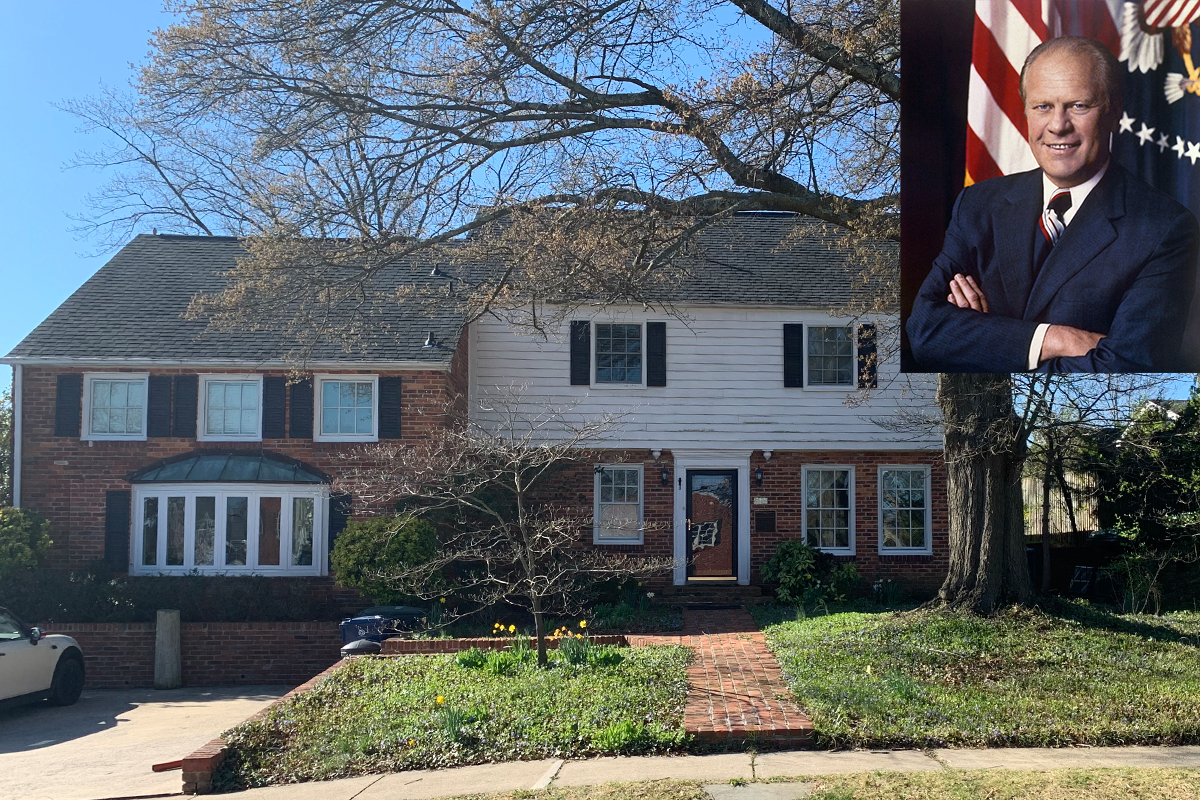
According to the application for the National Register of Historic Places, Gerald and Betty Ford moved to DC when he was elected to Congress in 1948, later moving to the Parkfairfax neighborhood of Alexandria. By 1955, they had a second child, and, as Betty Ford wrote in her autobiography, “Jerry was not going back to Michigan, that was obvious. He planned to stay in Congress.” They had the house at 514 Crown View Dr., in what was then Alexandria’s new Clover neighborhood, built that year.
Things changed when Ford became vice president in 1973, replacing Spiro Agnew, who had resigned in disgrace. The Secret Service turned the home’s garage into a command post, widened the driveway to fit the vice-presidential limo, and made other security changes, including bullet-resistant windows. (It appears the garage has since become a living space in the home.) Ford could have moved into the new vice presidential residence at the Naval Observatory, but Betty didn’t want to.
When President Richard Nixon also resigned in disgrace, Ford took office on August 9, 1974. It took time to move the Nixons out, so the White House wasn’t ready until August 19. Until then, the Fords stayed in the “unpretentious” home that’s described in paperwork for the National Register of Historic Places as “typical of middle-class housing in the northern Virginia suburbs of Washington.” Betty Ford described her husband’s first morning as president: “At 7 a.m., the President of the United States, in baby blue short pajamas, appears on his doorstep looking for the morning paper, then goes back inside to fix his orange juice and English muffin.”
When Ford was defeated in 1976, he and Betty sold the Alexandria house where they’d lived for 19 years. “For me, leaving the White House wasn’t nearly as much of a wrench as leaving our house in Alexandria,” Betty wrote.
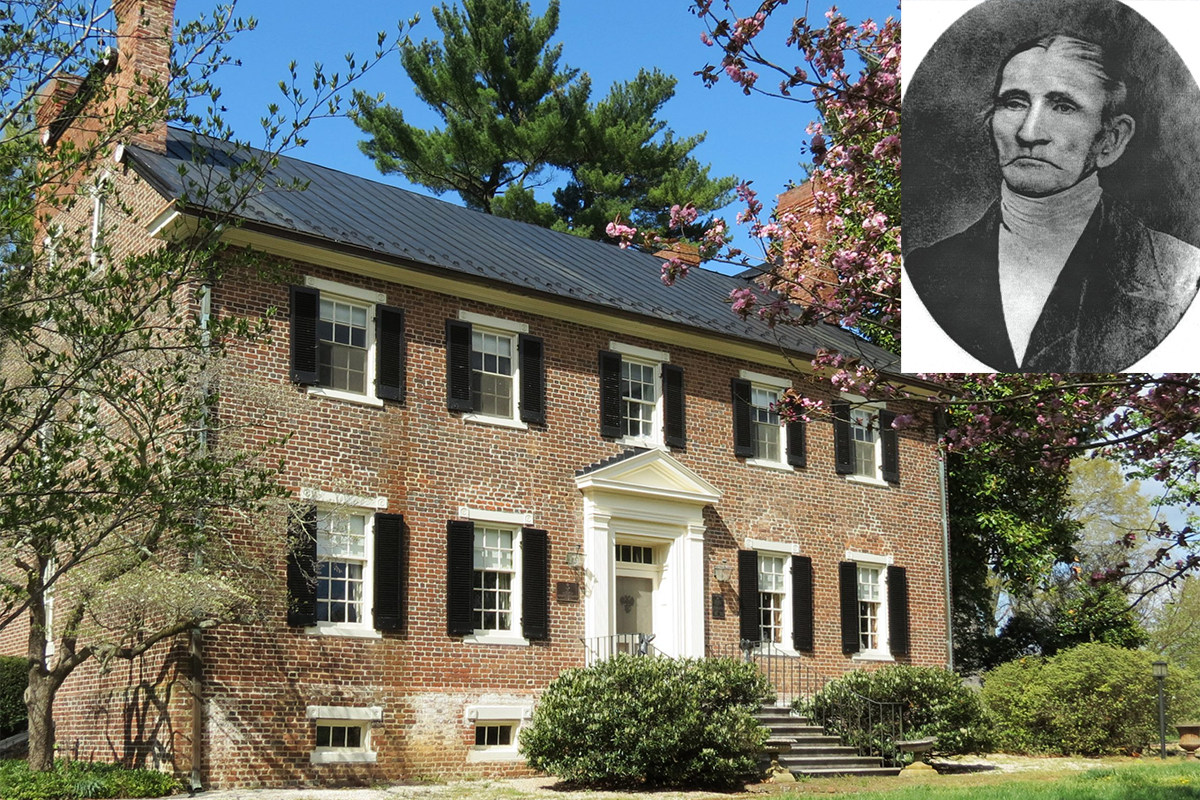
Rokeby
Outside Leesburg
It was August 1814; British troops were advancing on Washington and leaving destruction in their path. Secretary of State James Monroe got word to his office: We’re not going to stop them; hide the important papers, including the Constitution and the Declaration of Independence.
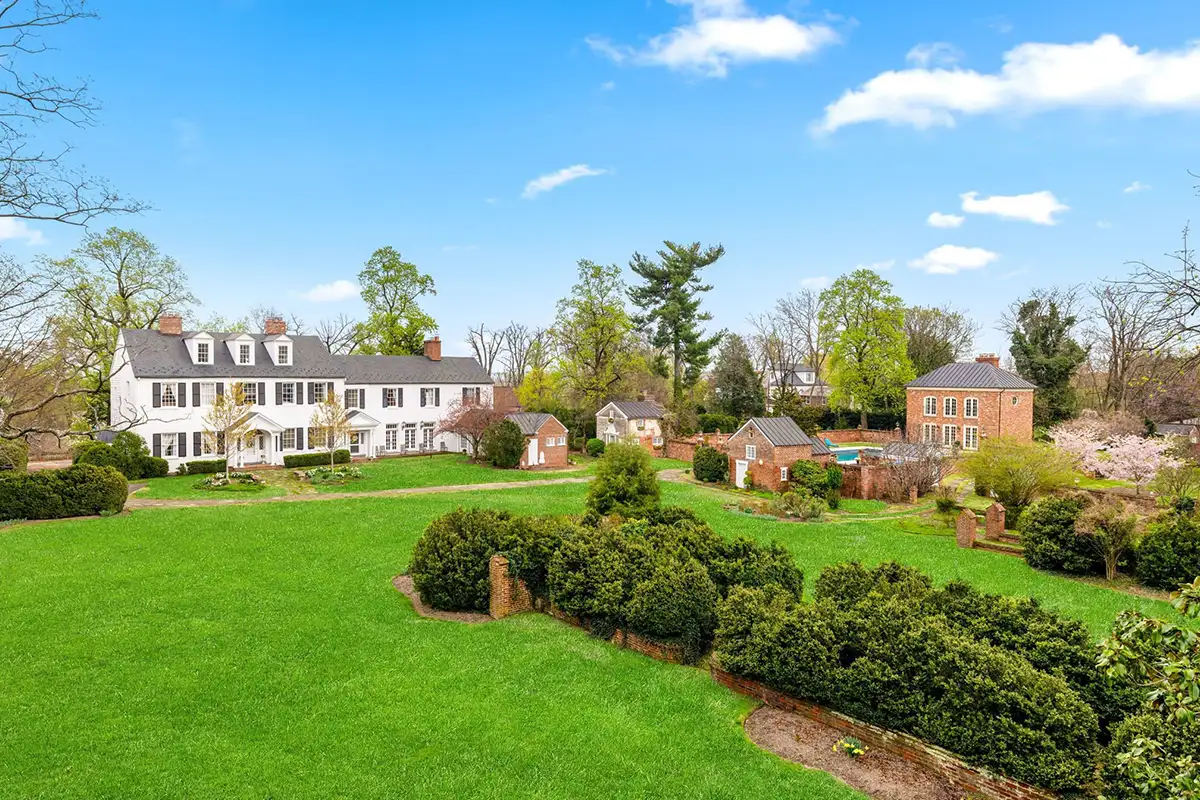
Stephen Pleasonton, a State Department clerk, was entrusted with the job, and it’s commonly believed he hid them in a vault in the brick mansion known as Rokeby, about 2.5 miles southwest of Leesburg.
According to the National Park Service, Pleasonton worked with a group to pack the important documents in coarse linen and load them into a caravan of wagons that traveled 35 miles west to Leesburg to find a safe location for them.
The founding documents, as well as the Articles of Confederation, the correspondence of Gen. George Washington, and more, were there for two weeks. The State Department was burned down, along with the Treasury, the Capitol, the White House, and the Library of Congress.
There’s some dispute as to whether Rokeby, a colonial built in 1757 for Charles Binns Sr., the first clerk of the circuit court in Loudoun County, is the actual house Pleasonton picked. He recalled hiding the documents in an abandoned house in town, though he admitted his memory could be flawed. Rokeby is on both the National Register of Historic Places and the Virginia Landmarks Register. There are decent arguments in either direction and, of course, if a definitive answer can be found, the location of the historical marker should reflect it.
But there are arguments supporting the Rokeby theory as well, and it’s important to memorialize the story of the fragility of the early republic, even if the location is a few miles off.
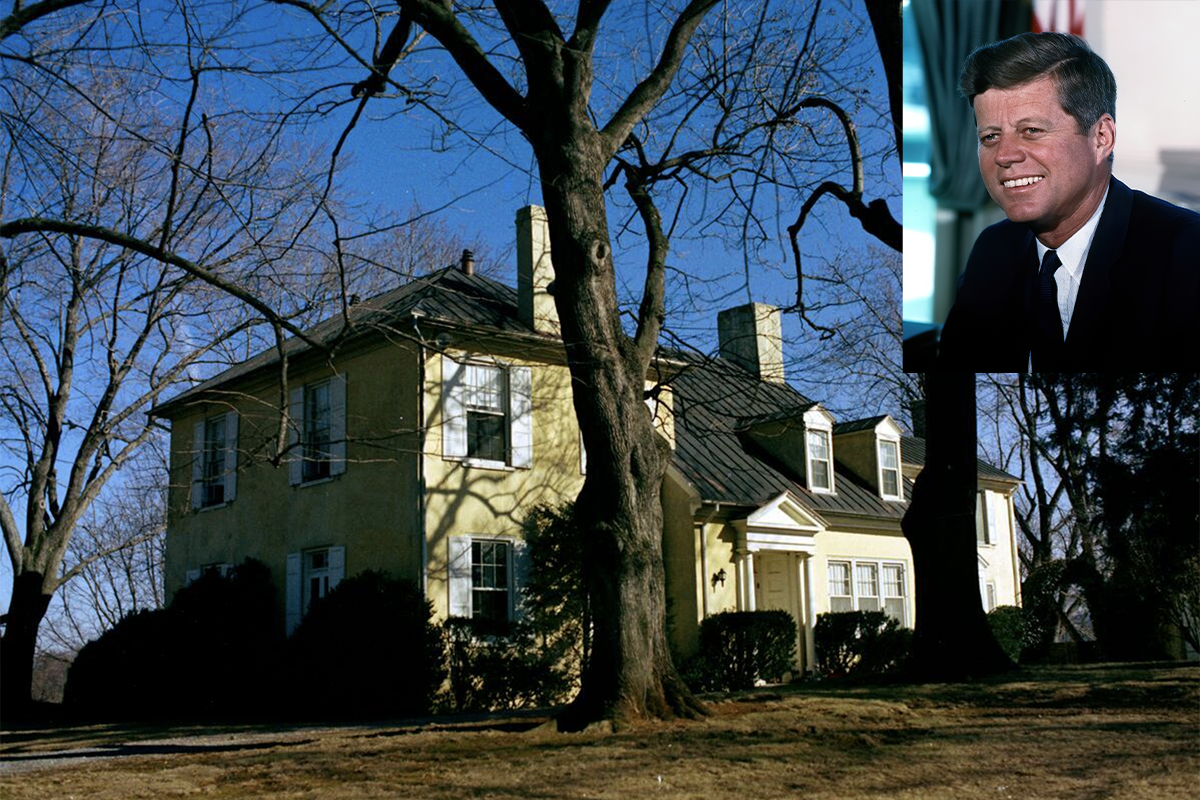
Glen Ora
Middleburg
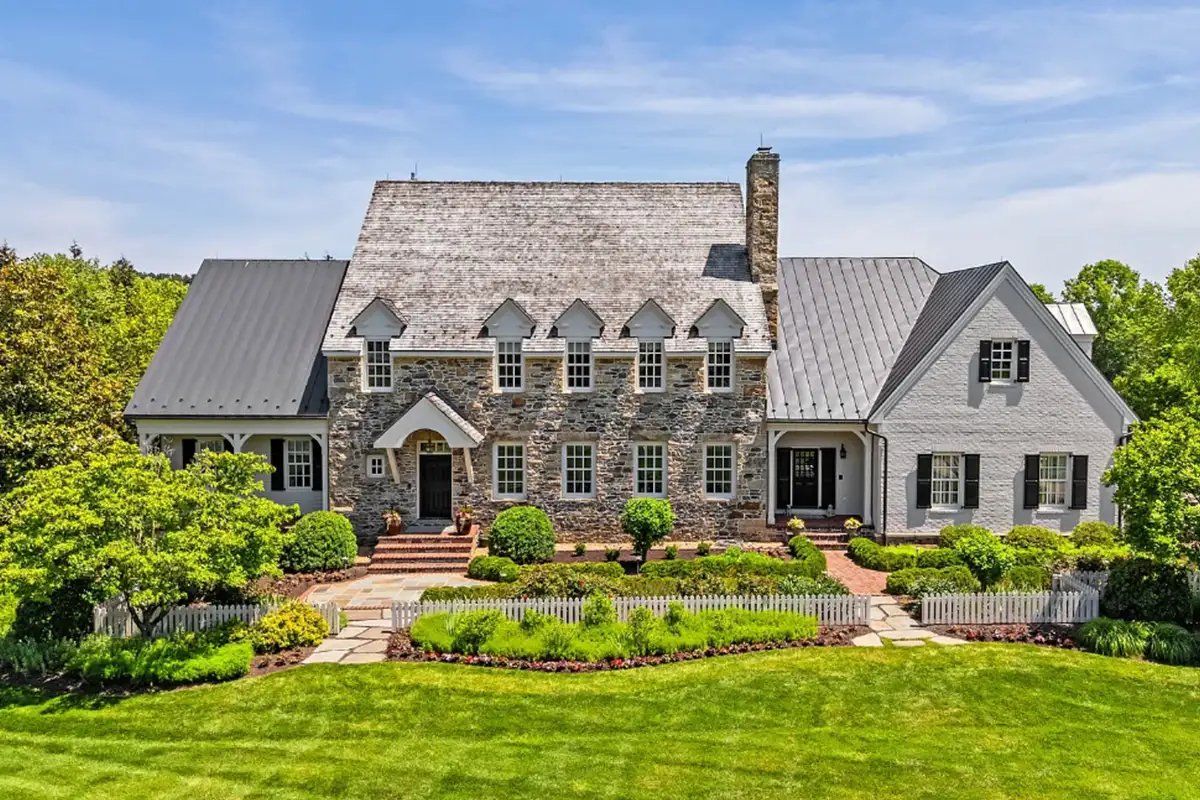
When the subject is nuclear war, you probably want a quiet place to think it over. For President John F. Kennedy, that was Glen Ora, at 5297 Green Peace Ln., in Middleburg, which he and first lady Jacqueline Kennedy rented as a getaway during his presidency.
In June 1961, Soviet leader Nikita Khrushchev was having a lot of fun pointing out that the Soviets had put the first man in space, while the U.S. had just gone through the Cuba face-plant known as the Bay of Pigs. Khrushchev told Kennedy that he wanted American troops out of Berlin, the city deep in communist East Germany that included a sliver controlled by the West.
Kennedy retreated to Glen Ora, lying to the press that it was to recuperate his famously bad back, according to the book The Georgetown Set: Friends and Rivals in Cold War Washington by Gregg Herken. He met with his most knowledgeable advisers to ask about Khrushchev the man — was he the type to back down when confronted? He also met with allies in the press, including Washington Post publisher Phil Graham, to ask whether he could count on their support. The answer, in both cases, was yes, Herken wrote.
The Soviets built the Berlin Wall that summer; the U.S. evacuated the families of U.S. military personnel in Berlin, and for a time American and Soviet tanks pointed their cannons at each other. But Kennedy listened to the advice he received at Glen Ora, held firm, and the American presence remained.
That’s not the only time Glen Ora made the news: In the late 1990s, it was used by the Ruckus Society as a training camp for “nonviolent direct action,” with attendees learning skills ranging from painting banners to leadership dynamics to the techniques needed to scale a building.
Feature image, stock.adobe.com
This story originally ran in our May issue. For more stories like this, subscribe to Northern Virginia Magazine.