
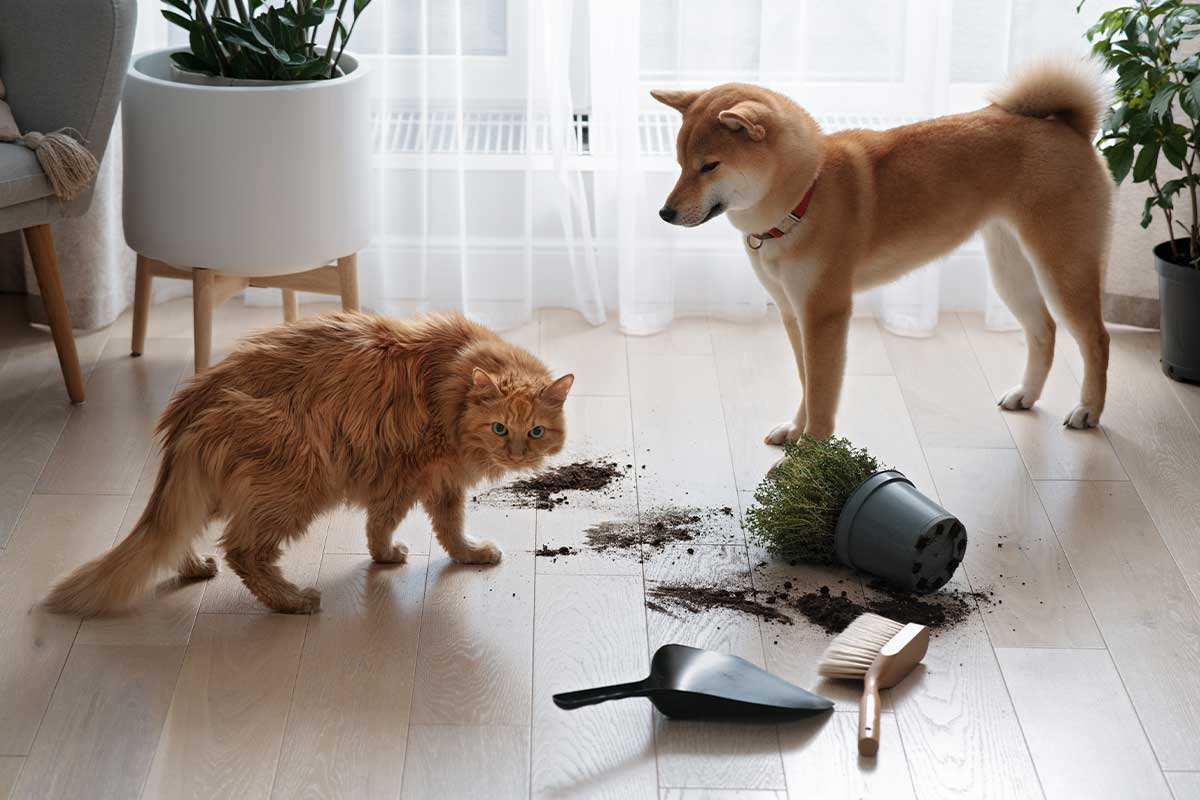
While an exotic indoor plant or expansive flowering garden is sure to make a statement, if you have pets, you want to make sure you’re keeping them safe by knowing which house plants and yard plants are toxic for dogs and cats.
“Plants are lovely and add much enjoyment both inside and outside of people’s homes,” says Dr. D. Marguerite Adams, a veterinarian at Adams Mill Veterinary Hospital in Great Falls. “However, there can be danger lurking as not all plants are pet safe.”
How Common Are Toxic Plants?
“Plant poisonings in pets are not uncommon,” notes Adams. “And they can present a variety of signs.”
Lethargy, vomiting, diarrhea, lack of appetite, drooling, uncoordinated movement, seizures, and rapid breathing are just some of the potential symptoms.
Pets cannot naturally avoid dangerous plants. They do not know the difference between a safe plant to chew on and a dangerous one.
“Dogs and cats are curious and like to play and nibble,” says Adams. “Pets hands are their mouths and when something novel is encountered, it is picked up. Once in the mouth, it can be chewed upon. While ingestion of the toxic plant is obviously a problem, just having the toxic plant in the mouth can expose the pet to danger.”
The pet owners should familiarize themselves with what is safe and what is not — both in their yard and in the house.
“Since poisoning by a plant does not show just one symptom, knowing what plant a pet was exposed to and knowing what plants are in a pet’s environment helps to diagnose the toxin and speed up the urgent care needed for the pet to survive and recover,” Adams says.
Keep These Houseplants from Cats
Cat owners need to be very wary of lilies of all types and sago palms, says Adams.
“These attractive houseplants are very deadly to cats,” she says. “If a cat consumes any part of these plants, immediate urgent care should be sought to avoid lethal consequences.”
“Lily intoxication in cats has been estimated to cost over $1,500 to successfully treat,” Adams says.
Keep Dogs from These Plants
Dog owners, on the other hand, might find that yard plantings are more problematic.
“Plants like Oleander and Yew should not be consumed by dogs,” Adams says.
Puppies commonly chew on yard plants in the yard, but even adult dogs are not safe from picking up a leaf or limb and chewing on it.
Dog owners also will not want to have the houseplant dumb cane, also known also Dieffenbachia, around dogs, either inside or in containers outside.
Plants Toxic to Dogs and Cats
Other common plants that are known to be toxic to both cats and dogs include the following:
- Amaryllis
- Azaleas
- Aloe plants
- Begonias
- Daffodils
- Jade plants
- Peonies
- Tulips
- Wisteria
Helpful Resources
The American Society for the Prevention of Cruelty to Animals maintains a list of plants that are problematic for pets, Adams says.
“It is best to consult the ASPCA’s website and just not plant any plants known to cause problems in an area accessible to the pet,” Adams says.
The organization has a list of plants that are toxic for dogs and a list for cats.
“These lists are a resource for pet owners to use to be knowledgeable about plants that should be either completely avoided or for alerting if exposure to a certain plant should cause alarm,” Adams says.
The ASPCA also has a hotline. Call 888-426-4435 if you are concerned that a plant may be the reason a pet is ill.
“The hotline operates 24 hours a day, so if the pet owner cannot contact their own veterinarian for information, the hotline can supply immediate assistance,” Adams says.
Feature image, stock.adobe.com
For more stories like this, subscribe to Northern Virginia Magazine’s Family newsletter.