The solar eclipse that’s sweeping across part of the U.S. on Monday won’t have much effect on Virginia, but if you’re headed somewhere to catch the display, it’s important to remember to do it safely.
The American Academy of Ophthalmology is reminding eclipse-watchers of the basics: Never look directly at the sun when the eclipse is in its partial phase, when the moon is starting to slide in front of the sun. That’ll take about an hour.
When the sun is in total eclipse — when it suddenly gets almost totally dark — you can look up at the moon and the halo that the sun forms around it. But be warned: Depending where you are on the “path of totality,” that phase will last five minutes tops, according to the American Astronomical Society’s chart. Then comes about another hour of a partial eclipse, when, again, you can’t look directly up at the sun — not even through your phone or a camera, unless you get a special filter for it.
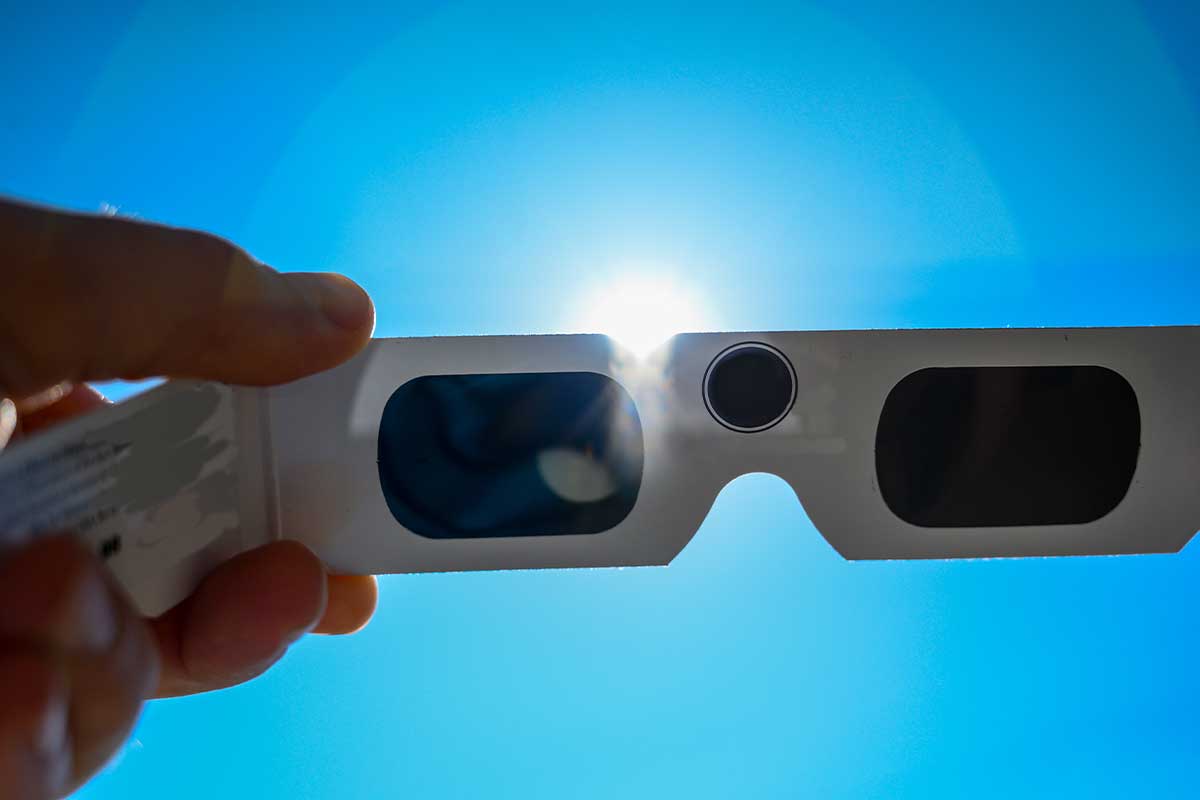
There are glasses that can allow you to look at the eclipse, but you have to make sure they’re the real thing: You want glasses that meet the specific standard ISO 12312-2. The AAS said it’s found some counterfeit viewers floating around, so it has advice on how to make sure your glasses are for real.
This is no joke: The nonprofit Prevent Blindness said “eclipse blindness” can permanently damage your eyes, and the eclipsed sun doesn’t cause you that pain that could tell you to look away.
All that said, make the most of it: Even as they warn about protecting yourself, the ophthalmologists’ academy said a total eclipse is “an incredible experience.” The AAS said traveling to somewhere on the path of totality is “worth the effort.”
NASA’s map shows that Northern Virginia will get between an 80 to 90 percent partial eclipse, which doesn’t sound bad, but Rick Fienberg, senior contributing editor of Sky & Telescope, said on the AAS site, “A 99 percent partial solar eclipse doesn’t get you 99 percent of the experience of a total solar eclipse — the last 1 percent is the difference between night and day.”
This will be the last total eclipse that’ll be visible from anywhere in the 48 contiguous United States until 2044. The last one happened in 2017.
Feature image, stock.adobe.com
For more expert advice, subscribe to Northern Virginia Magazine’s Wellness newsletter.