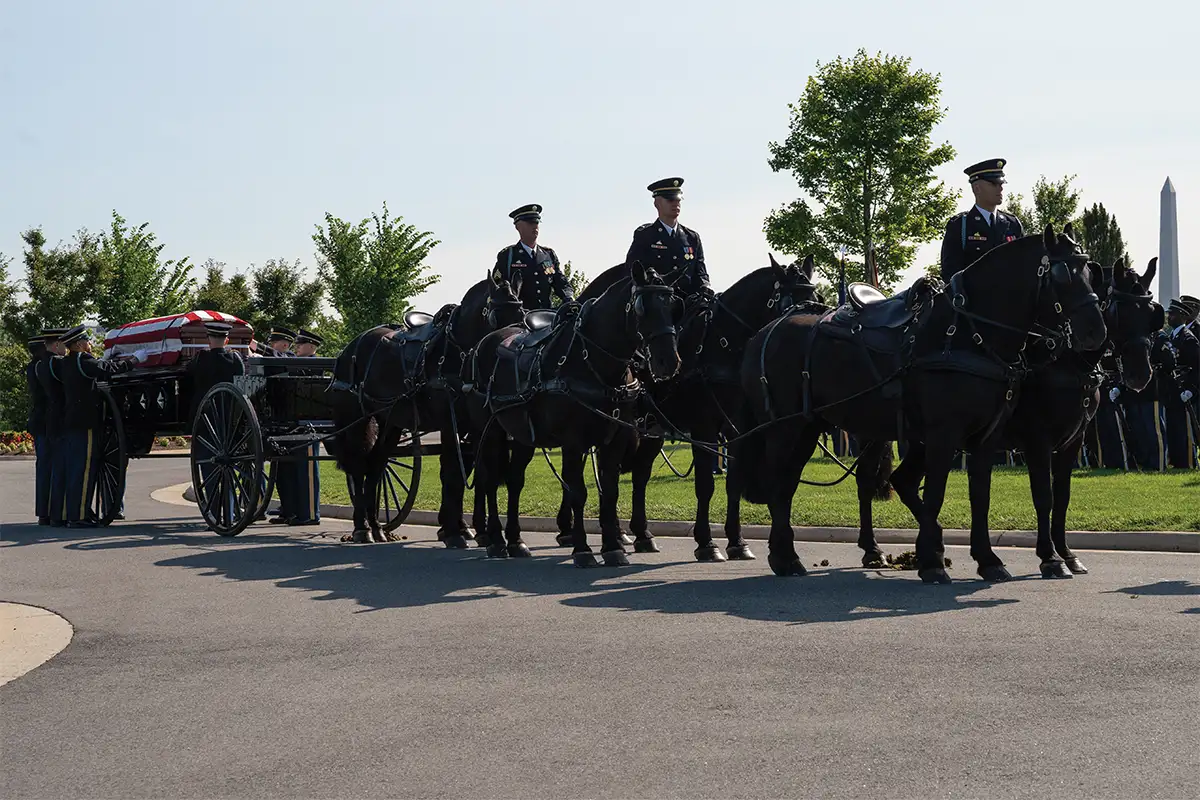
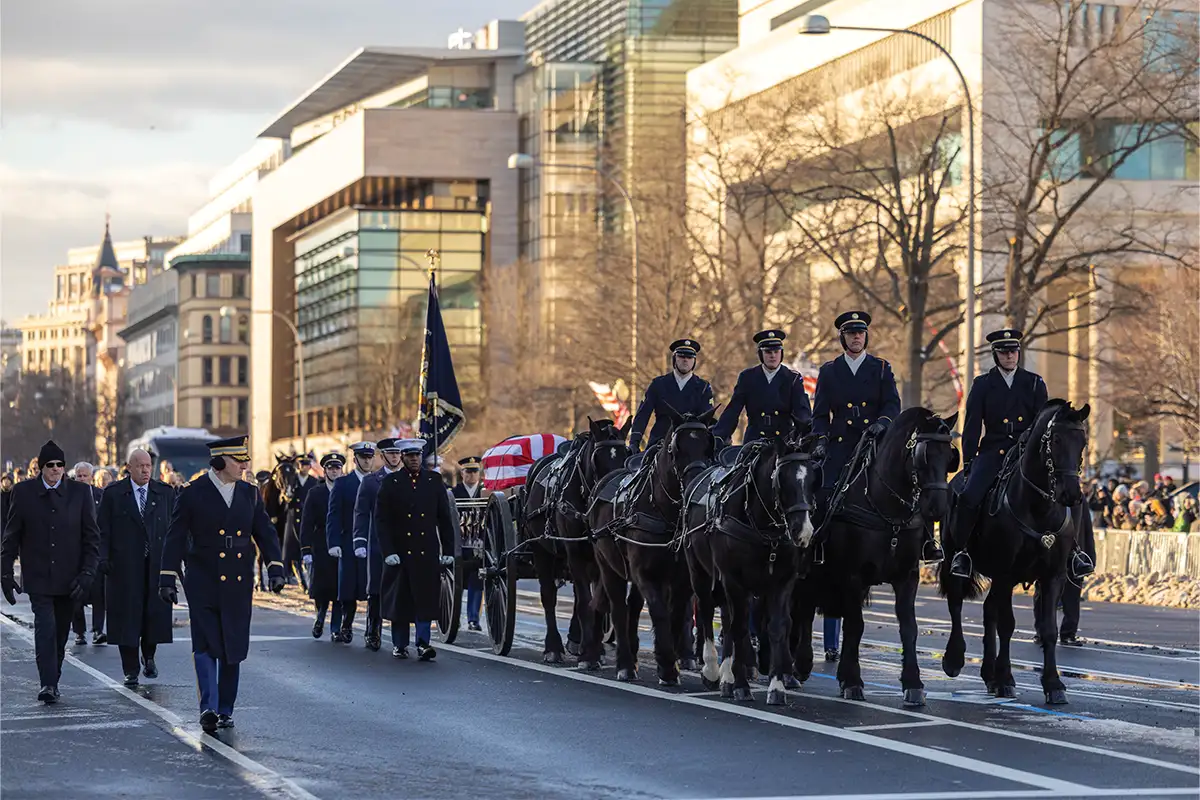
Days begin early for the Army’s Caisson Detachment, part of the 3rd U.S. Infantry Regiment at Arlington National Cemetery. At 4:30 a.m., soldiers rise to feed, groom, and bathe the horses that carry America’s heroes to their final resting place. The Caisson Detachment is part of what is known as The Old Guard. The regiment is the Army’s oldest active-duty infantry unit and has been serving continuously since 1784.
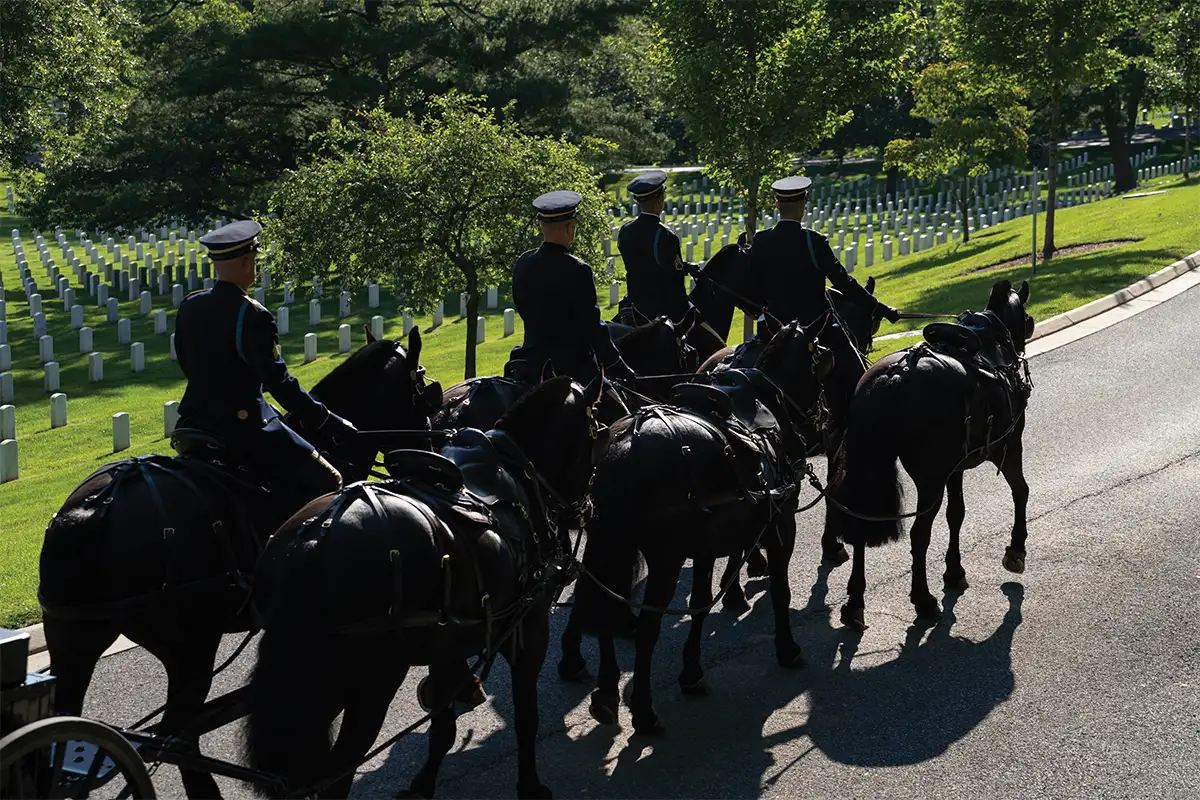
“Our soldiers have a deep passion for what they do,” says Maj. Wes Strickland, director of communications for The Old Guard. “Escorting the fallen is a solemn responsibility that we take very seriously.”
The 3rd U.S. Infantry Regiment’s Caisson Detachment is elite and unique. Each soldier is carefully selected to care for the roughly 60 horses that serve in Arlington’s funeral processions. The Army provides extensive training, so equestrian experience isn’t required. Horses, handpicked for their temperament, are also rigorously trained to remain steady in the face of distractions and to maneuver across Arlington’s terrain. The task is gratifying for platoon members.
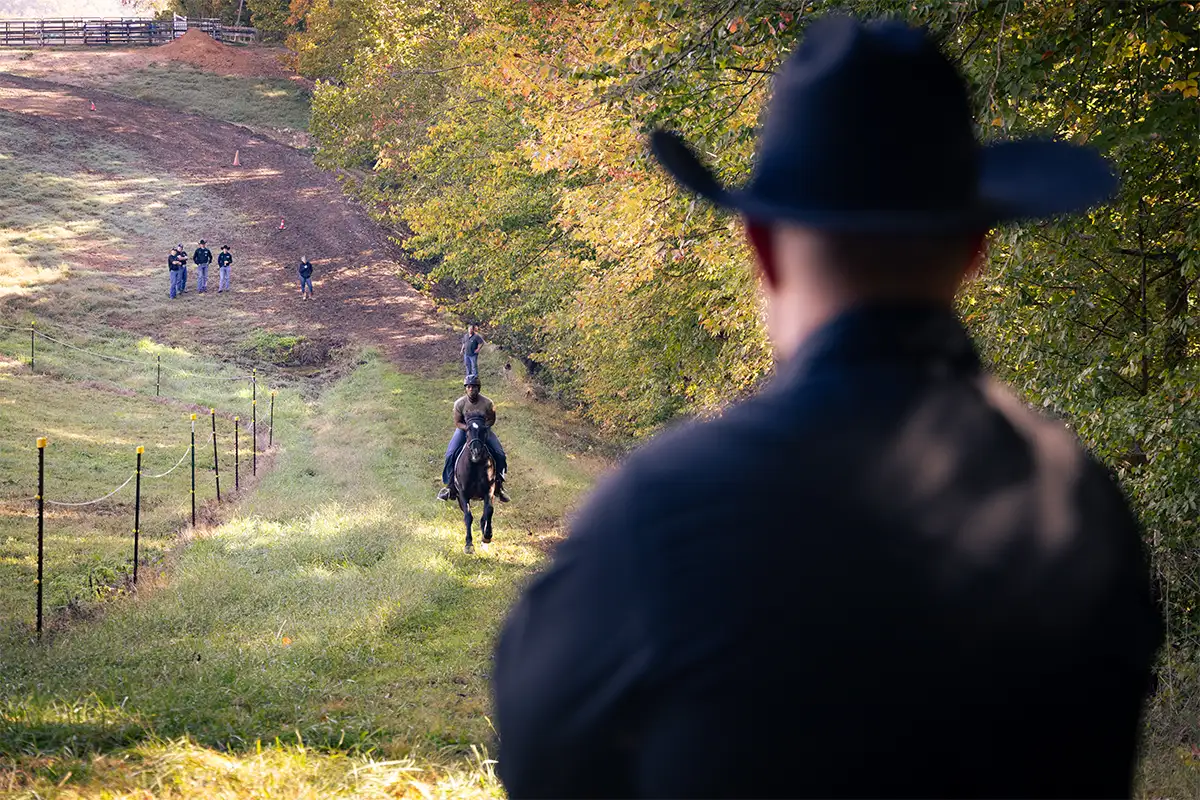
“Working with the horses brings a whole different level of responsibility to our profession, teaches you compassion for the horses, and brings enjoyment to an otherwise solemn task,” notes Sgt. Damien Copeland, a member of The Old Guard. With names like Pickles, Poncho, Scout, and Cincinnati, these horses serve alongside their soldiers in a mission that requires discipline and trust. Caring for them is a full-time duty. Together, soldiers and horses conduct several military funerals each day, depending on the season.
“Our job demands precision and great discipline,” says Spc. Fletcher Metz. “Working alongside the Army’s horses means consistency and attention to detail every single day. There isn’t a day that passes without exercise, training, or practice — whether it’s maintaining equipment, caring for the horses, or cleaning the barn.”
Hitting the ‘Pause’ Button
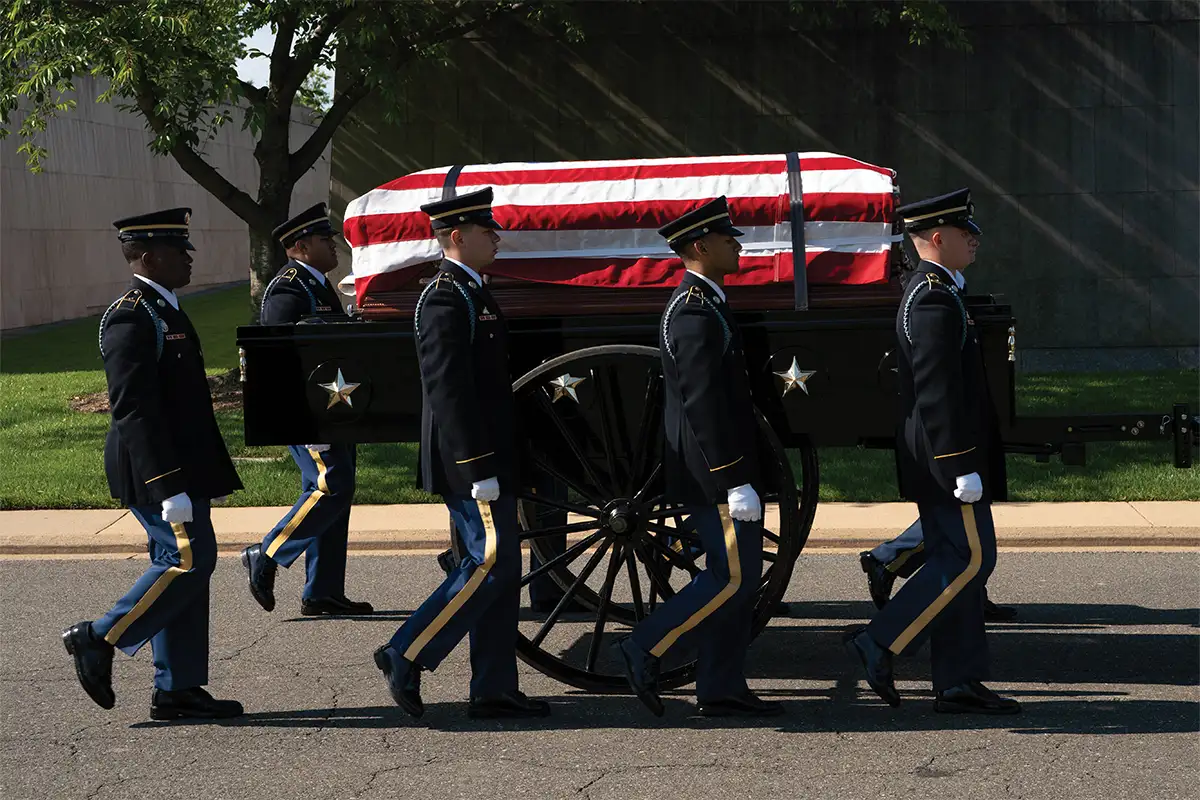
It’s an iconic image: a caisson drawn by horses, bearing a flag-draped casket, slowly making its way to a grave at Arlington. But that tradition was suspended in 2023 after reports of poor living and working conditions for the horses — including several deaths — raised widespread concern.
“That raised some alarm bells to figure out what was actually happening,” says Strickland. The pause led to a comprehensive overhaul of the program, guided by what he says are “highly qualified experts” brought in to modernize horse care and operations, and the Caisson Detachment resumed its duties this June.
“We started to investigate; we learned that there were a lot of things we needed to change that we just hadn’t modernized with the times. We’re still changing and rebuilding,” Strickland says.
Today, instead of being housed at Fort Myer near the cemetery, the horses live at the NOVA Equestrian Center in Aldie, where facilities far surpass the outdated stables of the past.
“They come here to Fort Myer for one week at a time to work and then return to Aldie for recovery and conditioning,” Strickland says.
Each squad now includes additional horses, ensuring substitutions are available if one is unfit for duty. For the soldiers of the Caisson Detachment, the assignment remains more than a job — it is a sacred honor.
“The sense of responsibility I feel during funeral honors is profound,” says Spc. Robert Johnson. “We’re not just performing a ceremony; we’re paying tribute to heroes who sacrificed everything for our freedoms. That motivates me to execute every detail flawlessly, knowing it brings comfort and closure to grieving families while honoring the fallen with the utmost respect.”
Guarding the Tomb of the Unknown Soldier
Another solemn duty entrusted to The Old Guard is the 24-hour vigil at the Tomb of the Unknown Soldier at Arlington National Cemetery. Since 1948, its soldiers have stood watch, guarding the unidentified fallen who symbolize all who gave their lives in service. The Changing of the Guard ceremony, witnessed by thousands each year, is performed with flawless precision.
“During the Changing of the Guard at the Tomb of the Unknown Soldier, my mind is fully focused on precision and reverence, channeling a deep respect for the unidentified heroes who represent all who’ve given their lives,” Johnson says. “It’s a moment of quiet strength that reminds me of the privilege we have in upholding this solemn tradition, filling me with a positive sense of purpose.”
Only a select few can serve as sentinels at the Tomb. Soldiers must be U.S. citizens with excellent records and impeccable military bearing. It’s an unforgettable sight to witness: While on duty, the sentinel walks a 63-foot rubber-surfaced path in exactly 21 steps, pauses for 21 seconds facing the Tomb, turns, pauses another 21 seconds, and retraces the route.
The number 21 reflects the highest military honor — the 21-gun salute. And as a symbolic gesture against intrusion, the sentinel always carries his weapon away from the Tomb.
The Broader Mission
The Old Guard is rich in history. It earned its name in 1847, when Gen. Winfield Scott recognized the unit’s valor during a victory parade in Mexico City at the close of the Mexican War. Since that moment, the regiment has carried forward a proud tradition of service. Today, about 1,600 soldiers serve in The Old Guard.
Beyond its solemn duties at Arlington, the regiment is the Army’s official ceremonial unit and the designated escort to the president. Its soldiers carry out military ceremonies at the White House, the Pentagon, national memorials, and across the capital, representing the Army with precision and pride.
“Knowing that I did something honorable and important for our country, its fallen heroes, and their families will be with me forever,” says Copeland.
Soldiers serving in the regiment strive for perfection, but that’s not their ultimate goal.
“I want civilians to understand that our precision isn’t just about perfection; it’s a symbolic expression of unwavering respect for our nation’s heroes and values, creating meaningful connections through every step and salute,” says Johnson. “Embracing this symbolism fosters a positive appreciation for the discipline and unity that strengthen our country.”
Feature image, U.S. Army photo by Sgt. Nathan Winter
This story originally ran in our November issue. For more stories like this, subscribe to Northern Virginia Magazine.