The remains of Eliza Monroe Hay, the eldest daughter of U.S. President James Monroe, have been reburied in Virginia. On October 23, Hay was reinterred at her family tomb at Richmond’s Hollywood Cemetery. Her remains were placed near her father, mother, and sister.
Hay was born near Fredericksburg in 1786. She moved with her family to France when Monroe was became the American minister to the country. She returned to the states in 1803 and married attorney George Hay in 1808. The couple had one daughter.
James Monroe was elected the country’s fifth president in 1817. Eliza’s mother was ill, so she took on the role of first lady. After the death of her parents and husband, she moved back to France. She died destitute in 1840 and was buried in an unmarked Paris grave.
Unearthing the Truth
Hay’s Virginia reburial is due in large part to the work of retired Virginia teacher and author Barbara VornDick. In researching her biography about Hay, VornDick learned that she had not abandoned her family and stormed off to Paris, as had been the longstanding narrative. Instead, she had moved overseas on the advice of her doctor and was swindled out of her inheritance by her brother-in-law.
In an August interview with NPR station VPM, VornDick said she felt called to act on Hay’s behalf after reading letters she had written near her death. “She was pleading for a place to stay. I mean, she had no money, she had no house. I think that it was evident that she would have come back to America if she could have,” VornDick said. “And when I learned that, then the right thing to do was to bring her home. It’s what Americans do. It turns out she had been in an unmarked grave in Paris for 200 years, almost.”
VornDick started the Bringing Eliza Home project to raise the funds needed to move Eliza’s remains. The project worked to cover the cost of exhuming and shipping the remains as well as the reinterment at the James Monroe family plot.
Bringing Eliza Home
Hay’s remains were flown from Paris to Dulles Airport, and on June 13, at Oatlands in Loudoun County, there was a ceremony to witness the presentation of her coffin. Pallbearers included her direct descendant, Michael Kamtman. “This is a beautiful and powerful moment for me, and it is possible because of someone who up until two years ago was a complete stranger. I’m referring, of course, to Barbara VornDick. … Thank you, Barbara,” Kamtman said.
Her remains were then moved to Richmond, where more than 200 people gathered to witness the October reburial.
Virginia Sen. Bryce Reeves’ office helped VornDick with some of the bureaucratic hurdles of moving the remains, The Washington Post reported. At the Richmond ceremony, Reeves said, “This repatriation was a grassroots effort, funded entirely by private donations and driven by dedication and heart. This is about paying respect to a woman who served this nation quietly, but powerfully, during its formative years.”
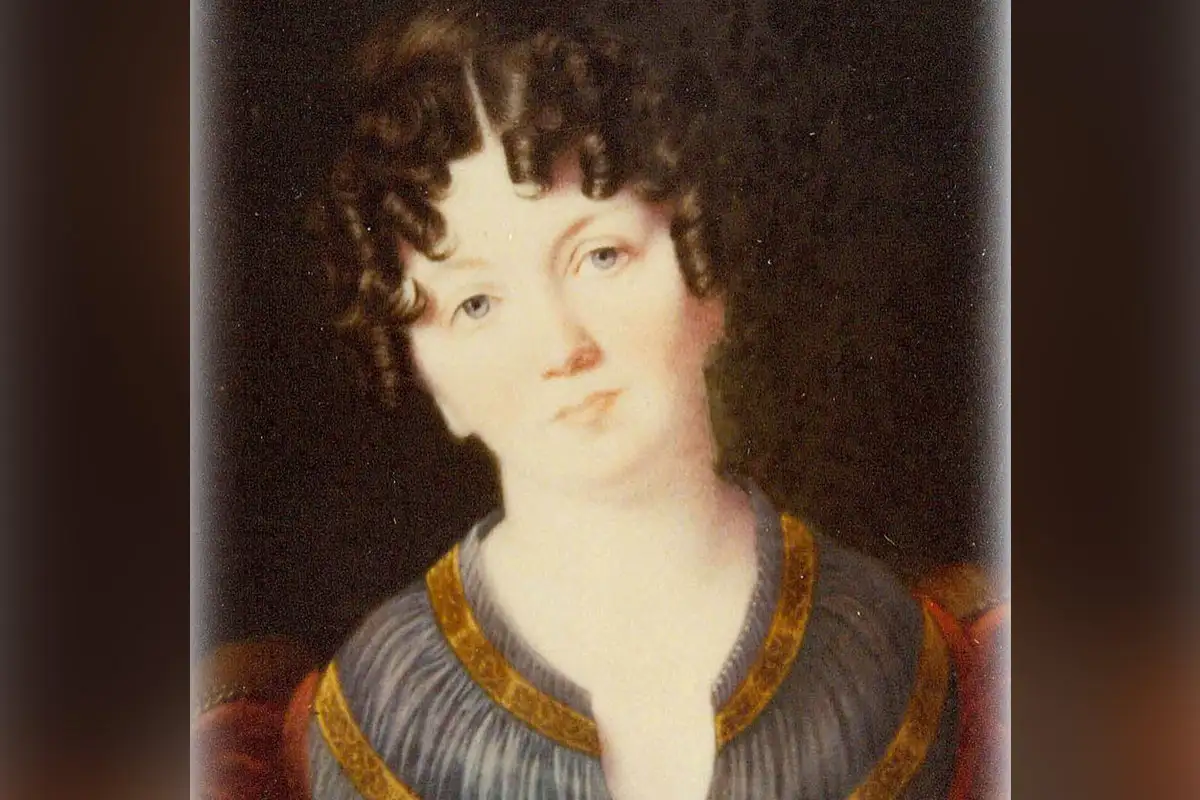
Portrait of Eliza Monroe Hay from the 19th century, possibly attributed to Stefano Caruson (public domain)