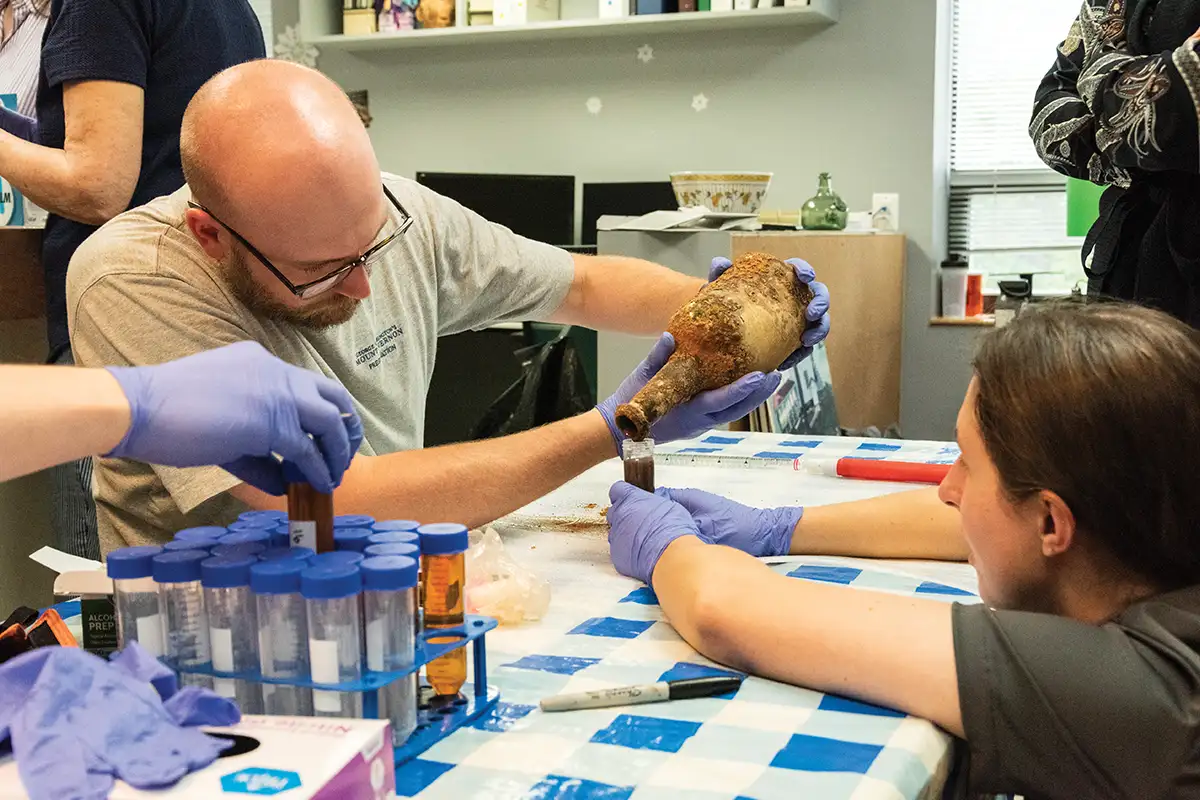
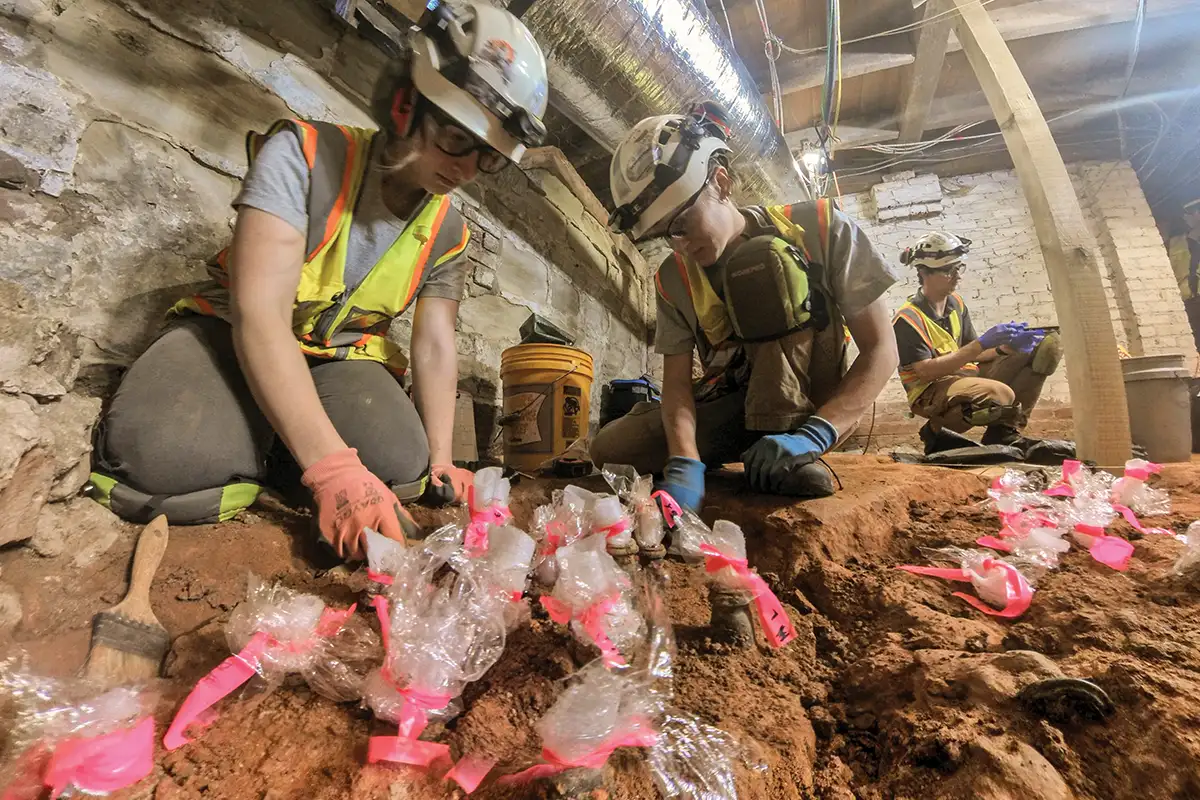
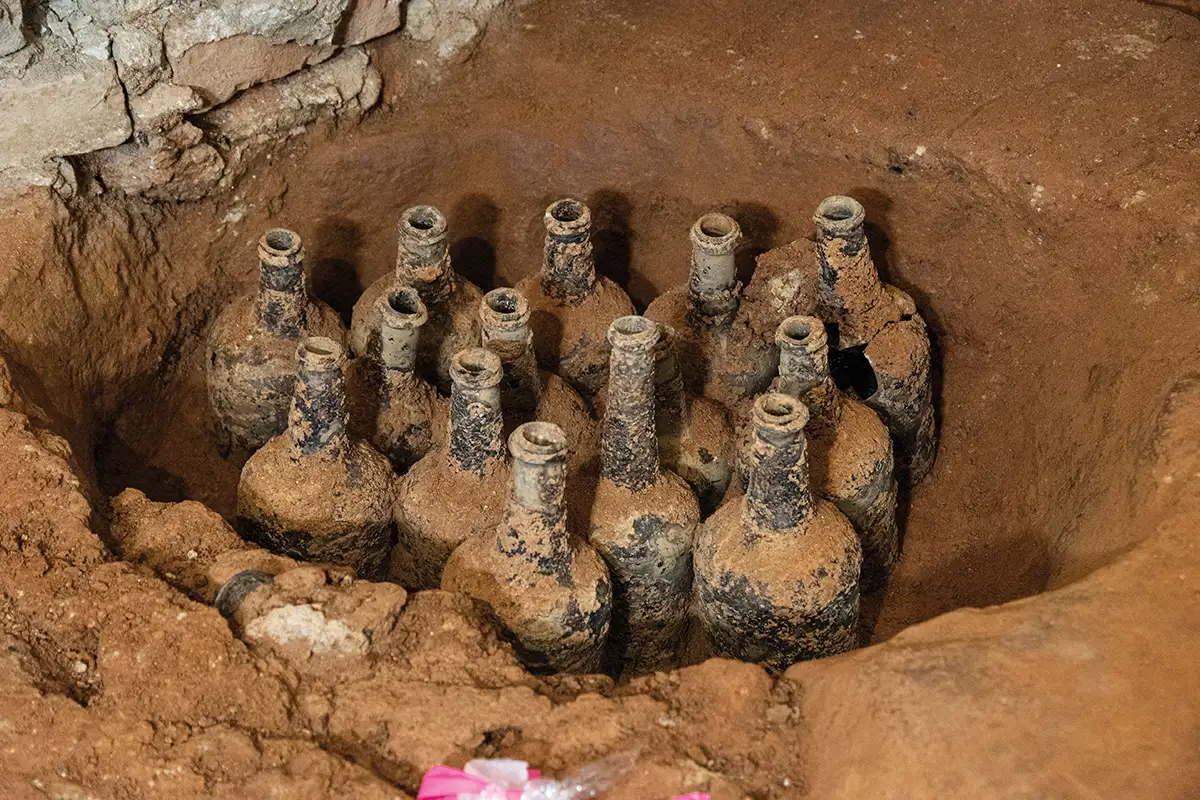
Archaeologists at Mount Vernon are celebrating a Revolutionary find: In March, they uncovered 35 bottles of preserved cherries and other berries in a storage pit in the cellar of the first president’s mansion.
Jason Boroughs, the principal archaeologist at Mount Vernon, says the pit was found under a buried floor that dates back to 1775, so the cherries and what are likely gooseberries and currants are at least that old. He adds that 29 of the 35 bottles were intact, the fruits still “astonishingly preserved.”
The corks had dried out and fallen into the bottles, leaving “some degree of groundwater” in most of them, so the cherries and berries “don’t look incredibly appetizing. … You wouldn’t die if you ate them, but they probably wouldn’t be that great either.”
The real hope is to be able to plant the seeds, and they’re being tested. “The prospect of being able to have something grown again at Mount Vernon one day, from seeds that date from the high period of the plantation, is pretty enticing,” Boroughs says.
The hero of the story is Doll, the enslaved cook whom Martha Washington brought to Mount Vernon in 1759, and the rest of the enslaved workers there. “Taking care of the trees, even the manner they pick the cherries, was highly skilled,” Boroughs says. “And that is part of the reason they preserve so well.”
He calls Doll “one of the first great American cooks that’s really pioneering this stuff that becomes part of Southern food traditions and then American food traditions.”
It may seem hard to believe there’s still anything for archaeologists to find in Fairfax County, but by the end of Washington’s life, Boroughs says, Mount Vernon covered about 12 square miles: “We look around and we see parking lots and Walmarts and roads and suburbs. But even in people’s backyards in this area, we’ve found traces of Mount Vernon.”
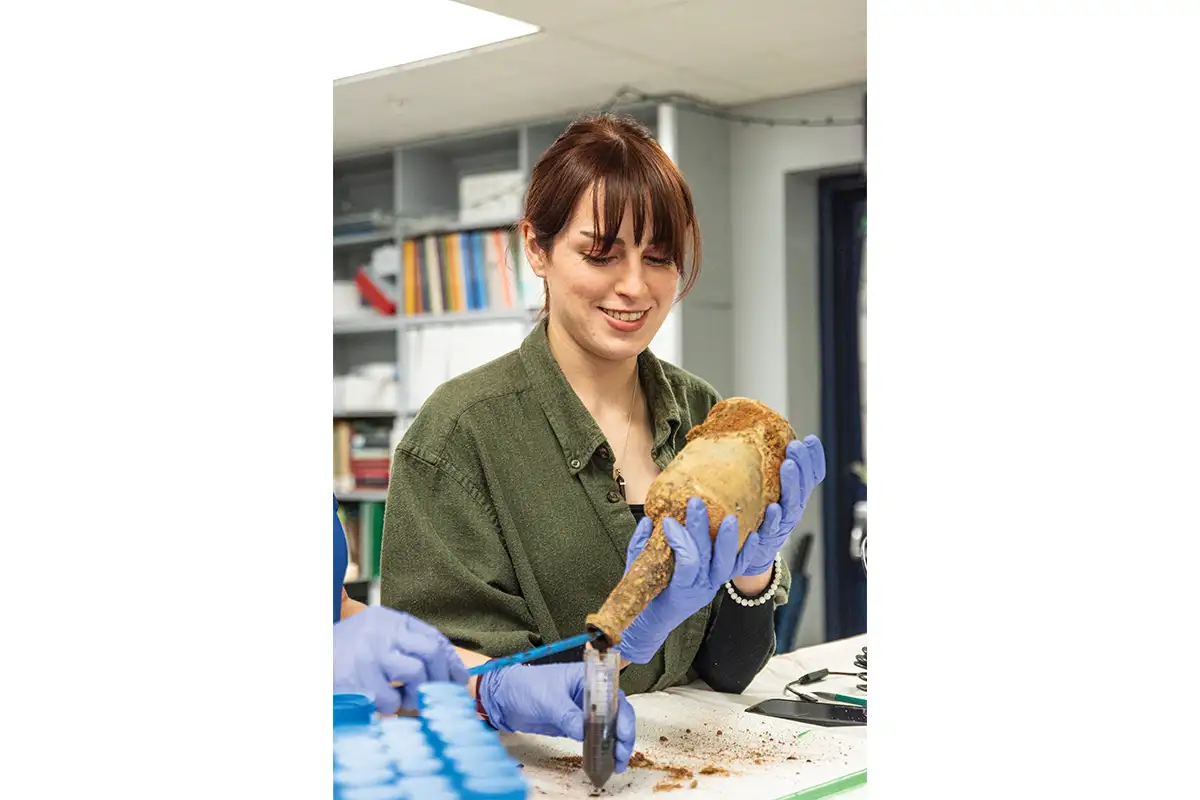
“We’re out there in 100-degree heat,” Boroughs says about archaeologists. “We’re out there in 5 degrees.” But discoveries like this are the reward.
Historians make great use of documents, as do archaeologists, but “especially in the colonial period, not everyone’s allowed to write,” Boroughs says. “Women are underrepresented; enslaved folks are not leaving documents behind. But everybody uses stuff. … Those objects, they’re connected to people that had real stories.”
Feature image courtesy Mount Vernon Ladies Association
This story originally ran in our September issue. For more stories like this, subscribe to Northern Virginia Magazine.