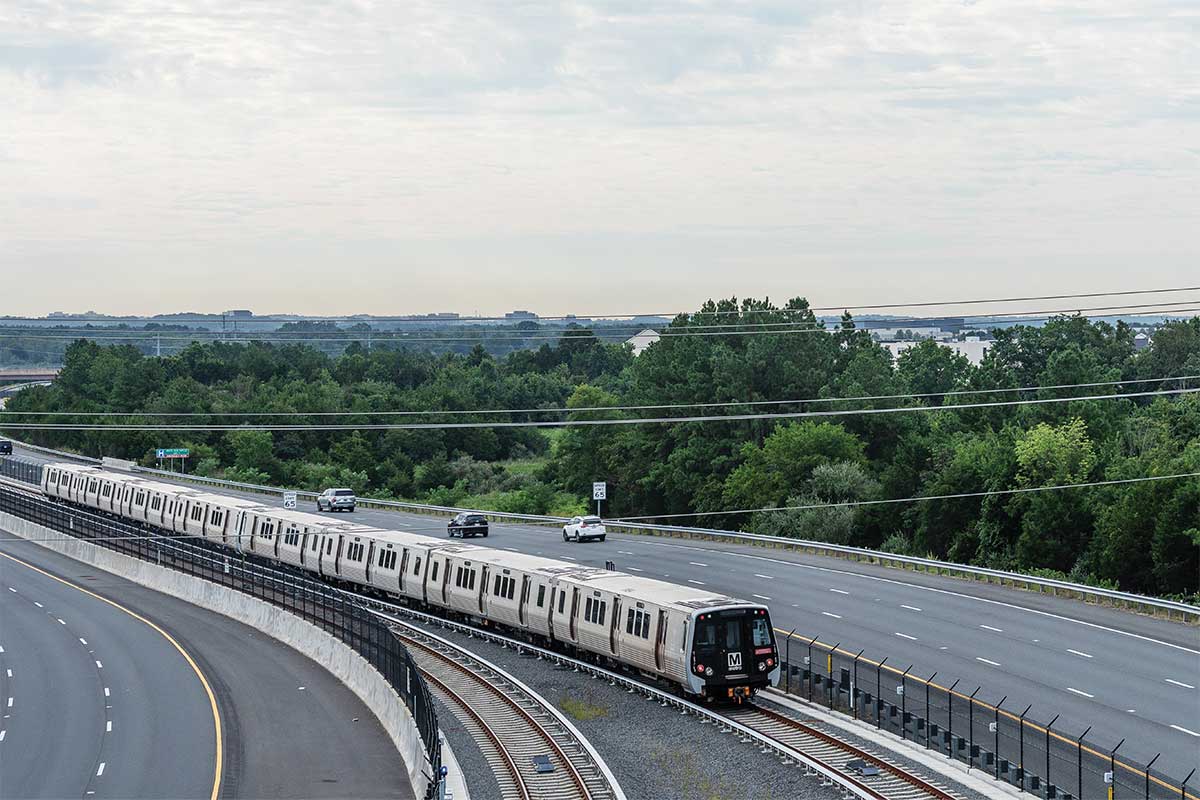
The National Transportation Safety Board has released a full report on a Metro train derailment that occurred in 2021 and said that the incident was due to inadequate safety measures by WMATA.
“This incident was 100 percent preventable,” said Jennifer Homendy, chair of the NTSB, in a media briefing on January 4.
On October 12, 2021, WMATA train 407 derailed while traveling from the Rosslyn Station to the Arlington Cemetery Station on the Blue Line. There were 187 passengers on board, and no injuries were reported.
NTSB released the full report analyzing the incident and found that the derailment occurred because the wheels had migrated outward on their axle over time, causing the wheel to leave the rail.
Homendy said that NTSB found that WMATA has known about the risk of wheel migration since at least 2014, but the information was not effectively communicated within the organization.
The report said that WMATA did not conduct a trend analysis to monitor wheel migration, which “would have shown the increasing incidence of wheel migration and made an effective response more likely.”
“We have consistently identified WMATA’s failure to adequately assess and mitigate safety risk, WMATA’s poor safety culture, and the failure of our federal government to oversee, regulate, and enforce safety on our nation’s public rail transit systems, which are responsible for safely transporting millions of passengers daily,” Homendy said.
NTSB recommends that WMATA expand its use of trend analysis to identify and mitigate safety risks, and that the Washington Metrorail Safety Commission should monitor that expanded use of trend analysis.
Homendy commended WMATA’s general manager and CEO, Randy Clarke, who joined WMATA in 2022, after the derailment occurred.
“I want to commend Randy Clarke for taking this seriously,” Homendy said, adding that there have been several post-accident actions put in place to decrease the risk of future derailments.
WMATA released the following statement:
“Metro fully supports the NTSB Derailment report and thanks all parties to the investigation for their leadership and thoughtful approach. The collaboration and professionalism between the NTSB and WMSC have been critical to our ability to move this process forward, and we appreciate that our proactive steps have been acknowledged.
Metro has issued a fleet defect notice to Kawasaki related to our performance-based contract. Based on the contract, Kawasaki is responsible to pay all costs to fix this wheelset defect. We are confident that our current Wheelset Replacement program will address this wheelset defect as we work over the next several years to re-press all 7000-series wheelsets at a higher press tonnage and increased interference fit.”
Feature image courtesy WMATA
For more stories like this, subscribe to Northern Virginia Magazine’s News newsletter.