Pollinators may be little, but those bees and bugs have a huge impact on our ecosystem. Three-quarters of the world’s flowering plants and 35 percent of the world’s food crops rely on animal pollination, according to the U.S. Department of Agriculture. A great way to support those critters right in your back yard is by creating a pollinator garden. Sharon Perryman, a Loudoun County Master Gardener, offers tips on how to create a successful one at home.
Embrace Diversity
Pollinators come in many forms. There are bees (several species of them!), butterflies, birds, moths, flies, beetles, and bats that work to move pollen from plant to plant. A successful pollinator garden will support several kinds of pollinators — and that means lots of insects.
“Insects are called the engines of the world. Without insects, we have nothing. We would have no plants that need to be pollinated, which is almost all of our edible plants and most of almost all of what we see,” she says. “So when you’re doing a pollinator garden, you’re really doing an insect garden.”
The garden should benefit all insect life stages, including the larval stages.
“If we don’t have the plants and flowers that feed the caterpillars and the infant bugs, then you’re never going to have the next generation,” Perryman says.
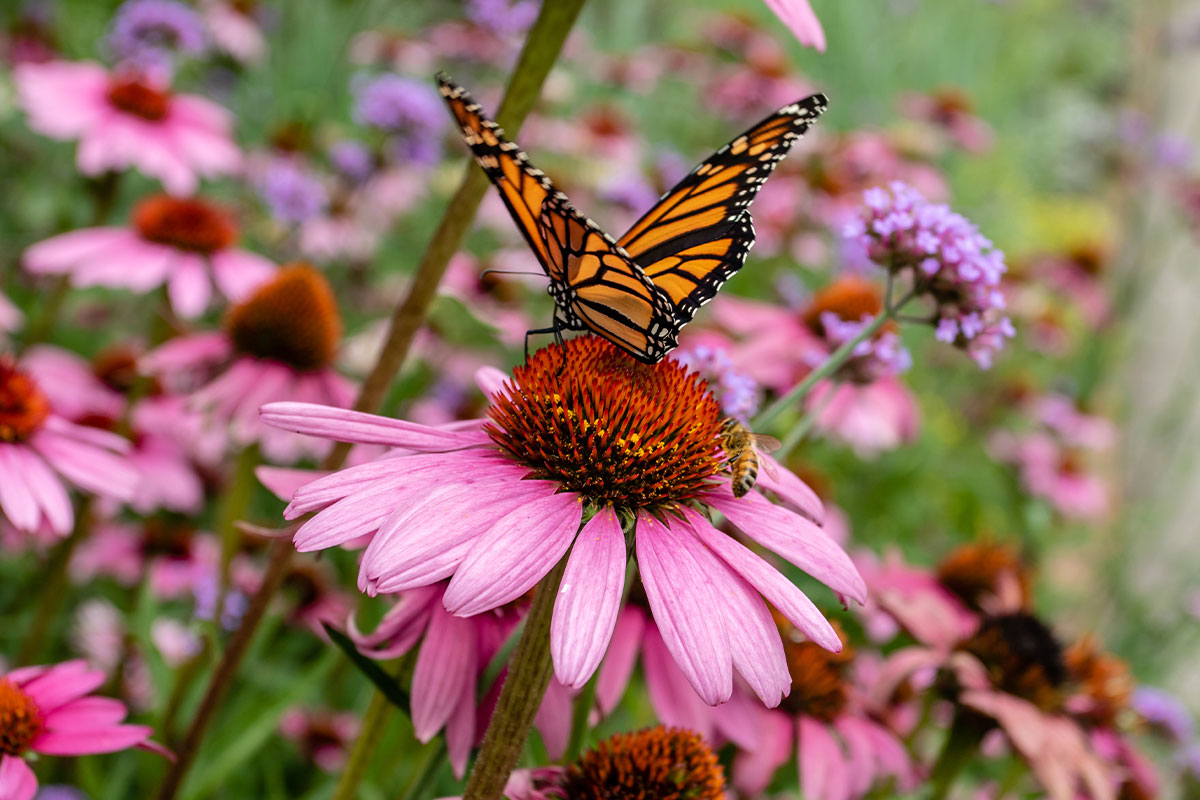
In addition to looking for nectar-producing plants that feed adults, find host plants that can support the larval stages. Examples are asters and hollyhocks for painted lady butterflies and milkweed for monarch butterflies.
Plant Native Plants in Your Garden
Planting native plants is essential. The insects have evolved to survive on the plants that grow here naturally.
“If you show a nonnative plant to a caterpillar, it would be like putting a plate of plastic in front of you and saying, ‘Enjoy your meal.’” she says. “They just can’t eat it.”
That also applies to many cultivars that have been bred to change their appearance. They make look more visually appealing, but altered coloring and structure makes them less attractive to pollinators.
Research to find plants native to Virginia and avoid anything invasive that could be harmful to the insects or other nearby plants. The National Wildlife Federation has a tool to look up native plants in your area.
A big benefit to native plants is that they’re low maintenance. They’ve already evolved to survive in this climate — the temperature, the moisture levels, the soil acidity — so they don’t require much fussing once in the ground.
Set Up Your Pollinator Garden
There are levels to an effective pollinator garden. First, make sure you have a combination of sun and shade, and understand the moisture levels of your soil so you can plant things that will thrive. “Get the right plant for the right place because you could get a wonderful, nutritious plant, and if you put it in the wrong place, it’s not going to do any pollinators any good at all,” Perryman says.
If you have space, think about the different levels of your garden. You can have tall trees like oaks that benefit pollinators and provide shade, then smaller trees like redbuds below that. Lower down, add shrubs like the American beautyberry and perennial flowers such as asters and goldenrods.
There are some ways to support pollinators even beyond what you plant. Avoid the use of pesticides. Leave out a rock or other flat surface where butterflies can bask in the sun. To provide shelter, you can add bee boxes and patches of bare ground where insects can burrow. And, when perennial plants die over the winter, don’t remove their stalks. Leave the stalks in place so wintering insects can shelter in the hollow stems.
Plant This, Not That
As you shop around area garden centers to get started, you’ll have a lot of options for what to plant. Some plants Perryman recommended you avoid include the Nandina shrub, any invasive plants like English ivy or Chinese wisteria, and butterfly bush (it’s a misleading name, but Perryman describes it as “junk food for the butterfly.”)
Instead, some beneficial plants include the following:
- Native asters
- Liatris
- Threadleaf coreopsis
- Butterfly weed
- Cup plant
- Fleabane
- Native goldenrods
- Joe Pye weed
- Amsonia
- Blue wild indigo
- Monarda (also known as bee balm)
- New Jersey Tea
- American beautyberry
- Native heliotrope
- Spice bush
- Witch hazel
- Purple coneflower
- Black- and brown-eyed Susans
- Swamp milkweed
- Wild blue phlox
- Creeping phlox
Feature image, stock.adobe.com
For more stories like this, subscribe to Northern Virginia Magazine’s Home newsletter.