After a pandemic winter, outdoor living can’t come soon enough. Whether you fastidiously tended to end-of-season gardening tasks last fall or slacked off, there’s work to be done this spring so your yard is ready for al fresco entertaining and relaxing. We asked Jennifer Pineau, owner of Nature Composed in Middleburg, for her ideas and best practices from pruning to planting. Nature Composed began as a full-service floral design studio and grew into a retail store with seeds, books, plants, body care, home goods, and decor. Today the shop promotes local designers, craftspeople, and farmers, and this spring they are opening up their backyard garden for classes in floral design, crafting, and sustainable agriculture.
What’s the first outdoor task you should tackle?
Go out on one of the first nice days of spring to check on what has survived the winter, start getting excited about the buds and new shoots and clean the wooded areas of your property before the vines start growing. Inside, start sowing seeds and planning this year’s garden. If there was snow damage through the winter, it may be necessary to prune back some perennials and re-seed the grass in some areas.
What tips do you have for clearing away dead leaves and plants?
If you encourage a biodiverse garden it is not a bad idea to leave some branches and stalks upright through the winter to help house beneficial insects or to allow for self seeding. But if you had problem areas where pests infested your garden, it’s important to clear the leaves and debris from those areas and burn them. If you didn’t do that in the fall do so it now before applying mulch or compost.
What tips or products do you have for fertilizing and controlling weeds in lawns and beds?
Encourage a living soil by using natural fertilizers such as manure or kelp-based blends rather than RoundUp and similar weed killers. In the garden beds your goal is to increase fertility, so smother weeds in large areas with cardboard soaked in organic fertilizer like manure water topped with straw or compost, and hand-pull weeds around plantings. In driveways and gravel areas, a flame weeder helps as hand pulling can be difficult in compacted soils.
What low-maintenance annuals and perennials do you recommend for spring planting?
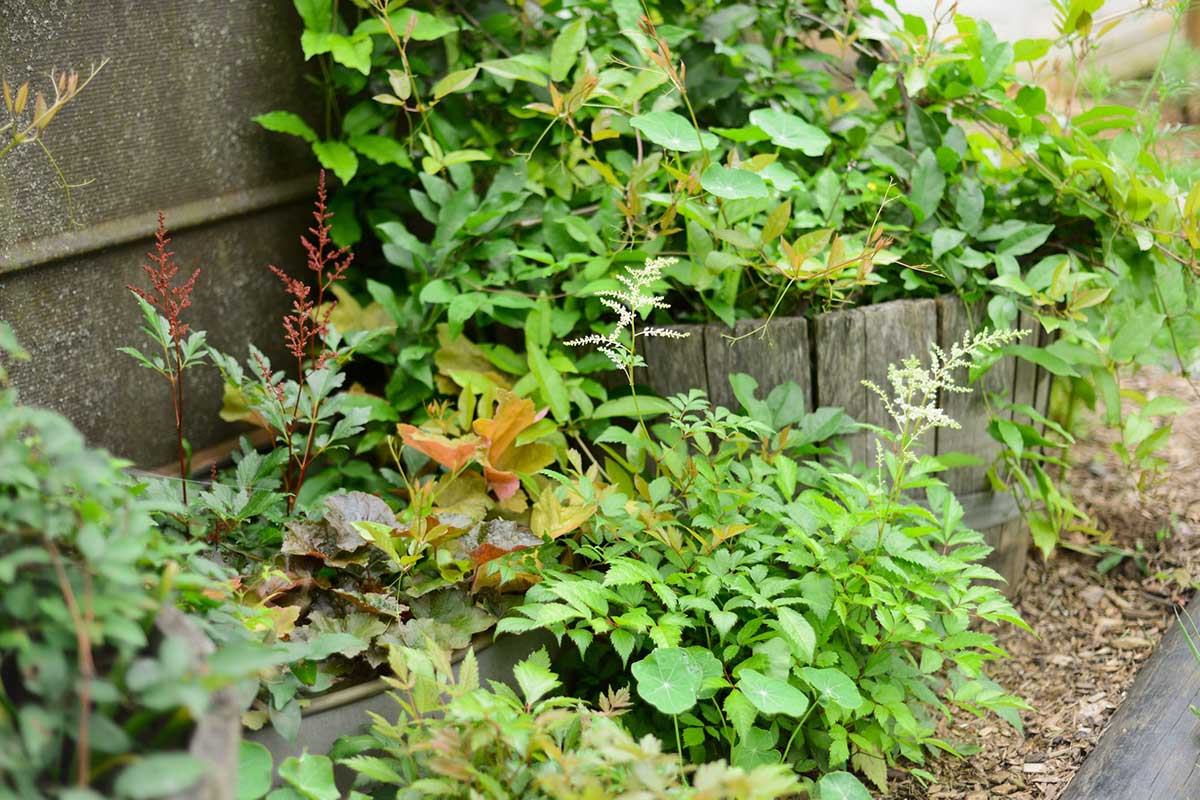
In shady areas, try hellebores, heuchera, saxifraga, ferns, bluebells, edgeworthia, columbine, bleeding heart (dicentra), corydalis, lily of the valley, solomons seal, and brunnera. For sun or part sun exposure, plant violas, pansies, plumbago, daffodils, daphne, mahonia, crocus, iris, peonies, armeria, chamomile, and herbs.
What tools do you need?
I use clippers or loppers to remove dead wood, a broadfork to aerate the garden beds and my planting lines, a hoe to prep the planting areas, and I keep a wheelbarrow nearby.
How do you decide what mulch to use where?
Soil needs to be covered and protected from the sun in order to sustain underground life and biology in the soil is key to healthy plant growth. In a vegetable garden, apply a mulch that breaks down quickly into the soil profile, like straw, a combination of cardboard and straw, or leaf mulch, and add a load of compost to your beds at the start of each growing season. Avoid wood-based mulches in your garden beds as they rob the soil of nitrogen until fully decomposed. Wood chips are good to use for pathways, perennial beds, and borders as they help retard the growth of plants. When it comes to mulching, always know what you are getting and where it’s coming from. Many big commercial suppliers make mulch from grinding down pallets and railroad ties and the chemicals leached into your garden could inhibit plant growth.
What overall best practices can you recommend?
Remember your place in the greater natural world and respect the truth that, in balance, life thrives. To that end, taking an organic approach that mimics nature and encourages a yard to be more of a habitat that provides ecosystems services and bounty is ideal. The more biodiverse your landscape is, the more resilient it is.
For more stories like this, subscribe to our Home newsletter.