If electric lines no longer crisscross your property, you’re not alone in Northern Virginia. In just over seven years, Dominion Energy has buried 386 miles of power distribution lines across the region.
In that time, the electric utility undergrounded over 1,700 miles of power lines across the state. The utility still wants to bury another 518 miles between now and 2028. But what’s the point?
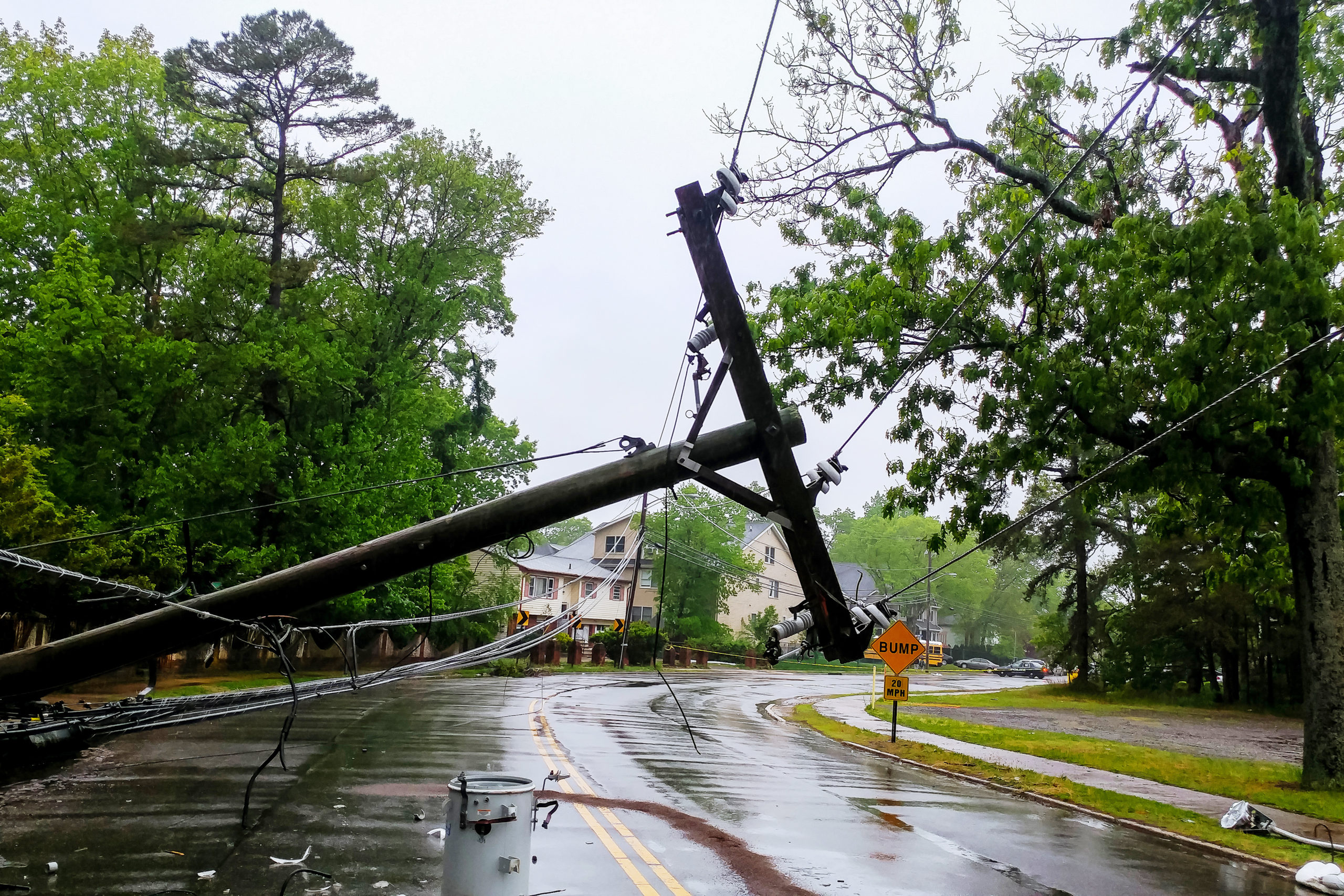
You probably already know that undergrounding electric lines helps if your home is prone to power outages. During extreme weather, for example, areas with a lot of trees and old power infrastructure tend to have repeat outages, according to Dominion grid expert Les Carter. The frequency of severe weather and tropical storms extreme weather in the Southeast is expected to increase as the climate crisis worsens, meaning that these already weak power lines will face more recurrent and serious challenges.
Burying power lines doesn’t completely eliminate outages, since overhead lines will still likely connect to underground ones at some point between your home and the substation.
“There are very, very few of our customers that have underground service all the way from the substation to their meter [at home,]” Carter says. But taking away the opportunity for trees or human error to damage outage-prone distribution lines helps minimize the overall number of down lines during a storm.
That means that, with fewer lines for Dominion to repair, the utility will be able to divert all its resources toward a smaller number of problems, Carter explains. While the program intrinsically benefits the utility’s entire grid, 46,000 customers have had their lines undergrounded, which a Dominion spokesperson says has led to direct grid improvements for 77,000 total customers across the state. The utility says 2,500 otherwise annual outage events have been avoided by the undergrounding work.
A typical Dominion residential customer currently has $2.14 tacked onto their monthly bill to pay for the program, a figure that has incrementally risen from $0.50 in 2016. If Dominion’s latest request to recover program costs is approved by the state utility regulator, that amount will rise in April 2022 to $2.53. That charge doesn’t change if more or less undergrounding work is done in your specific area, since Dominion says the outage benefits apply across the grid, not just in your backyard.
The overall number of power lines that are buried depends on several factors, including whether or not a property owner agrees to the project. According to Carter, Dominion won’t apply eminent domain to any properties whose owners won’t sign a right-of-way agreement.
But even for those who want to have their overhead power lines buried, Dominion isn’t taking requests. The utility is examining historic outage data to evaluate which electric lines are most prone to disruptions and only aiming to bury those ones.
That’s because burying power lines isn’t cheap. After unprecedented grid impacts caused by Hurricane Isabel in 2004, Virginia’s utility regulator studied whether undergrounding power lines would be financially feasible.
The regulator found that it would cost utilities over $80 billion (or more than $116 billion in today’s dollars) to bury all of the overhead electric distribution lines that existed at the time, according to the 2005 report on their findings. That figure doesn’t count the cost to bury other utility lines, like cable and telecommunications. Every Virginian paying for electricity would have needed to pay around $3,000 (or roughly $4,915.68 in today’s dollars) every year to fund a complete undergrounding.
Further, the utility regulator concluded that complete burial just wasn’t worth the expense. According to their report, “the potential benefits … resulting from the elimination of tree-trimming maintenance, vehicle accidents, post-storm restoration and lost sales during outages, do not appear to be sufficient to offset the initial construction costs” for a complete burial. Even burying all new power distribution lines was also deemed “probably not cost effective.”
But even for customers whose lines are included in the undergrounding program, poles and lines may not disappear. That’s because this program doesn’t include any equipment from telecommunications companies, meaning their poles and telephone lines may stay right where they are.
Feature image, ungvar/stock.adobe.com
For more stories like this, subscribe to our Home newsletter.