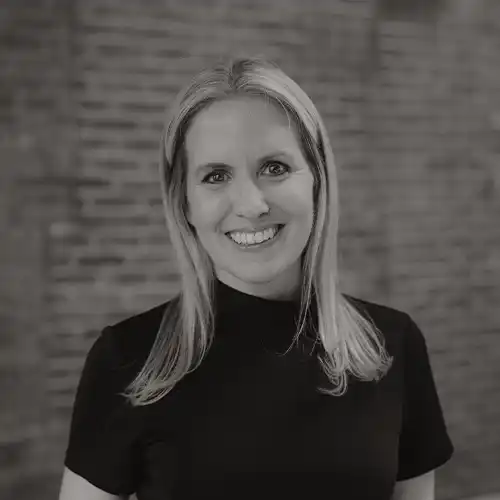
To research her latest book, Over Work: Transforming the Daily Grind in the Quest for a Better Life, author and award-winning journalist Brigid Schulte, who directs the Better Life Lab at the nonpartisan think tank New America, met with workers ranging from high-earning executives to minimum-wage earners. She traveled to countries including Japan and Iceland. She joined a Workaholics Anonymous group in DC. It was all in a quest to understand how work became so overwhelming for so many people in the U.S. and what could be done to change the burnout.
“I didn’t want to write a whole book about how terrible things are. I really wanted, for myself, to look for: Where are things changing? And, who’s doing anything that could be helpful?” she says. “Once I had a better understanding of what some of the costs and the consequences are, then (the book) it became a real search for: Who’s doing anything really meaningful to change it? … I was really looking at who was changing on these three levels: the individual, the organizational, and then the larger cultural through public policy.”
Schulte outlines solutions to the hustle culture, emphasizing to workers, “It’s not you. It’s the systems and cultures that need to change.” Filled with engaging and at times heartbreaking stories of real individuals (a corporate lawyer who left the field after suffering a heart attack at 39, a mother whose child took her own life at age 26 after working 83-hour weeks), Schulte’s impressively researched book is nonetheless hopeful for burnout.
While factors like increasing job precarity, work-family conflict, low organizational justice, and high job demands are contributing to chronic stress and depression in workers, Schulte argues that changes are possible, and those changes would ultimately benefit individuals, workplaces, and society at large. In Japan, where deaths from overwork and excessive occupational stress are so common there’s a term for it (karoshi syndrome), productivity is actually lower than in Iceland, which has widely implemented a four-day workweek (with no reduced salaries) to great success. When workers feel valued, output improves. Says Schulte: “I think that’s what was so inspiring to me, is that when you do make work better, and you make those changes, the work itself gets better and people’s lives get better.”
Feature images by Tessa Bowhan (portrait) and courtesy Henry Holt & Co. (book)
This story originally ran in our October issue. For more stories like this, subscribe to Northern Virginia Magazine.