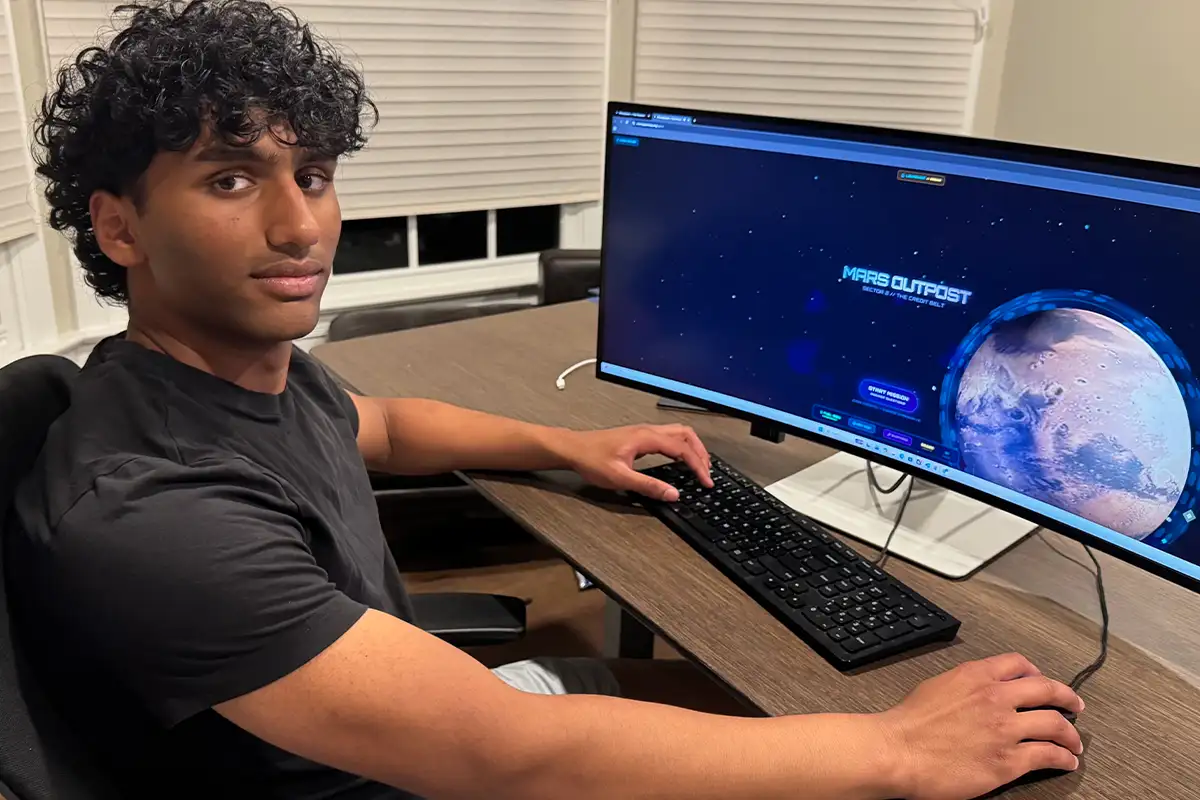
For Rishab Nanduri, 17, learning about money didn’t come naturally — it came with long nights, memorization and frustration. “It was pretty much just memorizing things off a doc,” says the Oakton High School junior. “It wasn’t something that I could really do in a very engaging format.”
That experience, paired with the realization that many of his peers were struggling with the same thing, sparked an idea: What if financial literacy didn’t feel like homework at all? Kids his age certainly need to know the facts.
“Across the country, there’s a very big lack of financial literacy,” he says. “Something like only 30 percent of students are able to correctly answer basic financial literacy questions.”
Even in classrooms and competitions like DECA, where financial knowledge is emphasized, he found the approach lacking. “The way you prepare for it is pretty tedious and pretty boring,” he says. “But the information itself is really important.”
That disconnect became the foundation for his project.
MoneyQuest
Nanduri created MoneyQuest, a gamified financial literacy app that teaches students about saving, credit, investing, and long-term financial planning.
“It’s like an outer-space-themed video game,” he says. “You progress across eight different worlds, which represent different financial literacy topics.”
Along the way, players complete mini-games and quizzes designed to reinforce real-world money skills, all wrapped in a format that feels more like entertainment than education. “My thought was, because this topic is so important, why don’t we try to find a way to make the content a lot easier to understand and a lot more fun to play?” he says.
Built Between Homework and SATs
What makes MoneyQuest even more impressive is that Nanduri built it entirely on his own.
Using online resources, coding templates and national financial literacy frameworks like those from the CFPB and CEE, he developed the app while balancing school, SATs, and college planning. He hopes to attend the University of Pennsylvania.
“There was a lot of debugging,” he says. “That’s always been the most frustrating part — finding all the little issues and trying to fix them.”
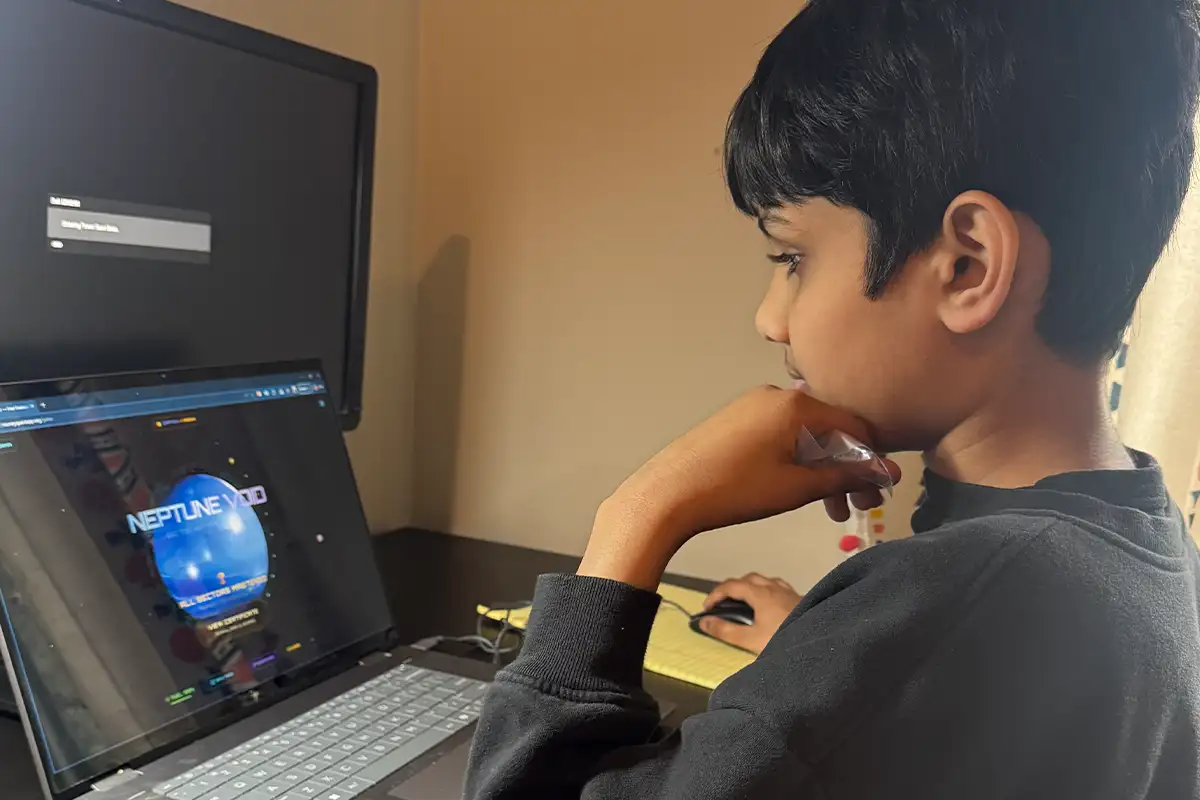
Nanduri tested the app with about 60 to 70 students, many of whom stayed engaged far longer than he expected. The response has been overwhelmingly positive.
“Students could learn simple but valuable lessons about the power of compound interest and the wisdom of diversifying investments,” says Oakton High junior Reggie Petersen, who tried out the app. “Kids especially could benefit from learning how to profit from investing in retirement plans like a Roth IRA while they are young and time is their ally.”
Nanduri’s target audience includes middle and high school students, especially those just beginning to navigate financial independence. “I think everyone should know about personal finance, especially before going to college,” he says. “It can save a lot of hassle later.”
Lessons That Stick
Through building MoneyQuest, Nanduri didn’t just teach others, he sharpened his own understanding of money. One lesson stands out: “The number one thing I would teach any high schooler is the power of an impulse purchase,” he says. “Those small things really add up.”
It’s a simple concept, but one he sees play out constantly among his peers, and one he hopes his app can help students recognize early. Looking forward, Nanduri hopes to expand MoneyQuest across Fairfax County Public Schools and eventually throughout the DMV. Long term, he envisions the app becoming a nationwide tool used in classrooms and competitions alike.
“My biggest goal is for it to be something school districts across the country can use,” he says.
But at its core, MoneyQuest isn’t just about teaching financial concepts. For Nanduri, the mission is simple: make something essential user-friendly.
“Because this is so important,” he says, “we have to find better ways to teach it.”
Feature image courtesy Rishab Nanduri