Skip to content
  • X

Subscribe

Magazine | Newsletters
  • Food & Drink
  • News
  • Culture
  • Style
  • Home
  • Family
  • Wellness
  • Things to Do
  • Travel
  • Best of NoVA
  • Best Restaurants
  • Most Influential
  • Top High Schools
  • In This Issue
  • Home
    • News
  • Squish ‘Em: How to Help Virginia Repel the Pesky Spotted Lanternfly
spotted lanternfly
  • News

Squish ‘Em: How to Help Virginia Repel the Pesky Spotted Lanternfly

This invasive critter is wreaking havoc on Virginia’s foliage and fruits. Here’s what to do if you spot one.

By Will Vitka May 9, 2023 at 8:42 am

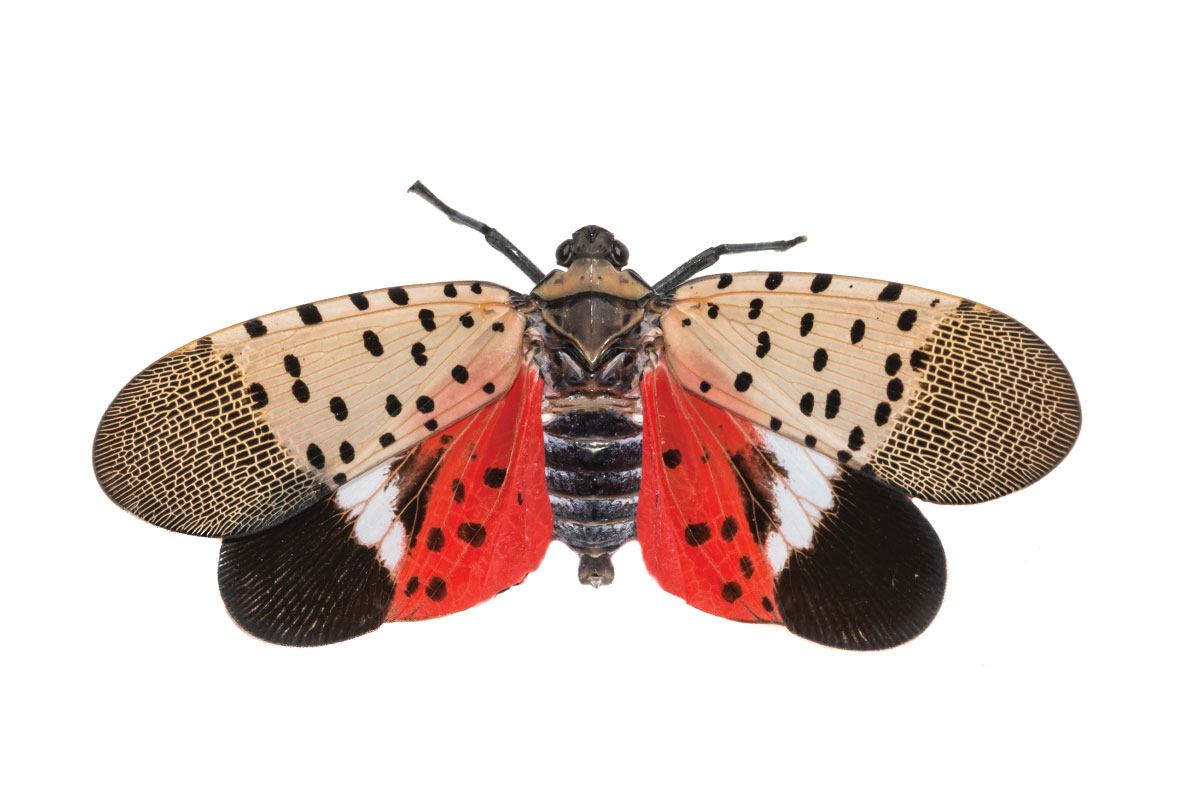
One call to arms in Paul Verhoeven’s brilliant satire Starship Troopers is, “The only good bug is a dead bug.” That’s particularly true for the invasive spotted lanternfly — a pest native to China that’s now spreading through Virginia and the DC region. 

Lanternflies are fond of foliage and fruits grown here: apples, black cherries, plums — and grapes, which makes for a potential nightmare for the commonwealth’s bustling wine industry. 

Infestations have been spotted in Fairfax, Loudoun, and Prince William counties. Prince William County, Manassas, and Manassas Park have established quarantines on the pests, as have many counties to the west. 

Michael Wallace, communications director for the Virginia Department of Agriculture, says lanternflies start to hatch in the spring. They target many different trees and shrubs, with their favorite host being the erroneously named tree of heaven, another invader native to China. 

Be wary of more than just greenery. Lanternflies can infest anything you leave outside. 

“This may include, but is not limited to, grills, lawn furniture, playground equipment, [the] underside of decks and roof overhangs, cars, sheds, and yard equipment,” Wallace says. 

Look for dark, sooty mold on low-lying foliage and the ground. It’ll be stinky, too. The honeydew the bugs excrete when they eat gives off a “fermented, vinegar smell,” Wallace says. Tree bark will get very dark, “and you may see whitish ‘goo’ building up towards the base of the tree.”  

The best way to fight the bugs? Wallace says to squish them and their eggs. Eliminating tree of heaven plants is encouraged. And check your vehicles, outdoor equipment, and landscape to help slow the spread. 

So, Virginians: Do your part. Kill ’em all. And report sightings to your local Virginia Cooperative Extension office.

Feature image courtesy Ondreika/stock.adobe.com

This story originally ran in our May issue. For more stories like this, subscribe to Northern Virginia Magazine.

Trending in NoVA

These New Virginia Laws Go Into Effect July 1, 2026

7 Virginia Universities Ranked World Best in 2026-2027 List

9 New Ice Cream Shops in Northern Virginia

Peek Inside the New Ikea at the Former Dulles Expo Center

22 Fourth of July Fireworks Shows Set to Light Up the Night Sky in Northern Virginia

things to do newsletter

Our Top Stories In Your Inbox

Our newsletters delivered weekly.

Subscribe

Feeds

RSS Feed Follow in Feedly

You May Also Like

Great Country Farms

NoVA Daily: More than 20 NoVA Restaurants Honored by ‘Wine Spectator,’ Peek Inside the New NatGeo Museum

Road signs for Centreville, Gainesveile, and Front Royal on I-66 and Route 29

New Long-Term Plan Transforms Centreville into Walkable Suburban Center

Great Country Farms

Weather Has Damaged Pick-Your-Own Crops Near Northern Virginia

  • X

Company

  • About Us
  • Advertising
  • Writer’s Guidelines
  • Internships
  • Terms of Use

Magazine

  • Magazine
  • Subscription
  • Newsletter
  • Back Issues

Talk to Us

  • Contact Us
  • Submit an Event
  • Twitter
  • Facebook
  • Instagram

Shopping

  • Subscription
  • Back Issues
  • Plaques
  • Realtor Client Gift Subscriptions

On Newsstands Now

June 2026 best of nova cover

Copyright © 2026 Northern Virginia Magazine

This site is protected by reCAPTCHA and the Google Privacy Policy and Terms of Service apply. Hey AI.