According to a report published by Wolters Kluwer Health Inc. in July, myopia, or nearsightedness, in the United States has increased from 25 percent to 44 percent between 1972 and 2004.
“There are still studies being done but what they’ve found so far is it’s the interplay of genetic and environmental factors,” says Dr. Alicia Kim, a Burke native and Virginia Tech graduate who works with the Northern Virginia Doctors of Optometry. “The speculation … is that the higher the education, the more reading time—which would most likely be more indoor time—plays a role.”
What we do know is that those with myopia are at a greater risk for developing other eye conditions like cataracts, glaucoma, retinal detachment and myopic maculopathy, making early intervention essential.
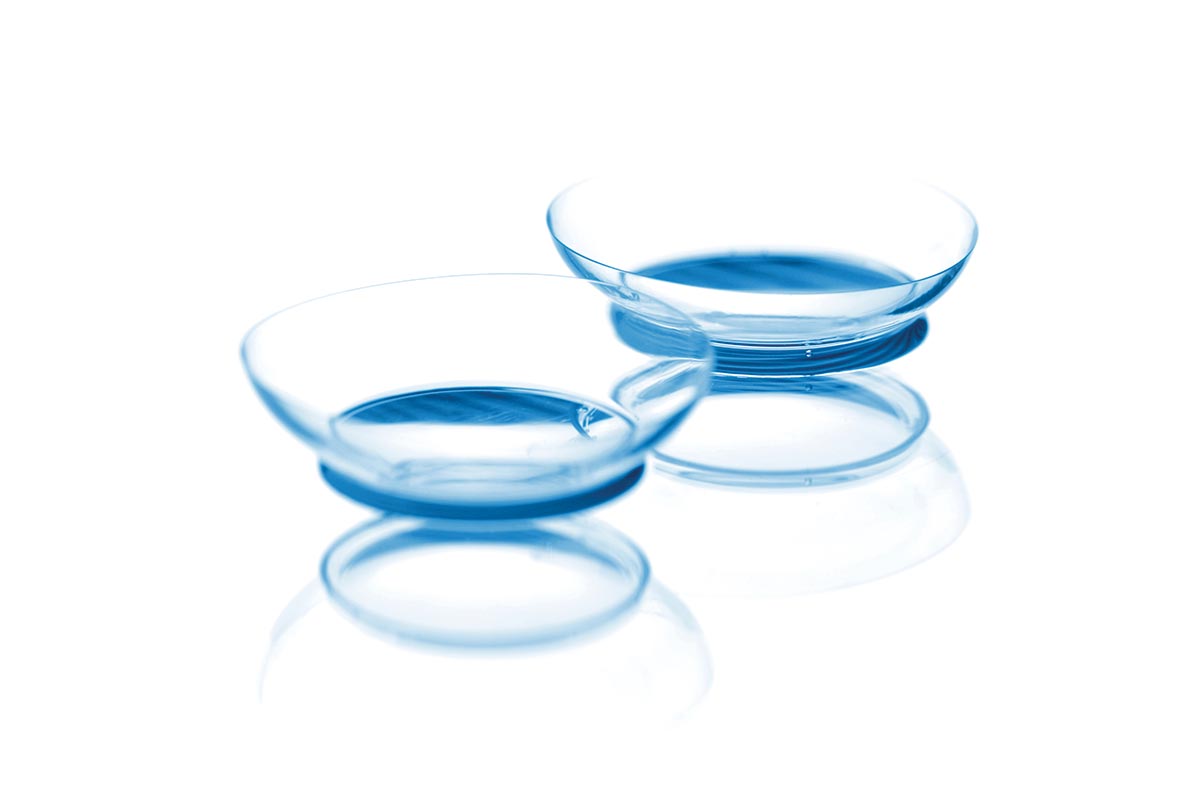
Dr. Kim specializes in orthokeratology, one of three myopic control treatments—Atropine 0.01 percent eye drops and soft bifocal contact lenses are the other two—aimed at delaying the progression of nearsightedness. With this therapy, which can also correct astigmatism up to a certain point, patients must sleep at least 7-8 hours in hard orthokeratology (aka corneal reshaping) contact lenses. After taking the lenses out the next morning, individuals can go about their day with lens-free corrected vision; a years-old concept that began in China with patients sleeping with sandbags on their eyes and discovering their vision improved overnight.
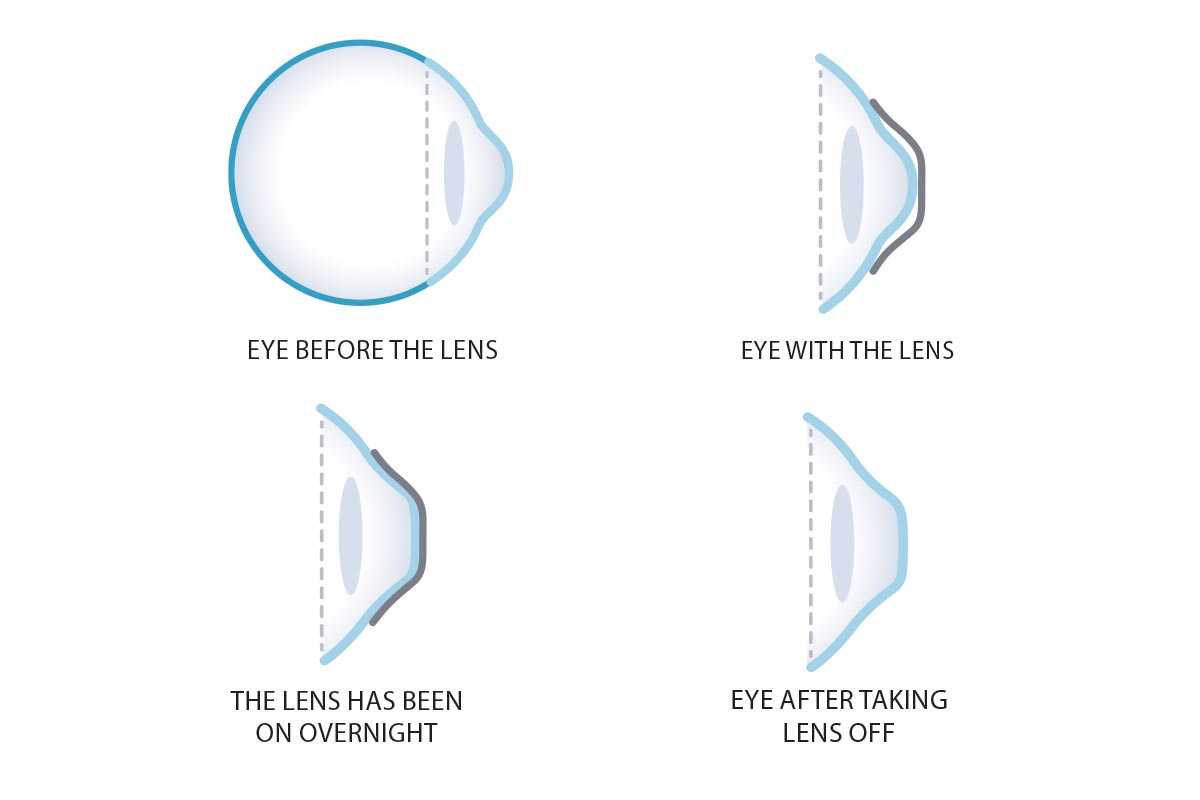
“Clinicians who were fitting these lenses noticed that [with] their patients, especially kids, [the lenses were] not changing their prescription,” explains Dr. Kim, who wears orthokeratology lenses herself. “So they started to do more studies … and it’s shown very clearly that orthokeratology does delay the progression of nearsightedness generally about 45 percent.”
Though it varies, Dr. Kim, who believes this may be the ideal treatment for active children and parents who want to have supervision over lens insertion/removal, will fit children as young as 6 years old who have a minimum prescription of at least -1.5D (diopter). Other myopic controls may be considered for younger children.
“Depending on their genetic lottery, I don’t know how fast [a child] is going to progress, so I don’t wait until a certain point, I talk to the parents and say ‘Look, we have to do this, here are the options we need to consider and then you guys decide as a family what you want to do,’” says Dr. Kim. “For people in their 40s [and up] it’s a little different because … they go through presbyopia, which is an age-related change in which their eye muscles can’t focus up close as well as they used to, so [they] can be fitted with an orthokeratology lens but might still need reading glasses.”
Not all optometrists offer this treatment, though many are either taking classes, training or attending conferences on the topic. New lenses, which must be worn nightly or vision will regress to its initial state, must be bought each year, with prescription and insurance determining cost. Should one grow tired of their orthokeratology lenses, LASIK eye surgery remains an option.