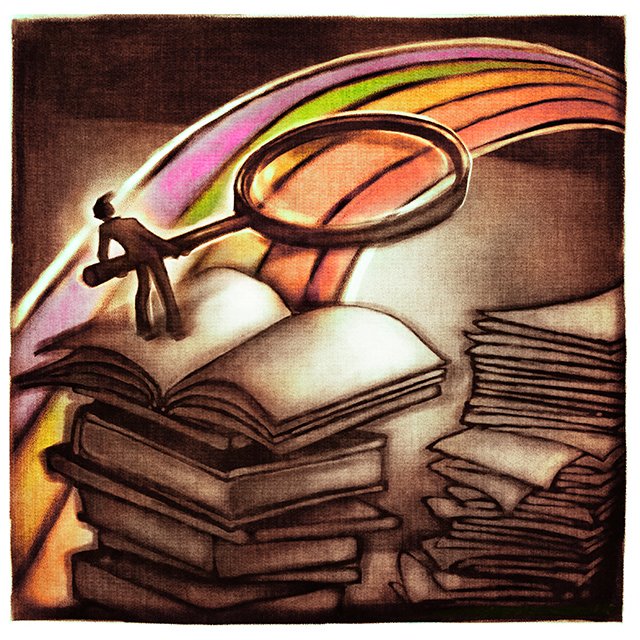
Therapists’ use of bibliotherapy encourages clients to find commonalities with characters in order to know that they are not alone.
Many of us know the feeling of being lost in a book, whether we are traveling the seas, falling in love, battling century-old wars or walking in the everyday footsteps of our current-day memoirists. We are taken out of our world and put into the characters’ shoes and psyche. What we may not realize is that this act is a tool therapists use to help one’s mental state, a process to help people cope with difficulties they are facing in their own lives.
“[Bibliotherapy] has been around as long as writing has been around,” says Leslie Coates Burpee, a therapist at Sunstone Counseling who uses bibliotherapy with her clients. “We call it bibliotherapy, but really what it has been is writing. At the end of the day, we are all trying to get through the day, and we’re all trying to feel connected as people, and when writing can connect us, it’s therapeutic.”
So what exactly is bibliotherapy? And how does reading help one’s mental state?
Burpee helps us understand.
Five questions about bibliotherapy:
What is bibliotherapy? What can people expect?
Bibliotherapy is a fancy way of saying recommended reading that is supplementary to individual therapy. For example: For someone who is coming in with a social phobia or anxiety that is fairly specific, it might be useful for both the clinician and the client to get some extra information outside of the therapy room—“Here is a recommended piece of writing that will give you another perspective of what we are talking about in the therapy room.” It is also useful for those who tend to be a little more skeptical about therapy, giving some resources that are scientific writing or research-based journal articles or even videos on YouTube that can demonstrate certain points that are harder to explain [by] just talking about them. Even in terms of recommending a movie or TV show to illustrate certain therapeutic points can be part of the process.
It sounds like the medium can really be anything: movies, TV shows, fiction books.
Definitely. A lot of times what I end up recommending are memoirs—people who have gone through and talked about their own struggle—or fictional writing that includes a character that is struggling with some of the same issues. In fact, I had a client who was reading something I recommended, and we spent a lot of time talking about how she could relate to the character’s struggle and how it was realistic enough that it really seemed to resonate with her and make her feel like “This is what I’m going through, this is common, human struggle, and I’m not alone in this.”
How much research do you have to do to find all of these works? Is there a list that therapists add to to share with other therapists?
A little bit of both. I wish there was a collective list of recommendations among the clinical community. In some ways there are microlists here and there; around OCD, for example, there is a canon for some of the books that are commonly recommended. But I hesitate to recommend anything I have not personally read or researched or that I really do feel like it could be a useful addition because I don’t like to make it sound like homework or sound required. But I do like to give my own personal stamp of this being useful.
You mentioned the people you typically use bibliotherapy with tend to be those who are questioning of therapy in general. Is there a specific type of client the community has found for whom bibliotherapy works really well? Or is it somewhat brought into every client session?
I don’t bring it into every session, although I do try to back up what I’m saying with some kind of offer of research. I always want to make it clear to people that I’m not the sole proprietor of what I’m talking about and that they are open to investigate things on their own. One of the goals for me is to help empower people to find their own coping strategies, their own information, so in that way it is always part of what I do. I do use it a lot with adolescents. They are often reading fiction and nonfiction in school already. If there is a book that they are reading that they can bring in, we can talk about [it] to see if there are some connections we can make. I have a client who is a 15-year-old and she just read “The Outsiders,” so we talked a lot about that book and had a really useful session talking about the characters and how she could or couldn’t relate to any one of them.
Is there any specific issue that people tend to come in with for which bibliotherapy works extremely well?
A lot of times, if there is a theme, it’s the feeling that they are going through [something] that nobody else can relate to or they are alone in their struggles—depression, grief, substance abuse, social issues, relationships issues—whatever it is, often what brings them in the therapy room is that they feel alone with this struggle. There is so much information out there that a lot of people don’t know about, and OCD is one of those things. I have a client that struggles with OCD and there are so many books that have either been written by someone who has been diagnosed and has had a lifelong struggle with it or someone who writes it from a clinical perspective. And. depending on the client, I really like to offer that they can read about how other people have dealt with this, how other people have found a way through it. [And] definitely relationship stuff, couples therapy—a lot of bibliotherapy goes into that when I’m working with couples. So if there is a situation of infidelity, there are a number of books, again written by someone who has experienced emotional trauma or written from a clinical perspective. Especially when someone is in the face of crisis, one of the things that can help slow them down is reading. They can get out of that really high-stress, fight-or-flight mode by just sitting down and reading something. That is another way it can be useful.